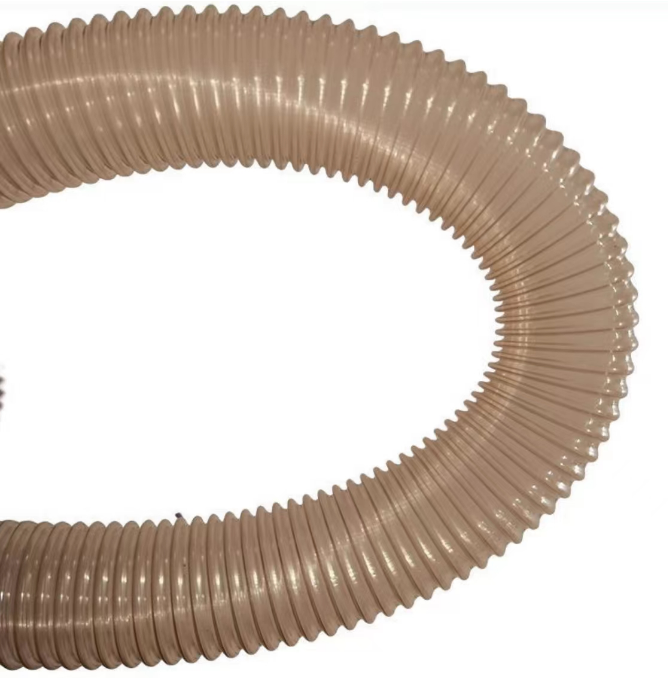
1. Product Overview and Performance Characteristics
PEEK (Polyetheretherketone) bellows are engineered plastic products manufactured from a high-performance, semi-crystalline thermoplastic material. They are widely applied in critical areas such as industrial sealing, thermal expansion compensation, and flexible pipeline connections.
1.1 Structure and Mechanical Properties
The design of PEEK bellows incorporates a unique corrugated outer wall structure, which grants them exceptional flexibility and high capacity for expansion and contraction within limited spaces, alongside superior anti-kinking performance. In terms of mechanical properties, PEEK material offers remarkable advantages: it possesses outstanding strength, rigidity, and dimensional stability, making it well-suited for high-load operating environments. Furthermore, due to its low coefficient of friction and high wear resistance, PEEK bellows can achieve long-term stable operation without the need for additional lubrication. Compared to conventional metallic materials (such as steel, aluminum, or titanium), PEEK bellows are significantly lighter, making them an ideal choice for system lightweighting initiatives. Additionally, their geometric parameters, including corrugation height, wall thickness, pitch, material grade, and end connections, can be highly customized according to specific engineering requirements.
1.2 Environmental Adaptability
PEEK material demonstrates exceptional performance in harsh environments, offering fatigue resistance that is widely recognized as the best among all resin materials.
- Temperature Capability: PEEK exhibits robust thermal resistance; it can withstand temperatures up to approximately 250°C (480°F) in steam or high-pressure water, and its maximum continuous service temperature can reach up to approximately 300°C (570°F).
- Chemical and Corrosion Resistance: It possesses excellent chemical corrosion resistance and anti-degradation properties, particularly showing good tolerance to strong alkaline environments, such as 10%-50% sodium hydroxide (NaOH) solutions below 100°C.
- Comprehensive Properties: In addition, PEEK features inherent flame retardancy, superior electrical insulation, good sliding performance, and strong weather resistance.
2. Analysis of Core Application Scenarios
PEEK bellows are primarily used in environments that require frequent flexing, movement, or must withstand high-pressure or vacuum challenges, particularly in high-temperature fluid transfer and high-negative-pressure sealing scenarios.
In the Chemical Processing Industry, PEEK bellows are commonly used in diaphragm pumps or metering lines, often replacing inadequate PTFE or metal components to handle corrosive media such as high temperatures, strong alkalis, or organic solvents. Its core value lies in its superior high-temperature and strong chemical corrosion resistance.
In the Semiconductor and Wet Process Fields, PEEK bellows are deployed in wet bench systems. Their low outgassing rate and high modulus properties ensure chemical purity and system integrity, minimizing the risk of particulate contamination.
Medical and Healthcare Systems represent another vital application area. PEEK bellows are used in medical fluid systems and equipment requiring high-temperature sterilization, meeting the demands of weight-sensitive or metal-incompatible environments, and complying with stringent regulatory standards such as USP Class VI or ISO 10993.
In Aerospace applications, such as satellite fuel lines or aircraft fluid management systems, PEEK provides crucial performance support with its heat resistance, chemical inertness, and ultra-low weight.
Finally, in the New Energy Sector, it is utilized in electric vehicle battery cooling systems, solar water heaters, or fluid transfer lines in wind turbines, effectively resisting corrosion from high-temperature electrolytes and providing lightweight solutions.
3. Summary of PEEK Bellows Advantages
PEEK bellows demonstrate multiple advantages in demanding industrial applications:
- High Efficiency and Flexibility: They allow for efficient extension and compression in limited spaces while providing powerful flexibility and anti-kinking capability.
- Exceptional Durability: Superior resistance to high temperatures, chemicals, corrosion, fatigue, and wear ensures stable, long-term equipment operation.
- Comprehensive Substitutability: In harsh conditions, PEEK can serve as an alternative to metals like stainless steel; compared to PTFE, it offers better dynamic adaptability, higher strength, and a longer operational lifespan.
- Simple Maintenance: The extremely low coefficient of friction means no additional lubrication is required.
4. Limitations and Professional Solutions (Addressing Deficiencies)
Despite their significant advantages, PEEK bellows still face limitations in certain extreme applications, which require professional assessment and mitigation:
4.1 Reliability in Concentrated Sulfuric Acid Environments
PEEK’s performance becomes unreliable, and it may even fail, in concentrated sulfuric acid environments (typically exceeding 10% concentration). During design, specific testing must be conducted, or alternative materials resistant to extremely strong acids should be considered.
4.2 High Initial Price and Total Cost of Ownership (TCO)
The initial material cost of PEEK is typically about 10 times that of common polymers like PTFE, leading to higher final product costs. Consequently, it is generally unsuitable for high-volume, low-cost commodity applications.
However, from a Total Cost of Ownership (TCO) perspective, in critical scenarios requiring high fatigue cycles and high reliability (e.g., core production equipment, life science instruments), PEEK’s ultra-long service life and extremely low failure rate can significantly reduce downtime and maintenance expenses. This means that, despite the high initial investment, PEEK often results in a lower overall cost in the long run.
4.3 Outgassing and Permeability in Vacuum Systems
PEEK’s outgassing rate and gas permeability are higher than those of metallic materials, making it generally not recommended for Ultra-High Vacuum (UHV) or Extremely High Vacuum (XHV) environments. The material’s vacuum compatibility must be rigorously verified before use, and a Bake-out procedure should be executed.
The purpose of the Bake-out is to remove adsorbed moisture and other volatile substances from the material’s interior by heating, thereby reducing contamination and the outgassing rate in the vacuum system. For precision applications, it is advisable to consult material data such as Total Mass Loss (TML) and Collected Volatile Condensable Material (CVCM) to ensure compliance with specific vacuum class requirements.
4.4 UV Sensitivity and Protection
Prolonged exposure to ultraviolet (UV) light (especially direct sunlight over several weeks) can lead to PEEK degradation, embrittlement, and a loss of its original strength and elongation.
Professional Anti-UV Solutions include:
- Internal Enhancement: For UV-exposed environments, consider using a filler-enhanced PEEK variant. Incorporating additives like carbon fiber, graphite, or specific dark pigments can effectively absorb UV energy, protecting the bulk polymer.
- External Protection: For outdoor or strong UV radiation applications, additional protective coatings or opaque protective sleeves can be used to physically shield the PEEK bellows.
4.5 Higher Processing Difficulty
Due to PEEK material’s high melting point (approximately 340°C – 400°C), its molding requires specialized high-temperature and high-pressure equipment. This factor increases the manufacturing cost and process complexity of the final bellows product.
5. Key Comparisons with Other Materials (Narrative Format)
5.1 Comparison with PTFE Bellows
The primary advantages of PTFE bellows lie in their lower cost, excellent chemical inertness (especially to strong acids), and high flexibility. However, PEEK holds a clear advantage in mechanical properties and durability. PTFE has low mechanical strength (tensile strength around 20–30 MPa), is prone to deformation, has poor fatigue resistance, and a continuous use temperature of only about 260°C. In contrast, PEEK offers significantly higher strength (around 100 MPa), a higher continuous service temperature (around 300°C), and a much longer fatigue cycle life (3,000+ cycles). Therefore, PEEK is better suited for applications subject to dynamic loads and mechanical stress.
5.2 Comparison with Metal Bellows (e.g., Stainless Steel)
Metal bellows boast higher mechanical strength and pressure resistance, extremely low outgassing rates, and are suitable for ultra-high vacuum environments. Their disadvantages, however, include heavy weight, susceptibility to corrosion in certain chemical environments, and a lack of the flexibility inherent to PEEK.
PEEK’s advantages lie in lightweighting and corrosion resistance, making it the ideal choice for chemical and medical fields sensitive to weight and corrosion. Conversely, metals are more reliable under extreme high pressure and ultra-high vacuum conditions. Thus, PEEK is generally regarded as the lightweight, high-performance alternative to metal in corrosive environments.
Leave a Reply