Exams. Just saying the word can make your heart race, palms sweat, and brain go blank. We all know that feeling—the panic when you realize there’s so much to cover and so little time. But here’s the thing: preparing for exams doesn’t have to feel like walking on a tightrope with no safety net. With the right strategies, you can study effectively, retain information, and actually keep your sanity.
Understand Your Exam
First step, always, always understand what kind of exam you’re facing. Multiple choice? Essay? Practical problem-solving? Each type needs a slightly different approach. And don’t just glance at the syllabus. Really break it down. Highlight topics that are heavily weighted. Note chapters that you’ve already struggled with. When you know exactly what you’re up against, you can make a plan that feels realistic.
It’s easy to think “I’ll just start revising everything.” That’s a recipe for stress. Focus on what’s important, what actually counts, and give yourself a chance to tackle it properly.
Make a Realistic Study Schedule
One of the biggest causes of exam stress is trying to cram everything at the last minute. Instead, make a study schedule. And by schedule, I mean something that isn’t overly ambitious. Don’t block 12 hours straight and expect miracles. Break your study time into smaller, manageable chunks.
For example, you can try the Pomodoro technique—study for 25 minutes, take a 5-minute break, repeat. After four cycles, take a longer break. This method not only keeps your brain fresh but also reduces stress because you know breaks are coming.
Also, balance subjects. Don’t do the same tough topic for three hours straight. Mix it up with something easier, or something you actually enjoy. Your brain will thank you.
Active Learning Over Passive Reading
Rereading textbooks for hours is tempting, but it doesn’t really work. Active learning does. Ask yourself questions. Summarize what you’ve read in your own words. Teach it to an imaginary class or a friend. Make flashcards, mind maps, diagrams—whatever works for you.
The more actively you engage with material, the more your brain retains. Passive reading gives a false sense of productivity. You feel like you’re working hard, but when the exam comes, nothing sticks.
Take Care of Your Body
It’s crazy how often people forget this. Your brain is part of your body, and if your body is stressed or exhausted, your brain can’t perform. Sleep. Seriously, sleep. Late-night cramming sessions may feel productive, but you’re just sacrificing memory and focus.
Eat well. Avoid too much junk food or caffeine binges—they spike your energy and then crash it. Hydrate. Exercise a bit, even if it’s just a 20-minute walk. Movement clears your head and reduces tension.
Stress-Relief Techniques
Even with the best plan, stress can creep in. That’s normal. What matters is how you deal with it. Quick breathing exercises, meditation, or even short mindfulness practices can calm the mind. Some people find journaling or writing down their worries before studying helps—they feel less trapped by their own anxiety.
Also, don’t isolate yourself completely. Talking with friends about study strategies, sharing tips, or just venting a bit can lighten the mental load. Just avoid comparing yourself to them—it’s easy to get discouraged that way.
Practice Exams and Past Papers
Nothing prepares you better than practicing under real conditions. Past papers, mock tests, sample questions—use them. They familiarize you with the format, timing, and pressure. They also highlight areas where you need more revision.
The trick is not to obsess over mistakes. Each error is a chance to learn. Stress comes when we fixate on what we don’t know. Shift your mindset: mistakes are information, not proof of failure.
Break Down Big Goals
Exams can feel like one giant mountain. But if you break it down into smaller, achievable goals, it becomes less scary. Instead of “I have to learn the entire chemistry syllabus,” try “I’ll finish chapter 3 and 4 today, then do practice questions.” Checking off smaller goals gives a sense of progress and reduces overwhelm.
Remember, it’s about consistent effort, not perfection. One productive hour is worth more than six distracted hours.
Final Thought
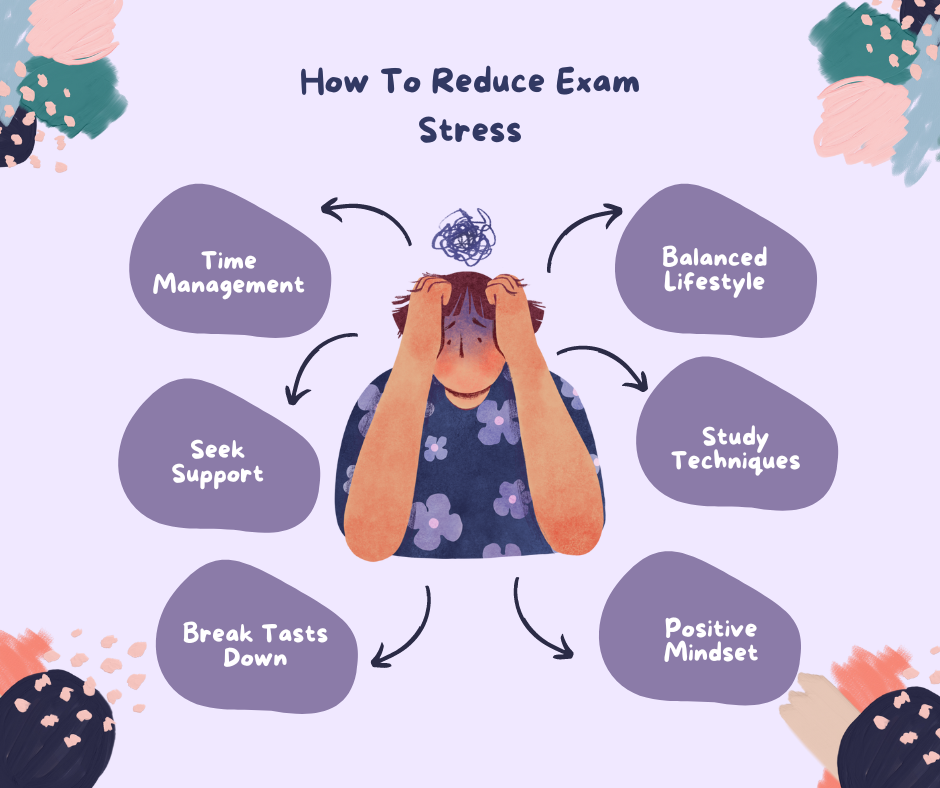
Exams are stressful, yes, but stress doesn’t have to control you. Preparation, organization, and self-care are your allies. Understand your exam, make a realistic study plan, engage actively with the material, take care of your body, and allow yourself breaks. Use past papers as a learning tool, and break big tasks into smaller, manageable steps.
At the end of the day, success isn’t just about memorizing everything—it’s about being calm, focused, and confident in what you know. Treat your study time like a process, not a panic attack. Step by step, you’ll get there, and maybe even surprise yourself with how much you can handle without losing your cool.
Leave a Reply