
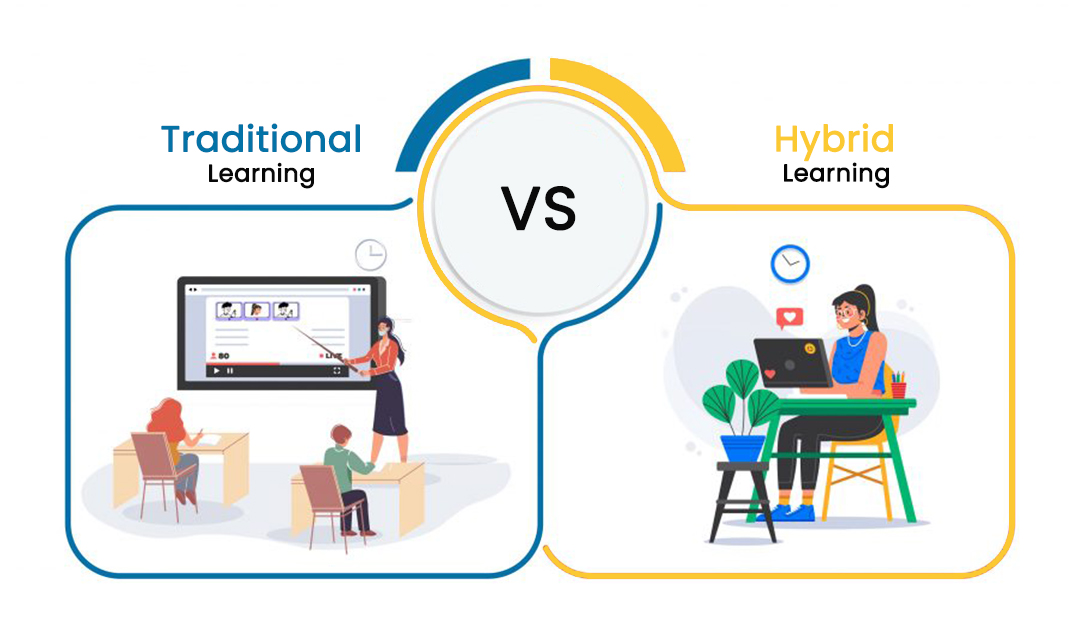
Education has changed a lot in recent years. With the internet becoming a major part of daily life, many students now study online instead of attending physical classrooms. This raises an important question: Is online education better than traditional classroom education, or vice versa?
To understand this, we need to compare both methods.
Traditional Education
This is the system most of us are familiar with. Students sit in classrooms, listen to teachers, interact with classmates, and follow a fixed schedule.
Advantages
- Face-to-face learning builds communication skills
- Social interaction helps personality development
- Structured routine improves discipline
Disadvantages
- Students learn at the same pace, even if they need more time
- Travel time is required
- Classes may sometimes feel too strict or repetitive
Online Education
Online education happens through digital platforms such as Zoom, Google Classroom, or YouTube lessons.
Advantages
- Learn from anywhere
- Study at your own pace
- Access to global teachers and courses
- Flexible schedule
Disadvantages
- Requires strong self-discipline
- Less face-to-face interaction
- Screen time can be high
- Internet access is necessary
Which One Is Better?
The answer depends on the student’s needs.
| If a student needs: | Better Option |
| Structure & discipline | Traditional |
| Flexibility & independence | Online |
| Social development | Traditional |
| Self-paced learning | Online |
| Hands-on practice | Traditional |
| Access to resources | Online |
In many cases, the best solution is a mix of both, known as Blended Learning.
Conclusion
Both online and traditional education have unique strengths. Instead of asking which is better, we should ask which one suits a student’s personality and goals. The future of education may combine the best of both worlds to create a flexible, interactive, and balanced learning environment.










Leave a Reply