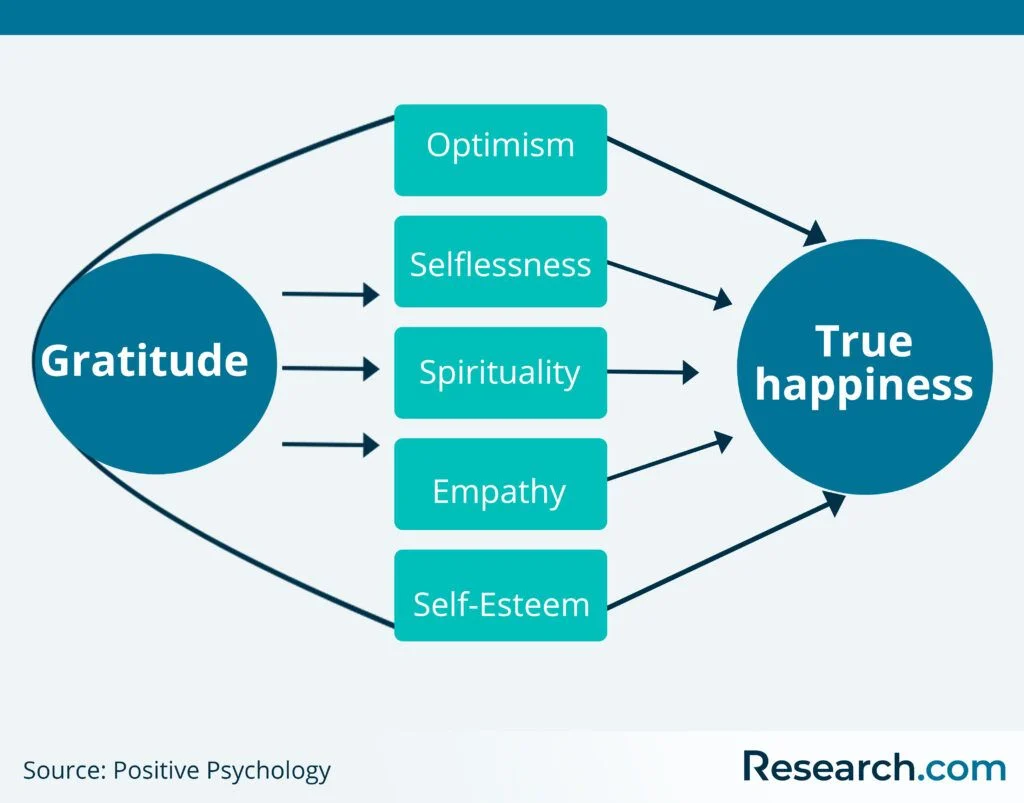
In the journey of education, students are often told to work harder, stay focused, and keep pushing forward. However, one important factor is frequently overlooked: gratitude. At first, gratitude may seem unrelated to academic success. After all, how can simply being thankful help someone study better or improve grades? But research and real-life experiences show that gratitude has a powerful effect on the mind, emotions, motivation, and overall learning ability.
Gratitude is more than just saying “thank you.” It is a mindset of recognizing and appreciating the positive aspects of life, no matter how small. When students learn to notice what is going well instead of focusing only on what is missing or stressful, their brain becomes more balanced, calm, and ready to learn.
In this article, we explore how gratitude helps students improve their academic performance and how to develop this habit in daily life.
1. Gratitude Reduces Stress and Anxiety
School life can be stressful. Exams, assignments, peer pressure, and expectations can create constant worry. When a student is stressed, the brain releases stress hormones that make it harder to concentrate, remember information, and solve problems.
Gratitude works like a natural stress reliever.
When students practice gratitude, their brains release dopamine and serotonin, the chemicals responsible for happiness and emotional stability. This helps to:
- Calm the mind
- Lower anxiety levels
- Improve emotional control
- Increase ability to think clearly
A calm mind learns better than a stressed one.
So, gratitude directly supports better learning.
2. Gratitude Increases Motivation and Willingness to Learn
Many students lose motivation because they focus only on what they have not achieved yet. They compare themselves to others and feel discouraged.
Gratitude shifts attention to progress rather than shortcomings.
When students acknowledge small achievements — finishing a chapter, improving handwriting, or understanding a difficult topic — they feel encouraged. This positive feeling motivates them to continue learning.
Gratitude helps students see effort as valuable, not just results.
As a result, they develop:
- Consistency in studying
- Confidence in their abilities
- A positive attitude toward challenges
Motivation becomes internal, not forced.
3. Gratitude Improves Focus and Attention
A distracted mind jumps from thought to thought, making study sessions ineffective. Gratitude helps to center the mind.
When students practice gratitude regularly, the brain becomes less focused on negative thoughts such as:
- “I might fail.”
- “This is too hard.”
- “I’m not good enough.”
Reducing negative thinking improves concentration. It becomes easier to stay present, listen in class, and understand concepts more clearly.
4. Gratitude Strengthens Relationships with Teachers and Peers
Academic success is not just about books — it is also about the environment in which students learn.
A grateful student:
- Shows respect to teachers
- Appreciates classmates
- Learns to listen and communicate kindly
- Creates a positive atmosphere around them
Teachers naturally respond better to students who show appreciation. Classmates become more helpful and supportive.
A supportive learning environment boosts academic growth.
5. Gratitude Develops Emotional Resilience
Every student faces difficulties — low grades, misunderstandings, mistakes, or failures. Gratitude helps students recover faster.
Instead of thinking, “I failed, so I’m not smart,” a grateful mindset says,
“I am thankful for what I learned from this experience. I will try again.”
This mindset reduces fear of failure and encourages continuous improvement.
Resilient students keep trying until they succeed.
6. Practical Ways to Practice Gratitude (Simple Daily Habits)
Gratitude grows stronger with practice. Here are small habits students can adopt:
a. Gratitude Journal
Write down 3 things you are grateful for every day.
They can be small, like:
- A helpful friend
- A good meal
- Understanding a topic in class
b. Say “Thank You” More Often
Expressing appreciation strengthens positive relationships.
c. Appreciate Your Own Effort
Instead of waiting for praise, acknowledge your progress.
Example:
“I studied today even though I was tired — that matters.”
d. Pause Before Sleeping
Think of at least one good thing that happened during the day.
These habits slowly rewire the brain to notice the positive more easily.
7. Real Classroom Example
Imagine two students preparing for an exam:
Student A:
- Focuses only on difficulty
- Feels stressed and overwhelmed
- Believes they are not prepared enough
Their mind becomes tense, making it harder to concentrate.
Student B:
- Practices gratitude
- Appreciates the opportunity to learn
- Recognizes past progress
- Believes challenges help them grow
This student studies with a calm mind and learns more effectively.
Same situation — different mindset — different results.
8. The Science Behind It
Psychological studies show that gratitude:
- Enhances memory function
- Activates the prefrontal cortex (responsible for planning and decision-making)
- Reduces cortisol (stress hormone)
This means gratitude is not just emotional — it is scientifically beneficial for learning.