Introduction
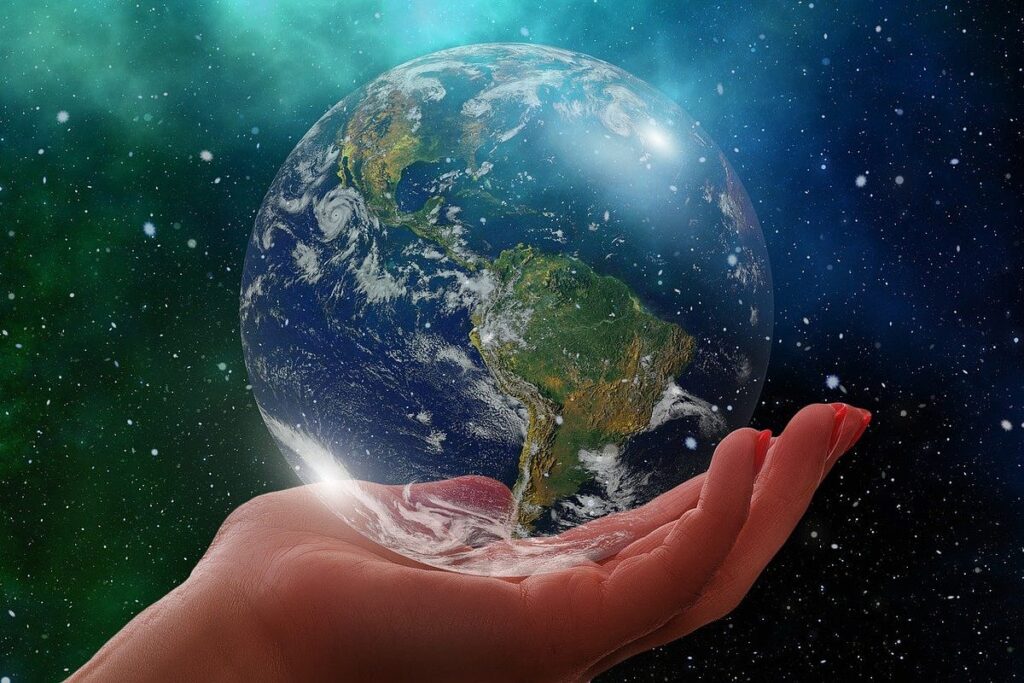
We live on a planet that gives us everything: air, water, trees, mountains, animals, the rich processes of nature. Yet, we often behave as though the Earth — our home — is endless, invincible. It is not. The protection of our Earth, and of the people who rely on it, depends on knowledge. Not just knowledge in the narrow sense (facts, numbers) but deeper knowledge: how things connect, how systems work, what our role is. This article explores that kind of knowledge — the kind that can really protect our Earth and its people.
Understanding the Earth as a System
First: we must understand that the Earth is not a collection of separate parts, but a web of interconnected systems. The atmosphere, the biosphere, the geosphere, the hydrosphere – they talk to each other.
Researchers argue that humans need “environmental insight” — the competence to see how Earth‐subsystems work together, and how we fit in. MDPI+1
For example: removing forest cover in one region doesn’t just affect trees; it affects rainfall patterns, soil stability, river flows, wildlife migration, carbon storage. And thereby, people’s lives.
If we ignore that web, we risk unintended consequences. One small change may ripple outward. Conversely, understanding the connections gives us power — the power to act in ways that preserve balance.
Knowledge of Human Impact & Ecosystems
Next: we need knowledge about what humans are doing. The good, the bad — but especially the bad, because many times the threats are subtle. Pollution, climate change, habitat destruction, invasive species.
From environmental education research: there are at least five types of knowledge that enable us to respond properly:
- Knowledge of physical and ecological systems. naaee.org+1
- Knowledge of social, cultural and political systems (how human society works). naaee.org
- Knowledge of environmental issues (what the threats are).
- Knowledge of multiple solutions (that there are choices).
- Knowledge of citizen participation and action strategies.
In plain terms: it’s not enough to know “the forest is being cut”. We must also know who is cutting it, why, what we can do about it, and how communities can engage.
Only then does knowledge become protective. Otherwise it remains a passive list of facts, which doesn’t serve the people or the planet effectively.
Indigenous and Traditional Knowledge – A Vital Piece
Beyond the formal scientific knowledge, traditional and indigenous knowledge offers rich protective value. The way Indigenous peoples have lived in harmony with their landscapes for generations carries lessons for us today.
For example, the concept of “traditional ecological knowledge (TEK)” is often referenced: it is place‐based, community rooted, and oriented toward living with nature rather than dominating it. Wikipedia
In many cases, TEK holds practical insights — local ecological patterns, seasonal cycles, species relationships — which either science is now just catching up with, or sometimes ignoring.
When we combine formal knowledge + traditional knowledge, we’re better equipped. Because one fills the gaps of the other.
Nature‐Based Solutions & Applying Knowledge
With understanding and awareness in place, the next step is application. Knowledge becomes protective only when it translates into action. One promising avenue: nature‐based solutions. These are solutions that use living systems (forests, wetlands, soils) to solve human concerns like climate change, water security, disaster risk. Wikipedia
Examples:
- Restoring wetlands so that they absorb floodwaters (instead of building only cement walls).
- Reforesting hillsides to reduce erosion and landslides.
- Designing cities with green spaces that cool urban heat islands and support biodiversity.
These actions show how knowledge of systems + urgency + creativity lead to protective measures for Earth and for people.
Education, Awareness & Behaviour Change
It’s all well to have scientific papers and policy frameworks — but if people don’t know, don’t feel, don’t participate — the knowledge stays inert. Research in “informal earth education” shows that when people are engaged in meaningful programs (beyond textbooks) their attitudes shift, which then helps knowledge stick. Frontiers
In short: protectively oriented knowledge needs to be spread, internalised, turned into lived behaviour. From household recycling, to community watershed management, to public policy engagement.
Take the scene in a small town: when residents learn “our river is fed by upstream forests, our water quality depends on that” — they may plant trees, monitor runoff, speak up for regulation. That’s knowledge protecting Earth & people.
Why It Matters – Risks & Stakes
Let’s lay out the stakes, because protective knowledge becomes urgent when the risks are high. Several recent studies show:
- The planet is exceeding many of its “safe operating spaces” (climate, freshwater, nutrients, biodiversity) – meaning our systems are under serious strain. AP News
- Large portions of global land are now beyond ecological limits – meaning the resilience is diminished. The Times of India
What this means: if we don’t act, we’re not just losing trees or species — we’re risking human well‐being. Clean water, clean air, stable food systems, safe living environments — all depend on stable Earth systems. Knowledge allows us to see these stakes, to anticipate the risks, to build protective strategies.
How to Cultivate Protective Knowledge (and Use It)
Here are several practical steps toward cultivating and using protective knowledge — imperfectly, and humanly.
- Learn the systems – Take time to learn about how Earth works: water cycles, carbon cycles, ecosystems, soil, climate. Even if superficially.
- Link to human systems – Understand how our economy, politics, culture, daily lives connect to those Earth systems.
- Listen to local knowledge – Communities, indigenous peoples, local stakeholders often have observations and insights that enrich science.
- Look for solutions – Don’t stop at “there’s a problem” — ask: what can we do in our region, community, home? Solutions might be small or large.
- Act – Knowledge without action is like a locked door. Join community efforts, advocate policy, change personal habits.
- Teach and share – If you know something, share it. Education isn’t only schools — families, conversations, neighbourhoods matter.
- Stay curious and humble – Systems evolve, new threats emerge. Be prepared to revise your understanding. Being protective means staying vigilant.
Challenges and Caveats
Of course — nothing is perfect. Some challenges in turning knowledge into protection:
- Complexity: Earth systems are complex; knowledge may be incomplete. We have to act under uncertainty.
- Behaviour gap: Knowing doesn’t always lead to doing. Many people know climate change is real, but behaviour lags.
- Equity & justice: Some communities bear the brunt of environmental damage without getting the protective capacity. Knowledge must be shared and accessible.
- Scale mismatch: The problems are global; actions are often local. Bridging that gap is hard.
- Political & economic inertia: Even when knowledge is clear, vested interests may resist change.
But these don’t mean we give up — they mean our protective knowledge has to be smart, inclusive, persistent.
A Vision for the Future
Imagine a future where knowledge is not a scarce commodity but shared widely. Where children grow up understanding that the rain in their town depends on a mountain forest, and the food on their plates depends on healthy soil. Where communities practise restoration, cities plan with nature in mind, nations coordinate across borders on protecting vital Earth systems.
In that future: Earth is healthier. People are healthier. The divide between “environment vs humans” dissolves because humans are part of the environment. The protective knowledge is embedded in culture, policy, education, economy.
And we live with not just courage or hope — but informed action.
Conclusion
So – we come back to the beginning: protecting our Earth and its people. It might sound grand, distant. But it starts with knowledge. Deep, connected, human knowledge. Knowledge of systems, knowledge of impact, knowledge of solutions, knowledge shared. If we commit to that – to learn, reflect, act, teach – then our Earth stands a chance, and we do too.
And yes — there will be mistakes, setbacks, resurgence of old habits. But because we have knowledge — protective knowledge — we can pivot, adapt, recover. That’s the power. That’s the hope.
Thanks for reading. If you like, I can also pull in specific case‐studies from around the world where this kind of knowledge made a real difference. Do you want that?