
Student mental health is in crisis. According to the American College Health Association’s 2022 survey, 44% of students reported depression symptoms and 37% experienced significant anxiety. With counseling centers overwhelmed and waitlists growing, students need accessible coping strategies they can use right now.
One surprisingly effective tool? Coloring.
It might sound too simple, but a growing body of research shows that structured coloring activities can significantly reduce anxiety, improve mood, and provide real stress relief. Let’s explore the science behind why coloring works—and how you can use it.
What the Research Says
Mandalas Outperform Free-Form Coloring
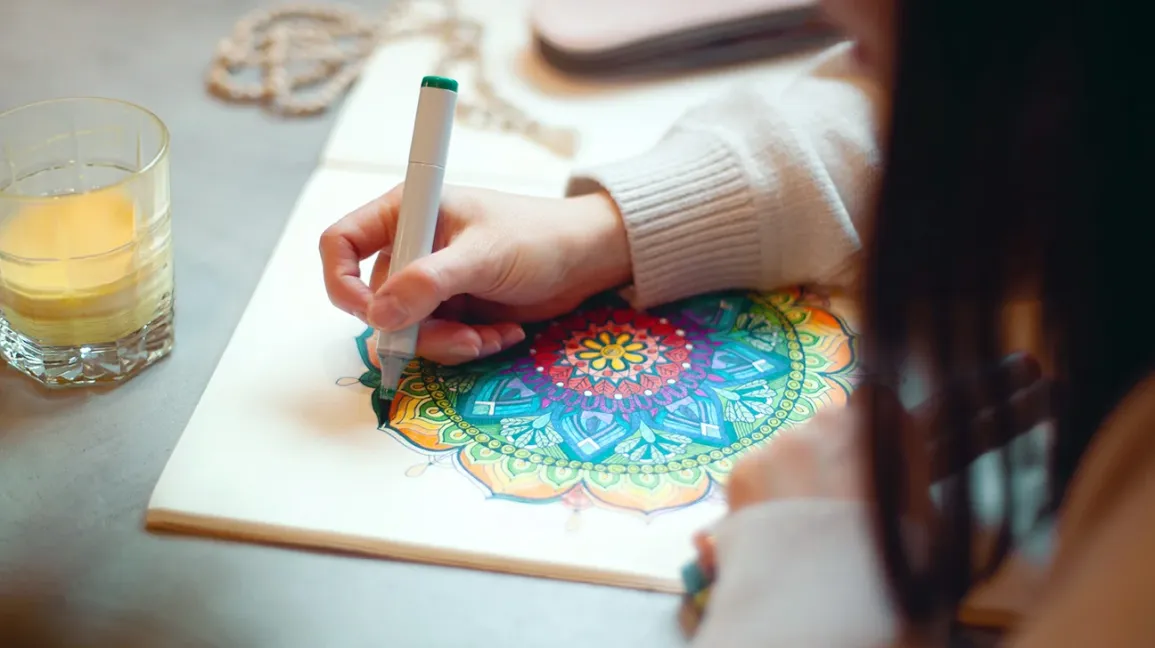
In a foundational 2005 study, Curry and Kasser had 84 students color either a mandala (a circular geometric design), a plaid pattern, or a blank sheet. The results were clear: mandala colorers experienced significantly greater anxiety reduction than the other groups.
Why? The researchers believe structured, repetitive patterns provide focus and predictability, engaging attention while quieting anxious thoughts.
Immediate Benefits After Just One Session
Eaton and Tieber (2017) found that college students showed significant mood improvements and reduced anxiety after just 20 minutes of coloring. You don’t need hours of practice—a single session during a study break can help.
Multiple Mental Health Benefits
Holt, Furbert, and Sweetingham (2019) discovered that coloring delivers a triple benefit for students:
- Decreased anxiety
- Improved focused attention
- Enhanced mindfulness
All three directly support both wellbeing and academic performance.
Long-Term Effects
Flett and colleagues (2017) found that daily coloring over one week led to significant reductions in both depression and anxiety scores. This suggests coloring isn’t just for acute stress—it can be part of ongoing mental health maintenance.
Why Coloring Works: The Brain Science
Understanding the neurology helps explain why something so simple is so effective.
It Activates Your Relaxation Response
Coloring triggers the body’s relaxation response—decreased heart rate, lower blood pressure, and reduced cortisol (your stress hormone). This directly counteracts the stress response that kicks in during exams, deadlines, and social pressure.
It Quiets Your Stress Center
Unlike complex academic tasks, coloring requires sustained but simple focus. This type of attention allows your prefrontal cortex to naturally quiet the amygdala—your brain’s fear and stress center.
Brain imaging studies show that creative activities like coloring decrease amygdala activity while increasing activity in regions associated with focus and sensory processing.
It Works Like Meditation (But Easier)
The repetitive hand movements in coloring activate similar neural pathways as meditation. Both involve structured, rhythmic actions that anchor you to the present moment.
The difference? Coloring doesn’t require the discipline or practice that formal meditation demands. It’s meditation for beginners.
It Restores a Sense of Control
When you color within defined boundaries and complete patterns, you experience accomplishment and control. This is especially valuable when academic demands feel overwhelming and beyond your influence.
Mindful Coloring: How to Maximize the Benefits
While any coloring helps, research by Mantzios and Giannou (2018) shows that mindfulness-enhanced coloring produces even greater anxiety reduction.
The approach is simple. While coloring:
- Notice the texture of the paper under your hand
- Observe how colors appear on the page
- Pay attention to your breathing
- When your mind wanders to worries, gently bring attention back to coloring
Try this simple reminder: “As you color, notice the sensation of the pencil in your hand. Observe the colors appearing on the page. When your mind wanders, gently return your attention to the act of coloring. There’s nowhere else you need to be right now.”
This transforms coloring from a passive activity into an active stress-management practice—and builds skills that transfer to other areas of life.
Practical Ways to Use Coloring for Stress Relief
During Study Breaks
Instead of scrolling your phone (which often increases stress), try a 10-15 minute coloring session. It resets your nervous system and restores focus for more effective studying. Browse coloring pages to find designs you can print and keep at your study spot.
Before Exams
A 20-minute coloring session before a test can reduce anxiety to manageable levels. Some universities now offer coloring materials in testing center waiting areas. Consider keeping a small coloring kit in your bag during exam season.
Before Bed
Struggling with sleep during stressful periods? Coloring for 30 minutes before bed helps transition from the day’s stress to a calmer state. Unlike phones and screens that emit sleep-disrupting blue light, coloring supports your natural sleep rhythms.
During Finals Week
Many university libraries now host “coloring nights” or “de-stress zones” during finals. If yours doesn’t, create your own—grab free printable pages and set up in a quiet corner.
As Part of Your Wellness Routine
Therapists increasingly recommend coloring as part of treatment plans or as self-help for students on counseling waitlists. Track your mood before and after coloring sessions to discover what works best for you.
Which Coloring Designs Work Best?
Not all coloring produces equal stress relief. Here’s what research and practice suggest:
Mandalas
Circular geometric designs are particularly effective for anxiety reduction. Their repetitive, structured nature provides predictability while engaging focus. The circular format may also have psychological significance, representing wholeness and containment.
Nature Scenes
Coloring forests, oceans, gardens, and wildlife leverages the calming effects of nature exposure. While not the same as being outdoors, nature imagery activates similar relaxation responses. Explore nature-themed coloring pages for peaceful imagery.
Geometric Patterns
Regular geometric designs offer similar benefits to mandalas—structure, repetition, and predictability. The mathematical precision may be less likely to trigger perfectionist anxiety than free-form creativity.
Match Complexity to Your Stress Level
- High stress? Start with simpler designs
- Moderate stress? Try medium-complexity patterns
- Looking for engagement? Gradually increase detail
Avoid designs that are so intricate they feel impossible to complete—frustration defeats the purpose. Also avoid imagery that might trigger anxiety, and don’t worry about artistic “skill.” Abstract patterns generally work better than realistic scenes that demand color coordination.
The best design is the one that feels right to you. Explore different options to find your preference.
The Bottom Line
Coloring is a scientifically validated, accessible, and nearly free intervention for managing stress and anxiety. Multiple controlled studies confirm it reduces anxiety, improves mood, and enhances focus—benefits that support both mental health and academic success.
From a brain science perspective, coloring activates relaxation responses, quiets your stress center, and engages attention like meditation does. When combined with mindfulness, these benefits intensify.
Your action steps:
- Keep coloring materials accessible during study sessions
- Use 10-15 minute coloring breaks to manage stress
- Try coloring before bed to improve sleep
- Approach it mindfully—focus on the present-moment experience
- Find designs that work for you at CuteColorings.com
Student mental health challenges are complex, and coloring isn’t a cure-all. But within a larger framework of self-care, simple evidence-based tools like this deserve recognition. When you feel overwhelmed, anxious, or stressed, you need practical strategies you can use immediately.
Coloring offers exactly that—a portable, affordable, scientifically supported way to find calm amid academic storms.
References
American College Health Association. (2022). ACHA-NCHA III: Reference Group Executive Summary Fall 2022.
Curry, N. A., & Kasser, T. (2005). Can coloring mandalas reduce anxiety? Art Therapy, 22(2), 81-85.
Eaton, J., & Tieber, C. (2017). The effects of coloring on anxiety, mood, and perseverance. Art Therapy, 34(1), 42-46.
Flett, J. A. M., et al. (2017). Sharpen your pencils: Preliminary evidence that adult coloring reduces depressive symptoms and anxiety. Creativity Research Journal, 29(4), 409-416.
Holt, N. R., Furbert, L., & Sweetingham, E. (2019). Cognitive and affective benefits of coloring. Art Therapy, 36(4), 200-208.
Mantzios, M., & Giannou, K. (2018). When did coloring books become mindful? Frontiers in Psychology, 9, 56.
van der Vennet, R., & Serice, S. (2012). Can coloring mandalas reduce anxiety? A replication study. Art Therapy, 29(2), 87-92.










Leave a Reply