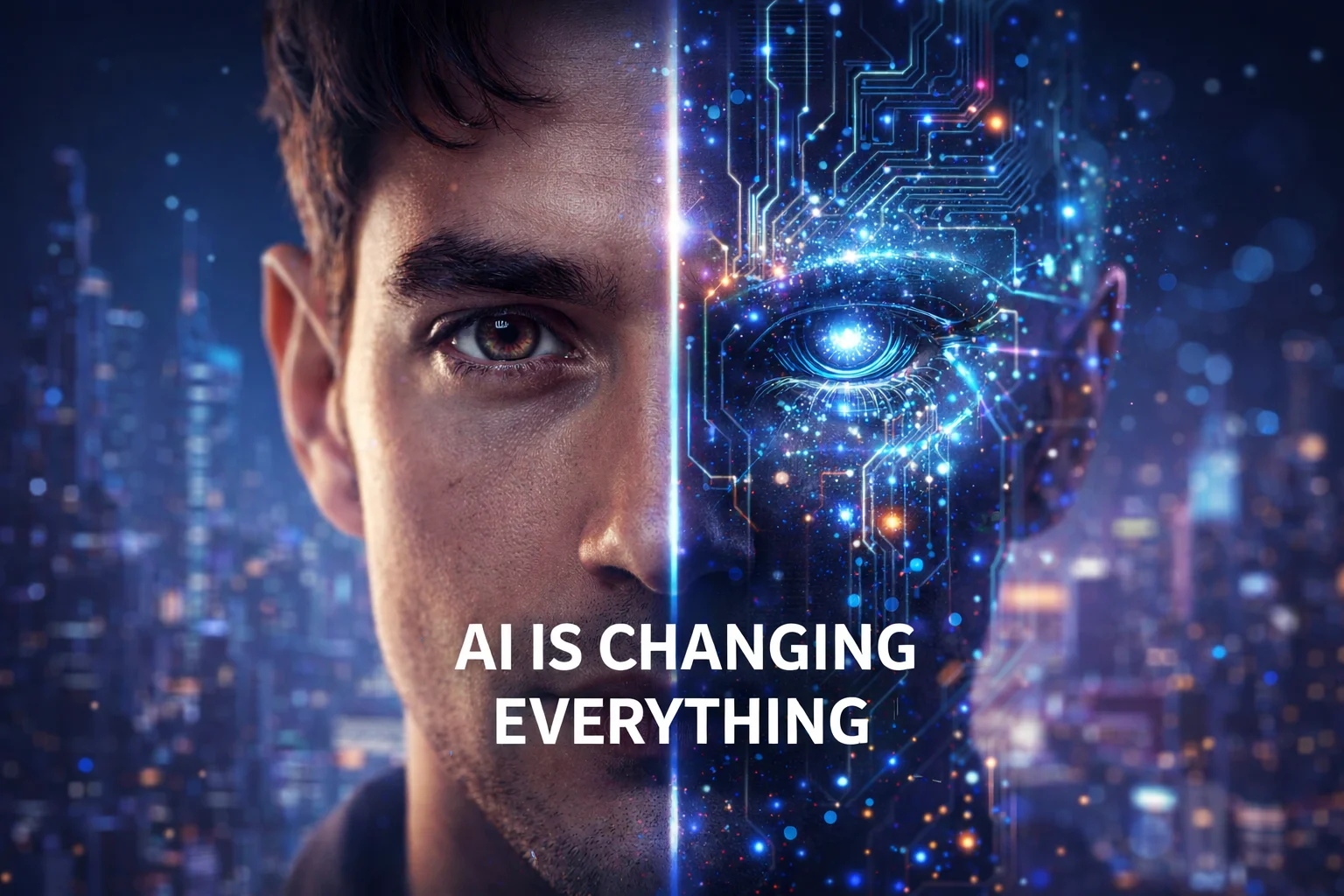
Artificial Intelligence (AI) is no longer just a future idea—it is now a real and powerful part of daily life in 2026. From the way people search on the internet to how businesses operate, AI has quietly become the engine behind modern technology. Whether someone is using a smartphone, running an online business, or scrolling social media, AI is involved in almost everything.
What is Artificial Intelligence?
Artificial Intelligence refers to computer systems that can perform tasks that normally require human intelligence. These tasks include understanding language, recognizing images, making decisions, and even creating content. Over the past few years, AI has improved so much that it can now write articles, generate images, analyze data, and interact with users in a natural way.
The most common example of AI today is chatbots and virtual assistants. These systems can answer questions, help users solve problems, and provide customer support without human involvement. This makes services faster and more efficient.
AI in Everyday Life
AI is deeply integrated into everyday tools and platforms. When you use social media, AI decides what content you see. When you search on Google or watch videos on YouTube, AI recommends results based on your interests. Even mobile apps like navigation, online shopping, and banking use AI to improve accuracy and user experience.
One of the biggest changes AI has brought is personalization. Everything online is now tailored to the user. Instead of showing the same content to everyone, platforms analyze behavior and show content that matches individual preferences.
AI and Business Transformation
Businesses around the world, especially in countries like the USA, UK, and Canada, are using AI to improve efficiency and reduce costs. Companies are automating tasks such as customer support, marketing, data entry, and even decision-making processes.
For example, AI tools can analyze thousands of customer reviews and instantly identify what people like or dislike about a product. This helps companies improve their services quickly. AI is also widely used in digital marketing to target the right audience and increase sales.
Small businesses and freelancers are also benefiting from AI. People are now using AI tools to create websites, design logos, write content, and manage social media accounts. This has lowered the barrier to entry for starting online work.
AI and Online Earning Opportunities
One of the biggest impacts of AI is in the field of online earning. Freelancers can now offer AI-related services such as content generation, SEO optimization, video editing, and automation setup. Platforms like Fiverr and Upwork have seen a huge rise in AI-based services.
Many individuals are building side incomes by using AI tools to work faster and smarter. For example, a freelancer can now write blog posts in minutes, create marketing strategies quickly, and manage multiple clients at the same time.
However, success in this field does not come from AI alone. People who combine AI tools with creativity, strategy, and human understanding are the ones who stand out and earn more.
Challenges of Artificial Intelligence
Even though AI brings many benefits, it also creates challenges. One major concern is job displacement. As AI becomes more advanced, some traditional jobs are being replaced by automation. Roles that involve repetitive tasks are especially at risk.
Another challenge is misinformation. AI can generate content very quickly, but not all of it is accurate. This means users must be careful and verify information before trusting it.
Privacy is also a major issue. AI systems collect and analyze large amounts of data, raising concerns about how this data is used and protected. Governments and organizations are working to create rules to ensure safe and responsible use of AI.
The Future of AI
The future of AI looks extremely advanced. Experts believe that AI will become even more intelligent and integrated into every industry. In healthcare, AI may help doctors detect diseases earlier. In education, students may receive fully personalized learning experiences. In transportation, self-driving systems may become more common.
AI is also expected to create entirely new industries and job roles that do not exist today. Instead of replacing humans completely, AI will likely work alongside humans, enhancing productivity and creativity.
Conclusion
Artificial Intelligence is one of the most powerful technological shifts of our time. It is changing how people live, work, and communicate. While it brings challenges like job changes and privacy concerns, it also opens huge opportunities for innovation and income generation.
The key to success in the AI era is adaptation. People who learn how to use AI effectively will have a strong advantage in the future. Instead of fearing AI, the world is gradually learning to work with it—and those who adapt early will benefit the most.
Leave a Reply