
Category: Digital Marketing

  • The Power of Video Marketing and Interactive Content in 2026

    The Power of Video Marketing and Interactive Content in 2026

    As we approach 2026, digital marketing continues to evolve, with two key trends rising to the forefront: video marketing and interactive content. Both of these trends are transforming the way brands engage with their audience, providing more immersive and personalized experiences. In this article, we will dive into how video marketing and interactive content are expected to shape the digital landscape in 2026, and how marketers can use these tools to stay ahead of the competition.

    Video Marketing: A Dominant Force in 2026

    Video marketing is not a new concept, but its dominance in digital marketing strategies will only grow in the coming years. By 2026, video will be a key tool for brands to connect with consumers, increase brand visibility, and drive conversions. The rise of short-form video platforms like TikTok, Instagram Reels, and YouTube Shorts has already shown that consumers prefer quick, engaging, and visually appealing content.

    As a result, brands are shifting their focus to create more dynamic and engaging video content that caters to these preferences. In 2026, video marketing will go beyond simple promotional ads to include storytelling, behind-the-scenes content, and authentic brand experiences. For instance, live-streaming will continue to thrive as a method for brands to engage in real-time interactions with their audience. Live product demonstrations, Q&A sessions, and virtual events will be used to bring authenticity and spontaneity to brand messaging.

    Moreover, interactive video will play a central role in the future of video marketing. Interactive videos allow viewers to engage with content by clicking on elements within the video, such as product links, call-to-action buttons, or even making purchasing decisions. This creates a more immersive experience, encouraging consumers to interact with the video, rather than simply watching passively. As technology evolves, we can expect brands to utilize this form of video content in more creative ways, pushing the boundaries of consumer engagement.

    The Shift Toward Interactive Content

    While video marketing will be critical in 2026, interactive content is a broader trend that will continue to shape digital marketing strategies. Interactive content refers to any type of content that requires the user to actively engage, rather than just passively consuming information. This includes formats like polls, quizzes, calculators, interactive infographics, and games.

    Consumers are becoming more active in how they engage with brands. With the sheer volume of content online, passive consumption is no longer enough to capture the attention of potential customers. Interactive content offers a way to break through the noise by encouraging participation and enhancing engagement. Instead of reading an article or watching a video, users are asked to make choices, answer questions, or customize their experience in some way. This type of content is highly engaging, providing an opportunity for deeper interaction between the brand and the consumer.

    In 2026, we’ll see more brands leveraging interactive quizzes that suggest personalized products or services based on the user’s answers. For example, beauty brands might offer quizzes that recommend skincare products tailored to individual needs, or fashion brands might create quizzes that help customers discover their personal style. By offering an interactive element, brands are able to provide more personalized and engaging experiences, which ultimately enhances customer loyalty and trust.

    One of the biggest benefits of interactive content is its ability to drive lead generation. By asking users to interact with the content, brands can collect valuable insights into customer preferences, which can be used for future targeting and content creation. Additionally, interactive content can be a great tool for gathering customer feedback, providing brands with real-time data on how their audience is responding to different products or services.

    Combining Video Marketing and Interactive Content for Maximum Impact

    While both video marketing and interactive content are powerful on their own, when combined, they create an even more impactful experience for consumers. Interactive video is a perfect example of how these two trends intersect. Imagine a product video where users can click on a product they like, add it to their shopping cart, or even watch additional videos related to the product—all within the same experience.

    This blend of video and interactivity allows brands to create highly engaging, multidimensional experiences that are both informative and entertaining. As we move into 2026, shoppable videos will become increasingly popular. Brands will be able to create videos with embedded purchase links, allowing consumers to purchase products without ever leaving the video. This seamless shopping experience will blur the line between content and e-commerce, making it easier for consumers to make purchases in real-time.

    Furthermore, brands can use interactive elements to personalize video content. For instance, a brand could offer a series of videos where the viewer chooses what happens next in the story, similar to the concept of “choose your own adventure” books. This personalized approach will keep the viewer engaged for longer periods, increasing brand recall and customer satisfaction.

    The Future of Video Marketing and Interactive Content

    The future of digital marketing will be shaped by these two key trends: video marketing and interactive content. In 2026, consumers will expect more dynamic and engaging experiences from the brands they interact with. Interactive videos, shoppable content, and real-time engagement will be the standard, and marketers who can effectively integrate these tools into their strategies will be able to stand out in a crowded digital landscape.

    To stay ahead, marketers will need to adopt new technologies, such as augmented reality (AR) and virtual reality (VR), that make video and interactive content even more immersive. By combining creativity, data, and technology, brands can deliver experiences that resonate with their audience, ultimately driving higher engagement, conversions, and customer loyalty.
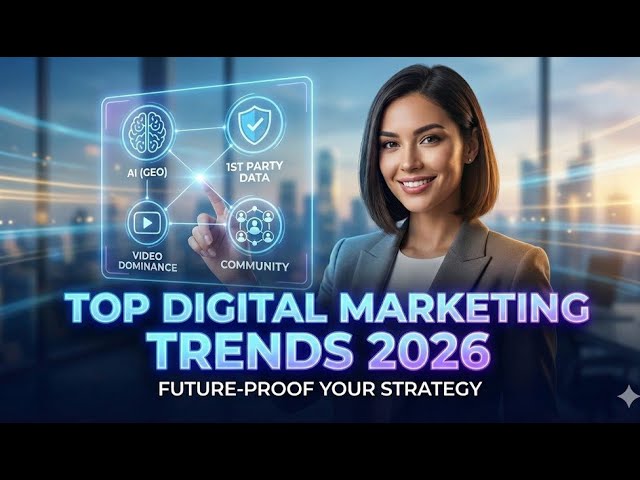
  • Digital Marketing Trends in 2026: What’s Next for Marketers?

    Digital Marketing Trends in 2026: What’s Next for Marketers?

    The digital marketing landscape is constantly evolving, and as we approach 2026, marketers need to stay ahead of the curve. New technologies, changing consumer behaviors, and the increasing importance of personalization are reshaping how brands approach marketing. In this article, we explore the digital marketing trends in 2026, highlighting the key strategies and technologies that will dominate the industry.

    1. Artificial Intelligence and Automation in Digital Marketing

    By 2026, Artificial Intelligence (AI) will be at the heart of digital marketing strategies. AI-driven tools will become more sophisticated, allowing businesses to automate marketing processes and create more personalized experiences for their customers.

    AI will be used to enhance customer segmentation, improve ad targeting, and even automate content creation. For instance, AI tools can analyze vast amounts of data to predict customer behavior, enabling marketers to tailor their campaigns to specific segments with high precision. Chatbots powered by AI will continue to provide real-time customer support, ensuring that businesses can engage with consumers 24/7.

    Furthermore, marketing automation platforms will be more refined, streamlining tasks like email marketing, social media scheduling, and lead nurturing. Automation will allow marketers to focus more on strategy while AI handles repetitive tasks.

    2. The Rise of Voice Search and Conversational Marketing

    As voice-activated devices become more integrated into daily life, voice search will become a significant aspect of SEO strategies in 2026. With virtual assistants like Siri, Alexa, and Google Assistant gaining more market share, optimizing for voice search will be critical for businesses that want to remain visible to their target audience.

    Voice search queries tend to be longer and more conversational than traditional text searches, meaning businesses will need to adapt their content to focus on natural language and question-based keywords. SEO strategies in 2026 will heavily focus on long-tail keywords and featured snippets that answer specific questions.

    Alongside voice search, conversational marketing will gain traction. Brands will continue to use messaging apps, chatbots, and live chat features to engage with customers in real-time, creating more personalized and immediate interactions. This type of marketing will help businesses build stronger relationships with their audience, ultimately improving conversion rates.

    3. Hyper-Personalization and Customer-Centric Marketing

    In 2026, hyper-personalization will be a top priority for digital marketers. With the vast amount of data available, brands will be able to create highly tailored experiences for their customers. Hyper-personalization goes beyond simply addressing a customer by name—it involves delivering relevant content, product recommendations, and ads based on a customer’s specific behaviors, preferences, and even past interactions.

    For example, brands may use AI to dynamically alter website content in real-time based on visitor behavior, offering personalized discounts, content, or products based on previous visits or purchase history. Customer-centric marketing will become the norm, with brands building campaigns around the needs and preferences of individual consumers rather than targeting broad demographics.

    In 2026, customers will expect a seamless, customized experience across all touchpoints, whether it’s on social media, email, or through a mobile app. Marketers who fail to deliver will risk losing customer loyalty to competitors who provide more relevant and engaging experiences.

    4. Video Marketing and Interactive Content

    Video marketing has already seen exponential growth, and by 2026, it will dominate digital marketing strategies. From short-form videos on platforms like TikTok and Instagram Reels to live-streaming events and product demos, video will continue to be the go-to medium for engaging with consumers.

    Interactive video content will also become more popular, allowing users to engage directly with videos. Whether it’s clicking on a product within a video or answering polls and quizzes, interactive content boosts user engagement and can improve conversion rates.

    Beyond traditional videos, augmented reality (AR) and virtual reality (VR) technologies will revolutionize how brands interact with consumers. Virtual try-ons, interactive 360-degree videos, and immersive shopping experiences will become more mainstream, providing customers with more engaging and memorable experiences.

    5. Social Media Marketing Evolution

    Social media will continue to evolve, and by 2026, social media marketing will be about more than just posting content—it will be about building community and engaging in two-way conversations. As platforms like Instagram, Facebook, and TikTok continue to grow, marketers will increasingly focus on creating authentic, community-driven content rather than simply pushing ads.

    One of the biggest shifts will be the rise of social commerce. Platforms like Instagram and TikTok are already integrating e-commerce features that allow users to shop directly from posts and videos. By 2026, this trend will expand, with more brands leveraging social platforms to sell directly to consumers. Influencer marketing will also continue to play a huge role in driving sales and engagement, with brands collaborating with micro-influencers and niche creators to tap into smaller, highly engaged communities.

    6. Data Privacy and Ethical Marketing

    With growing concerns over data privacy and consumer trust, marketers in 2026 will need to prioritize ethical marketing practices. Stricter data privacy laws, such as GDPR and CCPA, will force businesses to be more transparent about how they collect and use customer data.

    Ethical marketing will also involve being more mindful of the content brands produce and the values they support. In 2026, consumers will expect brands to align with their values, whether that’s sustainability, social justice, or inclusivity. Marketers will need to focus on building trust with their audience through honesty, transparency, and social responsibility.

    Conclusion: The Future of Digital Marketing in 2026

    The future of digital marketing in 2026 will be defined by technological advancements, more personalized experiences, and a shift toward ethical marketing practices. Marketers will need to embrace AI, voice search, hyper-personalization, and interactive content to stay competitive in a rapidly changing landscape. As consumers become more discerning, businesses will need to focus on building trust, offering value, and engaging in meaningful interactions.

    By staying ahead of these trends, businesses can not only drive traffic and improve conversions but also build lasting relationships with their audience. The future of SEO strategies, content marketing, and social media marketing lies in innovation, adaptability, and a customer-first approach.