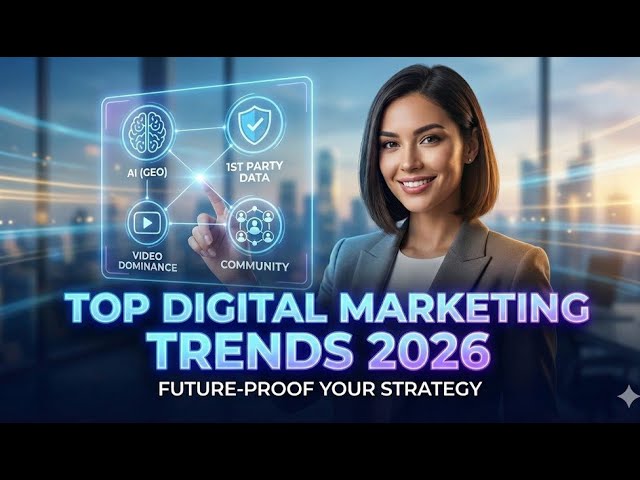
The digital marketing landscape is constantly evolving, and as we approach 2026, marketers need to stay ahead of the curve. New technologies, changing consumer behaviors, and the increasing importance of personalization are reshaping how brands approach marketing. In this article, we explore the digital marketing trends in 2026, highlighting the key strategies and technologies that will dominate the industry.
1. Artificial Intelligence and Automation in Digital Marketing
By 2026, Artificial Intelligence (AI) will be at the heart of digital marketing strategies. AI-driven tools will become more sophisticated, allowing businesses to automate marketing processes and create more personalized experiences for their customers.
AI will be used to enhance customer segmentation, improve ad targeting, and even automate content creation. For instance, AI tools can analyze vast amounts of data to predict customer behavior, enabling marketers to tailor their campaigns to specific segments with high precision. Chatbots powered by AI will continue to provide real-time customer support, ensuring that businesses can engage with consumers 24/7.
Furthermore, marketing automation platforms will be more refined, streamlining tasks like email marketing, social media scheduling, and lead nurturing. Automation will allow marketers to focus more on strategy while AI handles repetitive tasks.
2. The Rise of Voice Search and Conversational Marketing
As voice-activated devices become more integrated into daily life, voice search will become a significant aspect of SEO strategies in 2026. With virtual assistants like Siri, Alexa, and Google Assistant gaining more market share, optimizing for voice search will be critical for businesses that want to remain visible to their target audience.
Voice search queries tend to be longer and more conversational than traditional text searches, meaning businesses will need to adapt their content to focus on natural language and question-based keywords. SEO strategies in 2026 will heavily focus on long-tail keywords and featured snippets that answer specific questions.
Alongside voice search, conversational marketing will gain traction. Brands will continue to use messaging apps, chatbots, and live chat features to engage with customers in real-time, creating more personalized and immediate interactions. This type of marketing will help businesses build stronger relationships with their audience, ultimately improving conversion rates.
3. Hyper-Personalization and Customer-Centric Marketing
In 2026, hyper-personalization will be a top priority for digital marketers. With the vast amount of data available, brands will be able to create highly tailored experiences for their customers. Hyper-personalization goes beyond simply addressing a customer by name—it involves delivering relevant content, product recommendations, and ads based on a customer’s specific behaviors, preferences, and even past interactions.
For example, brands may use AI to dynamically alter website content in real-time based on visitor behavior, offering personalized discounts, content, or products based on previous visits or purchase history. Customer-centric marketing will become the norm, with brands building campaigns around the needs and preferences of individual consumers rather than targeting broad demographics.
In 2026, customers will expect a seamless, customized experience across all touchpoints, whether it’s on social media, email, or through a mobile app. Marketers who fail to deliver will risk losing customer loyalty to competitors who provide more relevant and engaging experiences.
4. Video Marketing and Interactive Content
Video marketing has already seen exponential growth, and by 2026, it will dominate digital marketing strategies. From short-form videos on platforms like TikTok and Instagram Reels to live-streaming events and product demos, video will continue to be the go-to medium for engaging with consumers.
Interactive video content will also become more popular, allowing users to engage directly with videos. Whether it’s clicking on a product within a video or answering polls and quizzes, interactive content boosts user engagement and can improve conversion rates.
Beyond traditional videos, augmented reality (AR) and virtual reality (VR) technologies will revolutionize how brands interact with consumers. Virtual try-ons, interactive 360-degree videos, and immersive shopping experiences will become more mainstream, providing customers with more engaging and memorable experiences.
5. Social Media Marketing Evolution
Social media will continue to evolve, and by 2026, social media marketing will be about more than just posting content—it will be about building community and engaging in two-way conversations. As platforms like Instagram, Facebook, and TikTok continue to grow, marketers will increasingly focus on creating authentic, community-driven content rather than simply pushing ads.
One of the biggest shifts will be the rise of social commerce. Platforms like Instagram and TikTok are already integrating e-commerce features that allow users to shop directly from posts and videos. By 2026, this trend will expand, with more brands leveraging social platforms to sell directly to consumers. Influencer marketing will also continue to play a huge role in driving sales and engagement, with brands collaborating with micro-influencers and niche creators to tap into smaller, highly engaged communities.
6. Data Privacy and Ethical Marketing
With growing concerns over data privacy and consumer trust, marketers in 2026 will need to prioritize ethical marketing practices. Stricter data privacy laws, such as GDPR and CCPA, will force businesses to be more transparent about how they collect and use customer data.
Ethical marketing will also involve being more mindful of the content brands produce and the values they support. In 2026, consumers will expect brands to align with their values, whether that’s sustainability, social justice, or inclusivity. Marketers will need to focus on building trust with their audience through honesty, transparency, and social responsibility.
Conclusion: The Future of Digital Marketing in 2026
The future of digital marketing in 2026 will be defined by technological advancements, more personalized experiences, and a shift toward ethical marketing practices. Marketers will need to embrace AI, voice search, hyper-personalization, and interactive content to stay competitive in a rapidly changing landscape. As consumers become more discerning, businesses will need to focus on building trust, offering value, and engaging in meaningful interactions.
By staying ahead of these trends, businesses can not only drive traffic and improve conversions but also build lasting relationships with their audience. The future of SEO strategies, content marketing, and social media marketing lies in innovation, adaptability, and a customer-first approach.
Leave a Reply