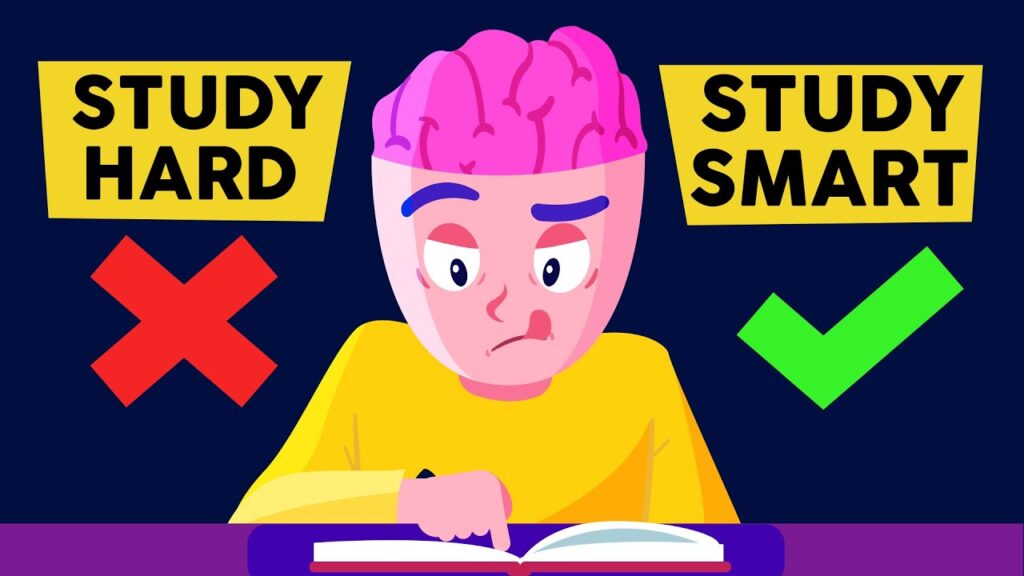
Studying. Most students think it’s all about the hours you put in. Stay up late, memorize everything, panic before exams. But here’s the truth: it’s not about studying harder, it’s about studying smarter. Working endlessly without strategy usually leads to burnout, forgetfulness, and stress. Smarter studying focuses on efficiency, understanding, and retention.
Understand, Don’t Memorize
First thing—stop trying to memorize everything. Rote memorization might help you remember facts for a few hours, but it doesn’t stick long-term. Instead, aim to understand the concepts. Ask yourself: why does this matter? How does it connect to other topics?
When you understand material, you can recall it easily, explain it in your own words, and apply it to new problems. That’s what top students do—they don’t just know; they understand.
Active Learning Over Passive Reading
Reading textbooks or notes passively feels productive, but it isn’t. Active learning is where the magic happens. Summarize information in your own words, ask questions, create flashcards, make diagrams. Teach the topic to an imaginary friend or even a pet. If you can explain it simply, you know it well.
Active learning also reveals gaps in your knowledge. Passive reading might make you think you know something, but during exams, those gaps show up.
Use the Pomodoro Technique
Long study sessions without breaks are brutal. Your brain gets tired, focus drops, and productivity plummets. The Pomodoro technique helps. Study for 25–50 minutes, then take a 5–10 minute break. After 3–4 cycles, take a longer break.
Short breaks prevent burnout and keep your mind sharp. It also creates a sense of urgency, making your study time more effective. Studying smarter isn’t about sitting longer; it’s about making each minute count.
Prioritize Tasks
Not all tasks are equal. Some chapters, topics, or assignments carry more weight. Focus on what’s important first. Use a priority list or schedule to tackle high-value tasks before low-value ones.
Also, chunk your study sessions. Instead of cramming 10 chapters at once, break them into smaller, manageable portions. It’s less overwhelming, and your brain retains information better when spaced out.
Practice Retrieval
Tests aren’t about seeing if you can read fast—they test recall. Practice retrieval by testing yourself regularly. Close your notes and write down what you remember. Use flashcards or answer past papers.
Retrieval strengthens memory and builds confidence. The more you recall, the easier it is to remember later. Studying smarter is less about reviewing endlessly and more about actively recalling what you’ve learned.
Make Connections
Brains love connections. Don’t study topics in isolation. Relate new information to things you already know. Draw diagrams linking concepts, make mind maps, or create analogies.
Connecting ideas helps you understand patterns, not just facts. It also makes retrieval easier during exams. You’re not just memorizing; you’re creating a network of knowledge your brain can navigate effortlessly.
Take Care of Yourself
Studying smarter includes taking care of your body and mind. Sleep is non-negotiable. A tired brain cannot focus or retain information. Nutrition matters too—skip the junk and drink water. Exercise, even short walks, boosts energy and clears your mind.
Stress management is part of smart studying. Techniques like deep breathing, mindfulness, or even quick stretches during study breaks keep anxiety in check. A calm mind learns faster.
Review and Reflect
Top students don’t just finish material and move on. They review and reflect. Revisit notes regularly, test yourself, and revise weak areas. Reflection helps you identify what works, what doesn’t, and how to adjust your strategy.
Studying smarter is iterative. You don’t need to grind endlessly; you need to tweak methods, focus on weak spots, and continuously improve.
Final Thought
Studying smarter, not harder, is about efficiency, understanding, and strategy. Focus on understanding, use active learning, prioritize tasks, take breaks, practice retrieval, make connections, and take care of your mind and body.
Hard work alone won’t get the best results. Smart work, consistent effort, and self-awareness will. You’ll not only retain more information but also reduce stress and make study time more productive. Learning doesn’t have to be a battle—it can be smart, focused, and even a little enjoyable. Step back, plan well, and study with intention. The results will speak for themselves.