Category: Education

  • Cyber Security Training in Pune: Your Pathway to High-Demand Jobs

    Cyber Security Training in Pune: Your Pathway to High-Demand Jobs

    How Can You Break Into Cyber Security Today?

    Getting into cyber security is less about collecting a pile of course certificates and more about getting comfortable with the tools and situations security teams deal with every day. A good hands-on program gives you the basics first and then puts you in front of realistic security problems. Pune has become a major IT centre with plenty of openings, but the training environment matters when you are choosing where to learn. Companies across Pune deal with everything from ransomware hitting manufacturing units in Pimpri to data breaches affecting tech offices in Hinjewadi. The demand for skilled cyber security professionals keeps growing. According to current industry estimates,d India will need over 1 million cyber security experts by 2025, and Pune sits firmly at the forefront of this hiring surge.

    SevenMentor Institute, operating in a deep, long-standing collaboration with IT Education Centre—Pune’s premier tech training institute known for max 20 students per batch, dual certification, and 100% placement support—delivers a comprehensive Cyber Security Course in Pune designed to transform complete beginners into confident, job-ready professionals. With 15+ years under their belt, 60,000+ grads, 500+ hiring partners, and a stellar 4.9 Google rating—SevenMentor has earned its spot as a trusted name in tech education. Their trainers are not theoretical lecturers; they are working industry professionals bringing 8+ years of real-time corporate experience straight to the floor.

    The practical lab setup is a big part of what makes this Cyber Security Training in Pune different. Students train inside state-of-the-art AC classrooms and dedicated labs located across Pune branches, including Shivaji Nagar (head office), Deccan, along with Pimpri and Hinjewadi. The curriculum covers everything from network security and ethical hacking to cloud security and incident response. Plus, the backing of IT Education Centre means you secure dual certification alongside 100% placement support, ensuring you enter the workforce fully prepared.

    Whether you are a fresh college graduate, an IT professional looking to upskill, or someone attempting a complete career transition from a non-tech background, these Cyber Security Classes in Pune meet you exactly where you are. Flexible batches, online or offline learning options, plus lifetime access to course materials make starting easier than ever. The following sections explore why SevenMentor’s practical approach works so well, what tools you will master, as well as salary expectations, and even even how to successfully transition into this critical tech role.

    Why Choose SevenMentor’s Practical Training Approach?

    SevenMentor builds its practical training methodology on a simple core principle: cyber security is mastered by doing, not merely reading. Traditional classrooms can spend a lot of time on theory, while SevenMentor puts learners into live projects along with simulated attacks and real-world defense scenarios from day one. This hands-on model explains why their Cyber Security Training in Pune consistently produces job-ready graduates capable of hitting the ground running from their very first day on the job.

    The practical labs use current hardware and software so students can work through network configurations along with firewalls and intrusion detection systems rather than just watching demonstrations. You also work through incident-based exercises such as a phishing attack against a Pune financial firm or a ransomware situation inside a manufacturing plant in Chakan. The point is not simply learning where a tool’s buttons are. You have to make decisions like someone defending a system while also thinking about how an attacker would approach it.

    IT Education Centre keeps the batches small with a maximum of 20 students so instructors can actually spend time on individual setups. Students receive dual certification that strengthens their resume, while 100%placement support handles resume building and mock interviews, as well as direct job referrals. Furthermore, SevenMentor’s active corporate training programs for major MNCs ensure the syllabus stays constantly updated against real market needs.

    Key features defining this practical approach:

    • Live project-based learning: Execute real security audits along with vulnerability assessments and incident response plans.
    • Expert trainers: Learn directly from instructors with 8+years of corporate experience who have worked at firms like IBM, Wipro, and TCS.
    • State-of-the-art infrastructure: Work inside AC classrooms and dedicated labs with 1:1 mentor guidance when you get stuck.
    • Flexible learning modes: Choose weekday batches or online batches, and keep lifetime access to the recordings.
    • Placement assistance: Work with a dedicated placement cell that connects with 500+ hiring partners.

    With SevenMentor, you are joining a larger network rather than simply finishing another course. That includes access to 60,000+ alumni along with 500+ hiring partners and the support around the training itself. The impressive 4.9 Google rating visible in official student reviews reflects this consistent commitment to quality training and support. For someone trying to build a career in technology security,y the useful part is the combination of practical labs and industry-aligned training rather than the certificate on its own.

    How Does IT Education Centre Ensure 100% Placements?

    Right from registration, IT Education Centre and SevenMentor throw you into a structured, multi-phase placement process designed to get you hired. The idea is to prepare you for the interview itself rather than treating placement as something that starts after the course ends.

    1. Skill Assessment & Gap Analysis

    You begin with a basic skill assessment when you join our classes so that our trainers can see what you already know and where the gaps in your understanding are. Trainers will then pinpoint what you’re good at and where you’re not up to the mark for actual industrial-level work and then map out a personalized route—so you never waste time relearning stuff you already know.

    1. Resume & LinkedIn Optimization

    The placement team works with you on the resume and LinkedIn profile and uses your lab projects along with certifications and actual tools worked on to make the profile more useful to recruiters.

    1. Mock Interviews & Soft Skills

    Face multiple rounds of technical and HR mock interviews conducted by seasoned industry veterans.Detailed feedback helps you nail your answers along with body language and how you talk—plus you get trained in professional emails and teamwork.

    1. Job Drives & Referrals

    SevenMentor’s placement cell runs recruitment drives with its 500+ hiring partners. Companies including Infosys, along with Cognizant and Capgemini as well as Persistent, regularly recruit through the network for active Cyber Security Jobs Pune openings.

    1. Post-Placement Support

    The support does not simply stop when you receive an offer. The team stays involved during the first six months so you have someone to turn to when the first few workplace problems show up.

    The placement activity has helped students move into Security Analyst and Penetration Tester roles,s along with SOC Engineer positions, through dedicated Cyber Security Placements Pune drives. Combining IT Education Centre’s placement commitment with SevenMentor’s massive corporate network creates an unmatched career launchpad. For complete contact details, branch addresses, and telephone numbers, check out the official contact page.

    What Core Tools Will You Master Here?

    Enrolling in this Cyber Security Course in Pune grants you hands-on mastery over the exact tools security professionals rely on daily. The curriculum wraps entirely around real-world scenarios, ensuring you understand not just the names of tools, but precisely when, why, and how to deploy them.

    Network & Reconnaissance Tools

    • **Nmap:**Deployed for network discovery, port scanning, plus OS fingerprinting.
      • Wireshark: Utilized for packet capture and deep traffic inspection.
      • Netcat: Used for things like banner grabbing and port listening, along with moving data between systems during controlled lab exercises.

    Vulnerability Assessment & Exploitation

    • Metasploit Framework: Used in controlled labs to understand how exploits are built and then tested against deliberately vulnerable targets.
      • Burp Suite: Used during web application security testing where you can inspect requests and work through issues such as SQL injection and XSS.
      • Nessus: Used for automated vulnerability scans and for checking systems against common compliance requirements.
      • OWASP ZAP: Used to inspect web applications and spot security weaknesses during testing.

    Operating Systems & Forensics

    • Kali Linux: The Linux distribution commonly used across penetration testing labs.
      • Windows & Linux hardening: Securing servers and endpoints against intrusion.
      • Autopsy & Volatility: Applied in digital forensics and memory analysis.

    Security Operations & SIEM

    • Splunk: This is used to pull all the logs into one place and learn about the events occurring within the system to point to an incident.
      • ELK Stack (Elasticsearch, Logstash, Kibana Stack): This is used to centralize the logs such that they can be searched and investigated right from the place of entry to exit.
      • Snort & Suricata: Used to monitor network traffic and detect or block suspicious activity.

    Cloud & Network Security

    • AWS Security Hub alongside Azure Security Center: Managed for cloud posture management.
      • pfSense and Cisco ASA: Used for firewall configuration along with VPN setup and related network security work.• OpenVPN: Configured for secure remote access to protected environments.

    You also get into cryptography—hashing, encryption, PKI—along with incident response playbooks and compliance standards such as ISO 27001 and GDPR. The Cyber Security Course in Pune finishes with capstone work where learners first simulate an attack against a mock enterprise network and then work through the defensive side of the same scenario. By the time you finish, you have lab reports and project documentation that can actually be shown during an interview instead of only a completion certificate. Explore the extensive syllabus and tool coverage further on the Cyber Security Course page.

    What Are the Salary Prospects After Certification?

    Salary prospects following a Cyber Security Training in Pune remain exceptionally strong and continue to climb. Pune hosts a thriving IT and manufacturing ecosystem where industries spanning banking, healthcare, together with automotive and e-commerce hire security professionals rapidly. Here’s a rough look at what you could earn, based on Pune’s market:

    Job RoleExperience LevelAverage Annual Salary (INR)
    Cyber Security Analyst0-2 years₹4.5 – 8 LPA
    Penetration Tester2-4 years₹8 – 14 LPA
    Security Engineer3-6 years₹12 – 20 LPA
    Security Architect6-10 years₹20 – 35 LPA
    SOC Manager8+ years₹25 – 45 LPA

    So keep in mind that these are general industry figure; however,er they may vary according to the company and their location. So when you think of what you actually get, that will depend on the company as well as your skills and any cybersecurity certification you’ve earned.

    You must therefore always think of earning globally recognized credentials like CEH (Certified Ethical Hacker) or CompTIA Security+ along with CISSP and CISM certifications that can dramatically accelerate your earning potential in this field. Many Pune-based employers specifically filter candidates for these exact qualifications, and SevenMentor’s curriculum prepares you directly for these examinations as part of its dual certification track.

    Beyond base compensation, cybersecurity careers frequently feature performance bonuses, together with shift allowances for SOC positions and fast-track promotion cycles. The talent shortage works in your favor—skilled pros can negotiate serious pay. Current Cyber Security Jobs Pune listings also show a mix of office-based and remote or hybrid roles.

    SevenMentor’s internal placement records indicate that graduates have secured multiple job offers within 3 to 6 months of completing the course. The 500+ hiring-partner network includes top-tier MNCs along with product companies and boutique consulting firms. To see how previous alumni transitioned into these roles, visit the official review page. Get the right training and certs, and a fat salary package is totally realistic.

    Ready to Secure Your Future in Pune?

    Thinking about a career in cyber security? Every day you hesitate, the industry skills gap widens, and valuable career opportunities slip past. SevenMentor Institute, in collaboration with IT Education Centre, delivers the most comprehensive Cyber Security Course in Pune featuring 100% placement support, dual certification, and instructors who bring 8+ years of real-world corporate experience to the table. Avoid the trap of purely theoretical learning—get hands-on training inside advanced labs along with work on live projects, and build a professional portfolio that gets you noticed. New batches launch regularly, though seats fill quickly due to strict batch size caps of 20 students. Reach out to the team or visit a Pune branch at Shivaji Naga,h Deccan, Pimpri, or Hinjewadi and sit through a free demo session. Your future in cyber security begins with a single choice—enroll today and become the defender Pune’s enterprises need.

    FAQs

    Do I need a formal technical background to enroll in this cyber security course?

    Not really. The course starts with the basics, including networking,g along with operating systems and introductory programming concepts. Many of our most successful graduates transitioned from completely non-tech fields like commerce, mechanical engineering, and humanities. Just bring eagerness to learn and a willingness to practice—consistently. Beginners get extra hand-holding sessions too. Knowing your way around a computer helps, though.

    How long does the whole Cyber Security Training program go on in Pune?

    Most learners at our centres have been able to complete it in roughly four to six months. Your schedule makes a difference, though, since weekday and weekend batches move differently and your own pace in the labs matters too. Each of the sessions can run about 2 to 3 hour,s and that too with extra lab time tacked on. You will get to keep lifetime access to recordings and materials, and you can review them whenever you want, even on your day jobs. Working folks usually pick weekend batches. Fast-track options exist for those with more flexibility.

    Will employers in Pune recognize the certifications provided?

    Yes, absolutely. SevenMentor issues dual certification—one from SevenMentor and another from IT Education Centre. The coursework also prepares you for recognised credentials such as CEH, along with CompTIA Security+ and CISSP. Employers across Pune,e including Infosys and TCS,CS along with Wipro and Persistent are familiar with these certifications. They definitely can help in strengthening your resume as well as your LinkedIn profile or portfolio, for that matter, but remember that your practical work still needs to back them up when applying for a job.

    What specific kinds of placement support can I expect here?

    You receive 100% placement support covering resume building along with LinkedIn profile work and mock interviews and dedicated job drives through the 500+ hiring-partner network. The placement team also shares relevant Cyber Security Jobs Pune openings and handles employer referrals along with post-placement guidance during the first six months. While no institute can legally guarantee employment, our proven track record shows that the vast majority of students secure roles within 3 to 6 months.

    Can I sit in on a demo class before making an enrollment decision?

    Yes. Sitting through a demo is a good way to see how the trainers teach and what the lab environment is actually like before enrolling. This lets you experience our teaching methodology firsthand and check out the lab infrastructure, as well as interact directly with our trainers. Demo sessions are available at the Pune branches in Shivaji Nagar, Deccan, Pimpri, and Hinjewadi, as well as through the online format. You can easily schedule your demo by visiting the official contact page or calling our admissions helpline.

    What are the fee structures and payment options for the cyber security course?

    Tuition fees vary based on your selected batch format, along with duration and any active promotional offers. We provide flexible payment alternatives, including structured installment plans to ease financial planning. For exact fee details tailored to your profile, please speak directly with our admissions advisors. We also offer scholarship opportunities for exceptional students along with corporate discount schemes for working professionals.

    Do you provide options for online learning alongside classroom training?

    Yes, we offer both online and offline classroom training modes. Online batches feature live, instructor-led sessions following the exact same curriculum and lab access as offline classes, complete with recordings for future review. Many students living outside central Pune join through our online format. Conversely, offline classes remain fully operational across all our Pune branches, with the flexibility to switch modes if your schedule changes.

    Explore Related Programs

    Expand your technical skill set with these additional job-oriented training courses from SevenMentor:

    • Full Stack Python Course – Master both backend and frontend development frameworks using Python.
      • AWS Training Institute – Build deep cloud computing expertise through official AWS certifications.
      • Data Science Course –Learn advanced data analytics, machine learning, plus artificial intelligence.
      • Software Testing Automation Classes – Build a stable career in software quality assurance and test automation.

  • British Education in Sharjah: World-Class Learning for Future Success

    British Education in Sharjah: World-Class Learning for Future Success

    Few decisions shape a child’s future as profoundly as the choice of school, and british education in sharjah offers families a trusted route to genuine academic excellence. Built on a curriculum refined over generations, it blends rigorous learning with the creativity, character, and confidence that help young people flourish. From the earliest years right through to university preparation, a British education equips students with globally recognised qualifications and the life skills to match, making it one of the most rewarding pathways a family can choose. For parents weighing their options, understanding what this pathway offers is the first step toward a confident, well-informed decision.

    Why Choose British Education in Sharjah?

    The appeal of British education in Sharjah lies in its balance of structure and inspiration. The curriculum sets clear, ambitious standards while still leaving room for curiosity, exploration, and individual growth. Students are encouraged to ask questions, think critically, and take ownership of their learning, developing habits that serve them for life. Teachers are trained to spot potential early and to challenge every learner appropriately, so no child is held back and none is left behind.

    Just as valuable is the emphasis on the whole child. Alongside strong academic results, pupils build resilience, empathy, and leadership through sport, the arts, and community activities. It is this rounded approach that produces confident, capable young people ready to succeed in a fast-changing world.

    A Complete Learning Journey

    One of the greatest strengths of the British system is its seamless progression from early years to secondary education. Well-regarded British curriculum schools in Sharjah guide children through each stage with care, ensuring that knowledge and confidence grow steadily year on year. This consistency also means that transitions between year groups feel natural and reassuring, keeping motivation high at every step.

    At scholars international academy, this journey is shaped by experienced, UK-trained teachers who understand how children learn best. Every stage, from Foundation and primary through to IGCSE and A Levels, is designed to build firm foundations and unlock each student’s full potential.

    Excellence, Value, and Care in One Place

    Quality education should never feel out of reach, which is why many families look for affordable British schools in Sharjah that deliver excellence without compromise. The finest schools channel their resources into skilled teachers, strong pastoral care, and rich learning experiences rather than surface appearances.

    This is where British education in Sharjah truly shines. Regulated by the Sharjah Private Education Authority (SPEA), leading schools offer a transparent, accountable framework in which both standards and value are held to the highest level. Transparent fees, clear communication, and a genuine focus on wellbeing give parents the reassurance that their investment is truly worthwhile.

    Frequently Asked Questions

    What makes British education in Sharjah stand out?

    Its blend of academic rigour, holistic development, and internationally recognised qualifications sets it apart. Students benefit from a proven curriculum, dedicated teachers, and a supportive environment that nurtures both achievement and wellbeing at every stage.

    Which age groups does it cover?

    A full British pathway typically spans the early years through to the end of secondary school, guiding children from Foundation Stage to IGCSE and A Level. This continuity allows learning to build naturally and confidently over time. Confirming the exact entry points and available year groups with the admissions team helps families plan their child’s journey with confidence.

    How does it prepare students for university?

    By combining challenging academics with independent study skills, British education in sharjah prepares students for the demands of higher education. Its qualifications are respected by universities across the region and around the world, opening doors to exciting opportunities.

    Conclusion

    Choosing british education in sharjah means giving your child a foundation built on excellence, care, and genuine opportunity. With a respected curriculum, inspiring teachers, and a commitment to nurturing every learner, Scholars International Academy helps students achieve their best and step confidently toward a bright and successful future.

  • Duy Tan University Makes Its Mark on Global University Rankings

    International university rankings have become one of the essential benchmarks for evaluating educational quality, research performance, and academic reputation. In Vietnam, Duy Tan University is among the country’s leading institutions, having earned consistent recognition across numerous prestigious global university rankings.

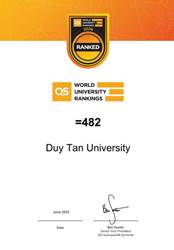
    In terms of overall institutional rankings, Duy Tan University is ranked 482nd globally in the QS World University Rankings 2026, making it the highest-ranked university in Vietnam. According to the Times Higher Education World University Rankings 2026, Duy Tan University is placed in the 601- 800 global band. Notably, in the U.S. News & World Report Best Global Universities Rankings 2025, Duy Tan University is ranked 288th worldwide, the highest among Vietnamese universities. Duy Tan University is also ranked 459th globally in URAP 2025,936th worldwide in CWUR 2026, and 1,070th globally in the Webometrics Ranking 2025.

    Duy Tan University is ranked 482nd globally

    in the QS World University Rankings 2026

    Beyond its overall rankings, Duy Tan University has also achieved outstanding results across a broad range of academic subjects. In the QS World University Rankings by Subject 2026, Duy Tan University is ranked first in Vietnam in several subjects. Most notably, Hospitality & Leisure Management is ranked 41st worldwide,Computer Science & Information Systems is ranked 144th globally,Environmental Sciences is ranked 146th globally, and Architecture & Built Environment is placed in the 101-150 global band.Other subjects, including Electrical & Electronic Engineering,Mechanical Engineering,Physics & Astronomy,Materials Science, and Pharmacy & Pharmacology, are also featured in the QS subject rankings, with Duy Tan University ranking first in Vietnam in these fields.

    Duy Tan University is ranked first in Vietnam for Physical Sciences (251-300 worldwide), Engineering (301- 400), Life Sciences (301- 400), Clinical and Health (401-500), Social Sciences (401-500), and Computer Science (501- 600), according to the Times Higher Education World University Rankings by Subject 2026.

    DTU Tourism programs is ranked 41st of the world

    In the ShanghaiRanking’s Global Ranking of Academic Subjects (GRAS) 2025, Duy Tan University has further strengthened its position as one of Vietnam’s leading universities, with strong performances across several key disciplines. Civil Engineering,Mechanical Engineering,and Water Resources Engineering are all ranked in the 151-200 global band. Meanwhile, Artificial Intelligence and Computer Science & Engineering are ranked in the 301- 400 global band, making Duy Tan University the top-ranked university in Vietnamin these disciplines and underscoring its strategic investment in digital technologies.

    These achievements are the result of Duy Tan University’s sustained investment in scientific research, high-quality education, and international collaboration. The  University’s presence across multiple internationally recognized ranking systems-including QS,Times Higher Education,U.S. News & World Report, and ShanghaiRanking, not only reflects its academic excellence but also reinforces confidence among students, employers, and international partners in the quality of education it provides.

    Text Box: Founded in 1994, Duy Tan University is the first and largest private university in Central Vietnam. Located in Da Nang City, Duy Tan University is multidisciplinary and diversified institution, with core strengths in Information Technology, Health Sciences, Tourism, and Engineering. Committed to internationalization, Duy Tan University has established academic partnerships with leading American universities such as Carnegie Mellon University and Purdue University. Duy Tan University is also consistently ranked among Asia's leading universities and has earned prestigious international accreditations, including ABET and UN Tourism TedQual.
Website: duytan.edu.vn


  • Why Smart Queue Management Is Becoming Essential Infrastructure for Universities

    Why Smart Queue Management Is Becoming Essential Infrastructure for Universities

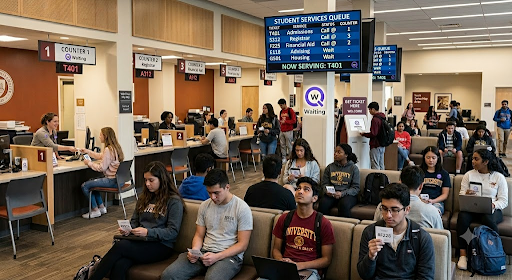
    It’s Monday morning, new admissions enrollment week. A student drives an hour to campus, walks into the registrar’s building, and joins a line that hasn’t moved in twenty minutes. Nobody tells her how long it’ll be. She asks a staff member, who looks as stressed as she does. By lunchtime, she gives up. Leaves. Comes back two days later.

    She didn’t drop out. But something shifted that week. A small, quiet erosion of confidence in the institution she just committed four years to.

    This happens everywhere, every semester. And most universities don’t track it because there’s no system to track it with.

    But this should not be a problem anymore. In 2026, lines can be avoided as more universities are now investing in smart education queue systems, which not only reduce students’ wait times but also ensure a quick and seamless admission onboarding. Let’s see how these systems actually work.

    What Unmanaged Service Queues Are Actually Costing You

    The real cost of queue chaos never appears on a report, which is exactly why it never gets fixed. Here’s how it impacts the growth:

    It Doesn’t Show Up on Any Report — That’s the Problem

    Most of the cost is invisible, which is exactly why it persists. Start with staff time. On a busy morning, how much of a front-desk team’s day goes toward crowd management rather than actual service? Answering “how long is the wait” fifteen times an hour. Manually logging walk-ins. Rescheduling no-shows. Chasing students who left without being served. None of that appears on a budget report. It just disappears into the workday.

    Students Are Absorbing a Cost You Can’t See Either

    Long, unmanaged queues aren’t just inconvenient. For students, that feels chaotic and adds real stress on top of everything else they’re carrying. This rarely surfaces in satisfaction surveys with enough specificity to trigger action. It just shows up as a general feeling that the institution is hard to deal with.

    No Data Means No Way to Improve

    When queues aren’t managed through a system, nothing is recorded. No average wait times. No peak period breakdowns. No service type analysis. Decisions get made on gut feel, and problems persist longer than they should. Administrators who want to improve service can’t build a case because there’s no evidence base to build from.

    What “Smart” Queue Management Actually Means

    The Queue Management System is not just a ticket machine. It’s an end-to-end service layer that most universities don’t yet have. Here’s how it helps:

    It Starts Before the Student Even Arrives

    When university administrators hear “queue management,” most picture a token dispenser in a government lobby. That’s not what we’re talking about. A modern platform touches the student journey before they even set foot on campus. A student checks available slots the evening before, books online or via QR code, and gets a WhatsApp notification the next morning with their time and expected wait. They arrive, check in at a kiosk, and are automatically routed to the right counter for their query, no guessing, no wrong lines. The staff member knows why they’re there before they open their mouth.

    Real-Time Visibility Changes How Managers Operate

    Meanwhile, the department head has a live dashboard showing service volumes across every counter, every building, in real time. He/ She can see where backlogs are forming and redistribute resources before the waiting area becomes a problem. This is the shift from reactive to proactive, from finding out something went wrong after the fact to seeing it coming and doing something about it.

    Feedback Becomes Automatic, Not an Afterthought

    Post-visit feedback is collected automatically: no paper forms, no follow-up emails, no hoping students bother to respond. Every service interaction feeds into a continuous picture of what’s working and what isn’t. Over time, that data becomes one of the most valuable operational assets a service team has. This is the layer most universities are missing. Not technology for its own sake, but connected service infrastructure that makes every interaction faster, calmer, and measurable.

    What the Early Movers Did Differently

    The universities that moved first didn’t overhaul everything at once; they started where the pain was loudest. Here’s how early migration to an effective university and school queue management system helped serve students seamlessly:

    They Started Small and Let the Results Make the Argument

    The universities that got ahead of this didn’t wait for a system-wide mandate. They started with one or two high-volume service touchpoints; typically, the registrar or financial services ran a focused deployment and measured outcomes before expanding. That approach did two things: it reduced implementation risk, and it generated internal proof that leadership could actually see.

    The Outcomes Went Beyond What Anyone Expected

    Results across these institutions showed a consistent pattern. Average wait times fell by more than half. Enrollment-week overflow was absorbed by appointment booking before it became a crowd. Staff reported less end-of-day exhaustion meaningfully. But the outcome that surprised operations teams most wasn’t the efficiency gain. It was the atmosphere. Quieter waiting areas. Staff with time to actually talk to students instead of managing the room. Students who arrived knowing what to expect.

    Staff Morale Was the Unexpected Win

    Nobody put “improve staff morale” in the project brief. But it came up in debrief after debrief. When service staff stop firefighting queues, they start doing the job they were actually hired to do — helping people. That change in day-to-day experience shows up in retention, in performance, and in the quality of every single student interaction. That’s what functional service infrastructure feels like when it works.

    A Final Thought

    Universities pour resources into getting students through the front door, recruitment marketing, campus visits, and scholarship programs. Then, on an ordinary Tuesday in October, a student needs help with something administrative, and the experience of seeking that help is slow, unclear, and exhausting.

    That moment matters. It doesn’t appear in any brochure. But it shapes how a student feels about their institution for years.

    Smart queue management doesn’t solve everything. But it solves something real, and the institutions treating service infrastructure as essential, not optional, are building something the others will eventually need to catch up to.

  • Artificial Intelligence in Education: The Future of Learning

    Artificial Intelligence in Education: The Future of Learning

    The rise of Artificial Intelligence is transforming nearly every industry, and education is one of the most affected fields. Artificial Intelligence in Education is no longer just a future concept; it is actively changing how students learn, how teachers teach, and how institutions operate. From smart classrooms to personalized learning systems, AI is reshaping the entire education ecosystem.

    What is Artificial Intelligence in Education?

    Artificial Intelligence in Education refers to the use of intelligent computer systems that can perform tasks such as learning, analyzing, and decision-making to improve the educational experience. These systems are designed to support students and teachers by making learning more efficient, personalized, and accessible.

    AI is now used in schools, colleges, and online platforms to analyze student performance, recommend study materials, and provide real-time feedback.

    Personalized Learning Experience

    One of the biggest advantages of Artificial Intelligence in education is personalized learning. Every student has a different learning speed, understanding level, and academic strength. Traditional classrooms often cannot meet these individual needs.

    AI solves this problem by:

    • Tracking student progress
    • Identifying weak areas
    • Suggesting customized lessons and practice exercises

    This allows students to learn at their own pace, which improves understanding and performance. Personalized learning is becoming one of the most important trends in modern education systems.

    AI as a Virtual Teacher

    Artificial Intelligence is also being used as a virtual teacher through chatbots and digital assistants. These systems can answer student questions, explain difficult concepts, and provide guidance anytime.

    Platforms like Duolingo already use AI to teach languages in an interactive way. AI tutors are especially useful for students who do not have access to quality teachers or coaching centers. They provide 24/7 learning support, making education more flexible and accessible.

    Smart Classrooms and Automation

    Modern education is moving toward smart classrooms powered by Artificial Intelligence. AI helps reduce the workload of teachers by automating many tasks such as grading, attendance, and performance tracking.

    AI systems can:

    • Automatically grade exams and assignments
    • Track attendance using digital systems
    • Analyze student performance data

    This allows teachers to focus more on teaching and mentoring students instead of spending time on repetitive administrative work.

    Online Learning Revolution

    Online learning platforms such as Coursera and Udemy are using Artificial Intelligence to improve education delivery. AI helps these platforms recommend relevant courses based on student interests and learning behavior.

    AI also enhances online education by:

    • Creating personalized learning paths
    • Designing adaptive quizzes
    • Improving engagement through smart recommendations

    This has made education more flexible, allowing students to learn from anywhere in the world.

    Benefits of Artificial Intelligence in Education

    Artificial Intelligence offers several key benefits in education:

    1. Improved learning outcomes through personalized teaching methods
    2. Time-saving for teachers due to automation of tasks
    3. Increased accessibility for students in remote areas
    4. Continuous learning support through digital tools

    These benefits make education more efficient and inclusive.

    Challenges of AI in Education

    Despite its advantages, Artificial Intelligence in education also presents several challenges:

    • Data privacy concerns related to student information
    • Over-reliance on technology by students
    • High implementation costs for advanced AI systems
    • Need for teacher training to effectively use AI tools

    These challenges must be addressed to ensure balanced and effective use of AI in education.

    Future of Artificial Intelligence in Education

    The future of education will likely involve a combination of human teachers and Artificial Intelligence working together. AI will handle repetitive tasks, while teachers will focus on creativity, emotional support, and critical thinking development.

    In the coming years, we may see:

    • Fully AI-powered smart classrooms
    • Virtual reality-based learning environments
    • Real-time translation in global classrooms
    • Personalized AI tutors for every student

    Conclusion

    Artificial Intelligence is revolutionizing education by making learning smarter, faster, and more personalized. While challenges exist, the benefits are significant. With proper implementation, AI has the potential to make quality education accessible to everyone, regardless of location or background.

    The future of education will not be defined by traditional methods alone but by the intelligent integration of technology and human teaching.

  • VideoCompress Video Cutter: A Fast Editing Layer for E-commerce Product Videos

    VideoCompress Video Cutter: A Fast Editing Layer for E-commerce Product Videos

    Online shopping no longer relies on flat images. Video now drives every sale, from simple product demos to honest user reviews. Actually, reality remains messy. Long takes, bad framing, and boring fluff frustrate many creative teams. It happens every single day.

    Editing at scale creates a massive, grinding throughput bottleneck. VideoCompress solves these headaches by sharpening production without sacrificing speed. Teams move faster now. That is just how life works.

    The Hidden Friction in Product Video Workflows

    E-commerce teams rarely produce just one video per product. A single SKU may require multiple variations: feature highlights, short ads, tutorial snippets, and platform-specific cuts. The challenge is not recording content, but refining it quickly enough to keep pace with catalog updates.

    A browser-based video cutter fits naturally into this environment. It allows teams to move from raw footage to usable assets without switching tools or relying on specialized editing roles. This becomes especially valuable when product cycles are short and iteration is constant.

    Why Editing Speed Directly Impacts Conversion

    Timing defines e-commerce success. Delayed product video uploads stall promotional campaigns, missing vital windows entirely.

    Actually, fast editing creates room for creative testing. Rapid iteration improves conversion rates. That is the reality. Simple speed helps you win more sales.

    Balancing Volume and Quality

    High output often leads to inconsistent quality. When teams rush to produce content, editing standards tend to drop. VideoCompress addresses this by simplifying the editing process while maintaining clean outputs, allowing teams to scale without sacrificing consistency.

    Scenario: Launching a New Product Collection

    Fashion labels often sweat through seasonal launches. Filming every product takes dozens of takes, capturing every specific angle plus unique styling changes. Marketing teams crave short, snappy clips for social feeds under brutal deadlines. It is a grind.

    Actually, spreading the workload solves the bottleneck. Dumping footage into VideoCompress lets members trim individual clips and export final files independently. Decentralizing tasks saves precious hours while keeping quality high. Forget waiting on a lead editor for every single minor tweak. Getting files finished quickly is the reality. That is just how the work gets done.

    Extracting Sellable Moments

    Not every second of a product video contributes to conversion. The focus is on moments that highlight texture, fit, or unique features. VideoCompress allows teams to isolate these segments quickly, ensuring that each clip delivers a clear message.

    Aligning Content Across Channels

    Marketing videos travel across many diverse platforms, from simple website listings to paid ads. Actually, consistency is the goal here. Trimming assets with one single tool keeps every output perfectly aligned. Just pick one and move forward.

    Editing That Matches Operational Needs

    Reliable e-commerce systems require predictable tools. VideoCompress handles those essential editing tasks without any annoying bloat. Actually, it just works. Simple results matter in this industry.

    Working with Large Batches of Video Files

    Product shoots dump endless files across various formats onto your drive. Actually, VideoCompress handles MP4, MOV, and AVI data directly without any tedious prep work.

    Easing these intense production bottlenecks keeps your team moving forward fast. That is the reality. Workflow efficiency finally feels like a standard habit.

    Precision Without Overhead

    Even in high-volume environments, precision matters. A poorly timed cut can weaken the impact of a product demonstration. The timeline interface in VideoCompress provides enough control to refine clips accurately, while remaining simple enough for non-editors to use confidently.

    Adapting Videos for Platform-Specific Requirements

    Sales channels impose unique constraints. Actually, a website video often needs serious tweaks for mobile platforms. Adapting content remains vital for growth. It just works.

    Reframing Content for Mobile Commerce

    Mobile traffic dominates e-commerce, which makes vertical and square formats increasingly important. Instead of re-editing videos from scratch, teams can adjust framing using the integrated video cropper. This allows quick adaptation without disrupting the editing workflow.

    Generating Multiple Variants for Testing

    Performance marketing relies on testing different creatives. By trimming various segments from the same source video, teams can produce multiple versions for A/B testing. This approach maximizes the value of each shoot while minimizing additional production costs.

    Output Quality and Brand Consistency

    Strong visual consistency builds a lasting brand identity in e-commerce. Editing workflows require tools that deliver reliable output standards.

    Watermarks often distract from your product, dropping perceived quality instantly. Actually, VideoCompress ensures clean exports for every channel. It remains sharp.

    Placing product videos into CMS platforms or ad managers creates unique hurdles. Exporting files in widely supported formats guarantees smooth integration, sparing you from extra conversion steps. Simplifying these technical cycles saves immense time. Using such efficient assets keeps your brand presentation polished, professional, and entirely coherent everywhere.

    Operational Perspective: Scaling Video Production

    As product catalogs expand, the demand for video content grows proportionally. Managing this scale requires tools that reduce complexity rather than add to it.

    Distributing Editing Across Teams

    When editing tools are accessible, tasks can be distributed beyond a single specialist. This reduces bottlenecks and allows teams to handle higher volumes of content without increasing headcount.

    Shortening Time-to-Market

    Speed is a competitive advantage in e-commerce. The faster a product goes live with supporting content, the sooner it can generate revenue. VideoCompress supports this by minimizing delays in the editing phase.

    Rethinking Video Editing in Commerce

    Modern e-commerce video production has shifted away from purely artistic narratives toward fast, repeatable cycles. Efficiency dictates the workflow now.

    Actually, editing serves the supply chain rather than acting as a standalone creative pursuit. Teams utilizing tools that align with this reality simply move faster. It is what it is.

    Streamlining these processes allows groups to test concepts, refine strategies, and churn out content without exhaustion. Success fuels a feedback loop, driving performance gains over time. Companies that ignore this cycle will inevitably fall behind their agile competitors in the long run.

    Closing Insight: Throughput Defines Competitive Edge

    Speed dictates e-commerce victory. Video content drives results, provided teams create and tweak assets efficiently. To be honest, most workflows crumble under high pressure.

    VideoCompress solves this by streamlining every editing task. It enables teams to process massive amounts of footage without lagging, effectively morphing raw clips into sharp assets meant for conversion. That is the reality. Simply put, the software removes typical bottlenecks so your creative output remains fast and consistent.

  • Dechecker AI Detector in Education: How Schools Are Quietly Rewriting the Rules of Writing Assessment

    Dechecker AI Detector in Education: How Schools Are Quietly Rewriting the Rules of Writing Assessment

    AI writing tools have already entered classrooms, even if policies haven’t fully caught up yet. In many cases, students now produce assignments with the help of tools like ChatGPT or Gemini, then lightly edit the output before submitting it as their own work. The result looks normal on the surface, but the writing process underneath has changed completely.

    How AI is reshaping what “student writing” actually means

    The writing process is no longer linear

    Traditionally, student writing followed a simple path: brainstorm, draft, revise, submit. That structure still exists, but it’s increasingly compressed or partially replaced.

    Now, many students begin with AI-generated text and treat it as a starting point. Instead of building ideas from scratch, they refine something that already exists. This might seem like a small shift, but it changes how thinking happens during writing.

    The result is often polished work that lacks visible development. Ideas appear fully formed from the beginning, which can make it harder for teachers to evaluate how the student actually thinks.

    Why plagiarism tools don’t solve the real problem anymore

    Plagiarism detection was designed for copied content. It compares submissions against existing sources and flags similarities.

    But AI-generated writing doesn’t reuse existing text. It generates new combinations of languages that don’t match any database. That means a fully AI-written essay can still appear completely “original” under traditional systems.

    This creates a new gap in education: text originality no longer guarantees learning originality.

    How Dechecker AI Detector is being used in education

    Moving from matching text to analyzing writing behavior

    Instead of looking for copied content, an AI Detector analyzes how the text is written. It focuses on patterns such as sentence predictability, structural uniformity, and linguistic consistency.

    The output is not a simple yes-or-no result. It’s a probability signal that indicates how likely the writing is AI-generated.

    In education, this is more practical because teachers are not trying to reach legal certainty—they are trying to understand whether the work reflects independent thinking.

    Helping teachers identify “too smooth” writing

    One of the most common signals educators notice today is writing that feels unusually clean.

    No awkward phrasing, no variation in rhythm, no visible struggle in expression. Everything flows too evenly.

    AI detection helps translate that intuition into a more structured signal. It doesn’t replace teacher judgment, but it supports it by highlighting patterns that are statistically unusual for typical student writing.

    The blurred line between assistance and dependency

    AI usage exists in multiple layers

    Not all AI-assisted writing is the same. Some students use it for idea generation, others for structuring paragraphs, and some for rewriting full essays.

    The problem is that these differences disappear in the final submission. Once submitted, everything looks equally polished, even if the learning process behind it was completely different.

    This makes evaluation more complex than before, because educators can no longer rely on the final text alone to understand effort or thinking.

    When AI becomes part of learning, not just output

    In many classrooms, AI is no longer treated as something purely forbidden. Instead, it is becoming part of the learning environment.

    Students may generate a draft, then rewrite it manually to match their own voice. During this process, tools like AI Humanizer are sometimes used to adjust tone and reduce overly mechanical phrasing.

    The key question is whether students are still engaging with the ideas, or simply accepting generated content without reflection.

    How AI detection is actually applied in real classrooms

    A supporting signal, not a grading system

    In practice, AI detection is rarely used as the final decision-maker. It functions more as a trigger for further review.

    If a submission shows a high likelihood of AI generation, teachers might request drafts, ask follow-up questions, or compare it with in-class writing samples.

    This shifts evaluation away from single submissions and toward a more contextual understanding of student ability.

    Teaching is shifting toward process visibility

    Instead of focusing only on final essays, educators are increasingly interested in how the essay was created.

    Draft history, revision patterns, and classroom writing exercises all provide additional context. This helps reduce over-reliance on polished final output and encourages a more complete evaluation of learning.

    Limitations of AI detection in education

    It is not a definitive answer

    Even advanced AI detection systems are not perfect. Some students naturally write in structured, formal styles that resemble AI output. At the same time, heavily edited AI-generated text can appear fully human.

    This means detection results should always be interpreted as probability signals, not proof.

    Context always matters more than scores

    A detection score alone cannot explain intent, effort, or learning. Without context, it can easily lead to misinterpretation.

    That is why most responsible educational use combines detection results with teacher observation and student writing history.

    The direction education is moving toward

    AI is no longer an external factor in education—it is part of the system now. The challenge is not whether to allow it, but how to adapt evaluation to a world where writing can be partially generated.

    Tools like Dechecker AI Detector are part of this transition. They don’t define what is right or wrong. Instead, they make the writing process more visible, helping educators make decisions based on evidence rather than assumption.

    In that sense, education is not just detecting AI—it is learning how to interpret writing in a new reality where authorship is no longer always obvious.

  • Global Brand Management in the Digital Age: The Amadeus Technology B.V. & Sunwin Case Study

    Global Brand Management in the Digital Age: The Amadeus Technology B.V. & Sunwin Case Study

    In an era defined by rapid digital transformation, the strategic orchestration of brand identity, market penetration, and regulatory compliance is paramount for global success. Amadeus Technology B.V., a pioneering force in digital entertainment, offers a compelling case study through its flagship platform, Sunwin (Sun Win), operated officially via Sunwin.org.

    1. Navigating the Regulatory Labyrinth: A Foundation of Trust

    For enterprises expanding across international borders, establishing legitimacy is the first hurdle. Amadeus Technology B.V. has strategically positioned Sunwin.org with a foundational pillar of trust: the Curacao Gaming License. This isn’t merely a legal formality; it’s a commitment to:

    • Ethical Operations: Upholding stringent standards for fair play and transparency.
    • Consumer Protection: Implementing robust frameworks to safeguard user data and financial integrity.
    • Sustainable Growth: Building a business model that thrives on compliance and responsible practices, critical for long-term brand equity in a globalized market.

    2. The Nexus of Technology and User Experience

    Under the purview of Amadeus Technology B.V., Sunwin leverages state-of-the-art technological infrastructure to deliver a seamless user experience. Key innovations include:

    • Advanced Data Security: Employing military-grade encryption to protect user information, a non-negotiable in today’s digital landscape.
    • Scalable Architecture: Designed to handle peak global traffic, ensuring uninterrupted service and superior performance across diverse devices.
    • Intuitive Design: Prioritizing user-centric interfaces that enhance engagement and retention, a testament to Amadeus’s focus on behavioral economics in digital product development.

    3. Global Brand Amplification: The Sergio Ramos Effect

    Perhaps the most striking element of Sunwin’s global strategy is its high-profile partnership with football icon Sergio Ramos. This collaboration transcends traditional endorsement; it is a strategic alignment that:

    • Elevates Brand Prestige: Associating Sunwin with a globally recognized figure renowned for leadership, excellence, and international appeal.
    • Expands Market Reach: Tapping into the immense global fanbase of football, particularly in key growth markets, significantly boosting brand visibility.
    • Reinforces Core Values: Ramos’s image as a tenacious, world-class performer perfectly mirrors Sunwin’s commitment to delivering a premium, reliable, and cutting-edge entertainment experience. This strategic ambassadorship transforms a digital platform into a cultural touchstone.

    Conclusion: A Model for 21st-Century Brand Leadership

    The journey of Amadeus Technology B.V. with Sunwin.org illustrates a potent blueprint for modern global brand management. By meticulously integrating regulatory adherence, technological innovation, and impactful brand ambassadorship, Sunwin sets a precedent for how digital entertainment entities can achieve both market dominance and sustained brand loyalty on a global scale. This case study offers valuable lessons for aspiring leaders and strategists navigating the complexities of international business.

  • How AI Is Changing the Education System

    How AI Is Changing the Education System

    Education has always changed slowly. Like… painfully slow. For decades, we’ve had the same picture: classrooms with students sitting in rows, teachers lecturing at the front, textbooks stacked like bricks. But suddenly—almost overnight—it feels like something big is happening. Artificial intelligence (AI) quietly walked into the classroom, and now everything looks a little different. Maybe even a bit weird.

    Some people are excited. Others worried. Both have valid points. But one thing seems certain: AI is reshaping how students learn, how teachers teach, and what classrooms might look like in the next few years.

    Let’s unpack all that.

    A New Partner for Teachers (Not a Replacement… hopefully)

    One misconception is that AI will replace teachers. Realistically? No. Kids still need people who understand emotions, who encourage them, who… just get them. But AI can be a powerful assistant.

    For example, AI can:

    • Grade multiple-choice or short written responses faster
    • Track student progress
    • Recommend personalized exercises
    • Spot learning difficulties early

    A teacher might spend hours grading or planning lessons. AI tools can automate some of that, freeing teachers to do what they’re best at—actually working with students.

    Imagine a teacher who knows which student struggles with fractions, who needs more reading practice, or who’s bored because the lessons are too easy. AI makes that possible at scale. It’s like having a second brain focused only on data.

    Personalized Learning Becomes Real

    For decades, “personalized learning” was basically a buzzword. Teachers tried, but with 30 students of wildly different abilities, it was easier said than done.

    AI changes that.

    AI tutoring tools can adjust difficulty levels on the fly. If you breeze through algebra, the software nudges you toward more challenging problems. If you stumble, it slows down. Some tools even analyze how you learn—visually, verbally, through repetition—and adapt to your style.

    This kind of individualized learning gives struggling students extra help without embarrassing them. And advanced students can grow without waiting for the class to “catch up.”

    It’s not a perfect system, but it’s a huge step.

    Smarter Study Tools

    Students today, honestly, have an entire toolbox that didn’t exist ten years ago. AI can summarize long articles, generate flashcards, quiz you, re-explain topics in simpler language, and even create practice tests.

    Some of these tools are controversial—people argue they make students lazy. But they also help kids who learn differently. For a student with dyslexia, text-to-speech can be life changing. For one who struggles with writing, predictive tools help them communicate.

    These tools don’t remove thinking. They reduce barriers so students can actually focus on understanding.

    AI and Accessibility: A Big Win

    This is maybe the most underrated thing: AI makes education more accessible.

    Think about:

    • Speech recognition for students who can’t type
    • Text-to-speech for reading difficulties
    • Real-time translation for language learners
    • Visual aids for students with processing challenges

    These aren’t hypothetical. They’re already happening.

    A student who once felt left out can participate more fully. That matters. A lot.

    New Opportunities… and Some Risks

    AI isn’t magic. And it’s definitely not perfect.

    One major concern is data privacy. AI tools collect info about students—test performance, behavior patterns, maybe even location. If mishandled, that data could be sold or misused. Schools and governments need strong rules about what’s collected and how it’s used.

    Another worry: bias. AI is trained on data, and if the data has bias, the results can too. That means AI could judge students unfairly—something we need to take seriously.

    And of course… cheating. With AI tools that can write essays or solve math problems, it’s getting harder to tell if students learned something—or if the AI did all the work. Teachers are now trying to redesign assignments so critical thinking outweighs simple answer-finding.

    The Role of Teachers Is Changing

    Teachers aren’t becoming obsolete. But their roles are evolving.

    Instead of being the main source of information—lecturing, writing on boards—teachers may become more like guides or mentors. They’ll help students think critically, ask questions, evaluate AI output, and understand context. The human part of learning becomes even more important.

    Soft skills—creativity, empathy, teamwork—will matter more, because AI isn’t great at those.

    At least… not yet. (Joking. Mostly.)

    Lifelong Learning Isn’t Optional Now

    AI is changing work too. New careers are emerging, old ones disappearing. So schools are shifting focus. It’s not just about memorizing facts; it’s about learning how to learn.

    Students will need:

    • Adaptability
    • Problem-solving skills
    • Comfort with tech
    • Curiosity

    The world is moving fast. Schools are trying to keep up.

    What Classrooms Might Look Like Soon

    Picture this:
    A student puts on smart headphones that translate the teacher’s words in real time. Another uses an AI that builds a custom lesson plan based on yesterday’s performance. A third gets instant feedback on a writing assignment—before the teacher even reads it.

    Teachers monitor all this through smart dashboards. Instead of trying to divide attention across 30 kids, they get a clear picture of who’s excelling and who needs help.

    This isn’t sci-fi. It’s starting to happen already.

    Conclusion

    AI isn’t a threat to education. It’s a tool—one with huge potential, but also real challenges. It can make learning more personalized, more accessible, and yes, maybe more fun. But we need careful planning, thoughtful rules, and a commitment to keeping humans at the center.

    Because at its heart, education isn’t just information. It’s relationships. It’s growth. It’s messy and emotional and unpredictable. AI can help shape the path—but the journey is still human.

  • What to Do When You Fail an Exam

    What to Do When You Fail an Exam

    Failing an exam can feel heavy. It can make your heart sink, your motivation drop, and your mind fill with questions like “Am I not smart enough?” “What will others think?” “What do I do now?” Almost every student has faced this feeling at least once. And even though failure hurts, it does not mean the end of your journey. It does not define your intelligence or your future. Failing an exam is simply a sign that something in your learning strategy needs to change — not that you are a failure.

    Let’s take a deep breath and talk about what to do next. Here is a step-by-step guide to turning a failure into a comeback.

    1. Allow Yourself to Feel Disappointed — It’s Normal

    When you get a low score or fail a test, it’s normal to feel upset. Don’t pretend everything is okay. Don’t force yourself to “get over it” instantly.
    Take a little time to:

    Talk to someone you trust — a sibling, parent, or friend. Sometimes simply expressing your feelings lightens the load.

    Just remember: This feeling is temporary. It will pass.

    2. Don’t Label Yourself Based on a Result

    One exam cannot measure:

    • Your intelligence
    • Your creativity
    • Your potential
    • Your value
    • Your future success

    Many great people in history failed exams:

    • Thomas Edison failed multiple tests.
    • Einstein struggled in school.
    • Jack Ma got rejected from 30+ job applications.

    Yet they succeeded because they kept trying.

    So instead of saying:

    “I failed the exam, so I am a failure,”

    Say:

    “I failed the exam. I will work on improving myself.”

    One result cannot define your future.

    3. Review What Went Wrong — But Do It Calmly

    After your emotions settle, look back and analyze:

    • Did you study regularly or only before the exam?
    • Did you memorize instead of understanding?
    • Were there distractions like phone, games, or noise?
    • Did you sleep well before the exam?
    • Did you manage your time properly during the test?

    Understanding the cause is powerful because this is where change begins.

    Write down your mistakes.
    Seeing them clearly makes improvement easier.

    4. Ask for Help — You Don’t Have to Do It Alone

    Sometimes all you need is a bit of guidance.

    You can ask:

    • A teacher → to explain concepts more clearly
    • A classmate → to help you practice
    • A tutor → to support in difficult subjects
    • A parent → to help organize your study routine

    Asking for help does not mean weakness.
    It means you are strong enough to choose growth.

    5. Make a New Study Plan — A Better One

    Failing an exam is usually a sign that your study method wasn’t effective.

    Here’s how to fix that:

    Break your study time into daily short sessions.

    Studying 30 minutes every day is better than studying 5 hours only before exams.

    Use active learning:

    • Explain the topic in your own words
    • Teach someone else
    • Create flashcards
    • Take small quizzes
    • Write summaries

    Solve past exam papers.

    This improves confidence and speed.

    Study harder topics first.

    Don’t avoid them — face them early.

    6. Remove Distractions While Studying

    Phones, social media, and noise steal attention.
    Keep your phone away during study time or use apps that block distractions.

    Study in a quiet, clean space.
    Even 30 minutes of focused study is more powerful than 2 hours of distracted study.

    7. Take Care of Your Mental and Physical Health

    When we are tired, stressed, or sleep-deprived, learning becomes harder.

    So:

    • Sleep at least 7–8 hours
    • Drink enough water
    • Avoid skipping breakfast
    • Take small breaks while studying

    A healthy mind learns faster.

    8. Don’t Be Afraid to Try Again

    One failure is not the end.
    It is a checkpoint, not a full stop.

    Great students are made through:

    • Patience
    • Practice
    • Persistence

    When you try again — with better habits — you not only pass the exam, you grow stronger as a person.
    9. Use Failure as Motivation, Not as a Scar

    Failure can do one of two things:

    • It can pull you down
    • Or it can push you forward

    The choice is yours.

    Instead of thinking:

    “I couldn’t do it.”

    Think:

    “I will do better next time, and this time I know where to start.”

    Let failure teach you, not defeat you.

    10. Appreciate Yourself for Not Giving Up

    The fact that you are reading this and thinking about improving means you are already stronger than failure.
    Many people give up — but you are choosing to rise.

    Small effort today becomes big success tomorrow.