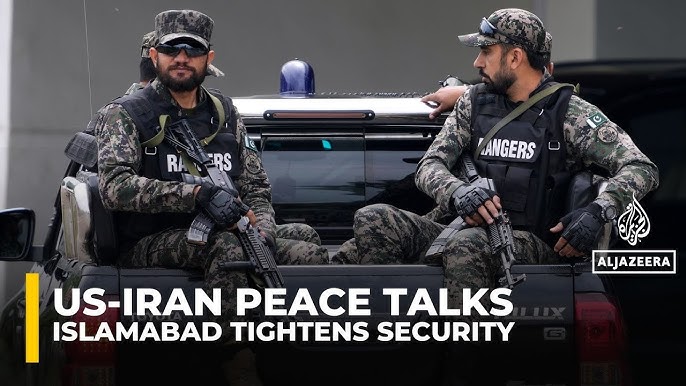
Islamabad, the capital of Pakistan, remains under a strict security lockdown despite no clear confirmation of imminent peace talks between the United States and Iran. The situation highlights the uncertainty surrounding ongoing diplomatic efforts and the significant impact of global geopolitics on local populations.
Islamabad Under Heavy Security Lockdown
For nearly a week, authorities in Islamabad have enforced tight security measures across key parts of the city. Major roads leading into the capital have been closed, while sensitive government zones, including the Red Zone, are under strict surveillance. Public transportation services have been suspended, and checkpoints have been established across multiple entry and exit points.
The lockdown is part of Pakistan’s preparations to host potential peace talks between the United States and Iran. However, despite these extensive arrangements, there is still no confirmation that the talks will actually take place. Officials say they remain ready to facilitate discussions at short notice, but uncertainty continues to dominate the situation.
Delayed Diplomacy and Uncertain Negotiations
The expected negotiations are seen as crucial in reducing tensions between Washington and Tehran. However, both sides appear divided on key issues, delaying any formal engagement. Reports suggest that even though diplomatic channels remain open, no direct meeting has been scheduled so far.
This is not the first time Islamabad has been placed under lockdown for such talks. Earlier in April, the city was sealed off for a previous round of negotiations, which ultimately ended without a breakthrough. Authorities briefly lifted restrictions after that round failed, only to reimpose them again in anticipation of another attempt at dialogue.
Impact on Daily Life and Economy
The prolonged lockdown has significantly disrupted daily life in Islamabad. Residents are facing difficulties commuting due to the suspension of public transport and closure of major roads. Markets in commercial areas are either closed or experiencing shortages of essential goods, including fruits and vegetables.
Businesses, especially small retailers and food outlets, are suffering financial losses due to reduced customer flow and supply chain disruptions. Many daily wage workers are struggling to earn a living as economic activity slows down across the city.
Additionally, the uncertainty surrounding the duration of the lockdown has added to public frustration. Citizens are unsure when normal life will resume, as authorities continue to maintain a state of readiness for talks that have yet to materialize.
Pakistan’s Role as a Mediator
Pakistan has positioned itself as a key mediator between the United States and Iran, aiming to facilitate dialogue and reduce regional tensions. Hosting such high-level talks reflects Islamabad’s strategic importance in global diplomacy and its efforts to play a constructive role in international peacebuilding.
Despite the current uncertainty, Pakistani officials remain optimistic that negotiations could take place. Diplomatic efforts are ongoing, with backchannel communications reportedly continuing between the involved parties.
Global Implications of the Stalemate
The delay in US-Iran peace talks has broader implications beyond Pakistan. Rising tensions between the two countries have already affected global oil markets and regional stability. The absence of dialogue increases the risk of further escalation, which could have serious economic and security consequences worldwide.
International stakeholders are closely monitoring the situation, urging both sides to return to the negotiating table. The potential for renewed talks remains, but the lack of clarity continues to raise concerns.
Conclusion
The ongoing lockdown in Islamabad underscores the far-reaching impact of international diplomacy on local communities. While Pakistan remains prepared to host US-Iran peace talks, the absence of confirmed negotiations has left the city in a state of uncertainty.
As global attention remains focused on the evolving situation, the hope for dialogue and de-escalation persists. However, until concrete steps are taken toward negotiations, Islamabad—and the wider region—will continue to face the consequences of diplomatic delays.
Leave a Reply