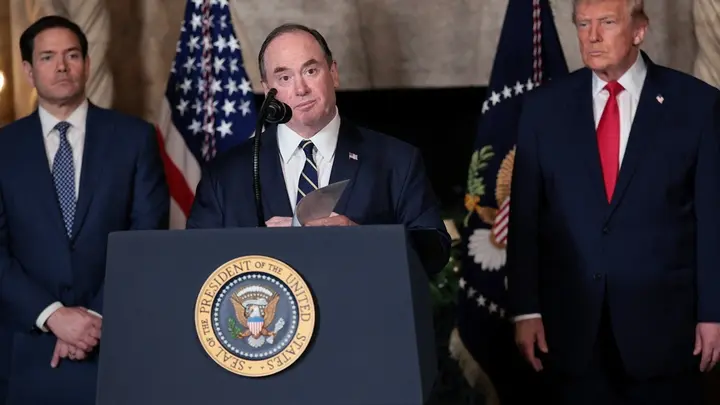
In a surprising move that has captured national attention, the Pentagon has announced that the United States Navy Secretary is stepping down “effective immediately,” with the role being filled by the deputy on an interim basis. The abrupt leadership change has sparked widespread discussion across political, military, and public spheres, raising questions about the reasons behind the decision and its potential impact on national security and defense strategy.
Sudden Leadership Transition
The announcement came without prior warning, catching many observers off guard. Typically, transitions in high-level defense positions are carefully planned and communicated in advance. However, this immediate departure signals that unusual circumstances may have prompted the decision. While officials have not disclosed specific reasons, the urgency of the replacement suggests internal pressures or strategic disagreements within the Department of Defense.
The deputy stepping in as acting Navy Secretary is expected to ensure continuity in leadership and maintain operational stability. This interim arrangement is standard practice during sudden transitions, allowing ongoing missions and administrative functions to proceed without disruption.
Possible Reasons Behind the Exit
Although no official explanation has been confirmed, analysts have begun speculating about potential causes. Leadership changes at this level are often linked to policy disputes, performance concerns, or broader political dynamics. In some cases, disagreements over budget allocations, military strategy, or procurement decisions can lead to high-profile resignations.
Another possibility is that the departure is connected to ongoing geopolitical tensions. With global security challenges intensifying, including conflicts and strategic rivalries, leadership cohesion within the military becomes critical. Any perceived misalignment at the top could prompt swift corrective action.
Additionally, internal investigations or administrative issues cannot be ruled out. Historically, sudden resignations have occasionally followed ethical concerns or management controversies, though there is currently no confirmed evidence pointing in that direction.
Impact on the US Navy
The US Navy plays a central role in maintaining global security, projecting power, and safeguarding maritime interests. A leadership change at the top could have both short-term and long-term implications. In the immediate term, the acting secretary will focus on ensuring that naval operations continue smoothly, especially in regions where tensions are high.
However, leadership transitions can also influence strategic priorities. New or interim leadership may reassess existing policies, delay major decisions, or introduce adjustments to align with evolving defense objectives. This could affect areas such as fleet modernization, personnel management, and international partnerships.
Political and Strategic Reactions
The announcement has drawn reactions from lawmakers, defense experts, and political commentators. Some view the move as a necessary step to address internal challenges, while others see it as a sign of instability within the defense establishment. Calls for transparency have increased, with many urging the Pentagon to provide more clarity بشأن the reasons behind the sudden change.
From a political standpoint, leadership shifts in the military often intersect with broader government dynamics. Depending on the underlying cause, this development could become a focal point in ongoing debates حول defense spending, military readiness, and executive decision-making.
What Comes Next?
Looking ahead, attention will turn to whether a permanent replacement is nominated quickly or if the acting secretary remains in position for an extended period. The nomination process for such a high-ranking role typically involves thorough vetting and Senate confirmation, which can take time.
In the meantime, the Pentagon is expected to emphasize stability and continuity. Maintaining confidence within the ranks of the Navy, as well as among international allies, will be a top priority. Clear communication and decisive leadership during this transition period will be essential to avoid disruptions.
Conclusion
The sudden departure of the US Navy Secretary marks a significant moment in the current defense landscape. While the full reasons behind the decision remain unclear, the move underscores the importance of strong and stable leadership within the military. As more details emerge, the situation will continue to be closely monitored by policymakers, analysts, and the public alike.
For now, the focus remains on ensuring that the US Navy continues to operate effectively during this unexpected transition, safeguarding national interests and maintaining its critical role on the global stage.
Leave a Reply