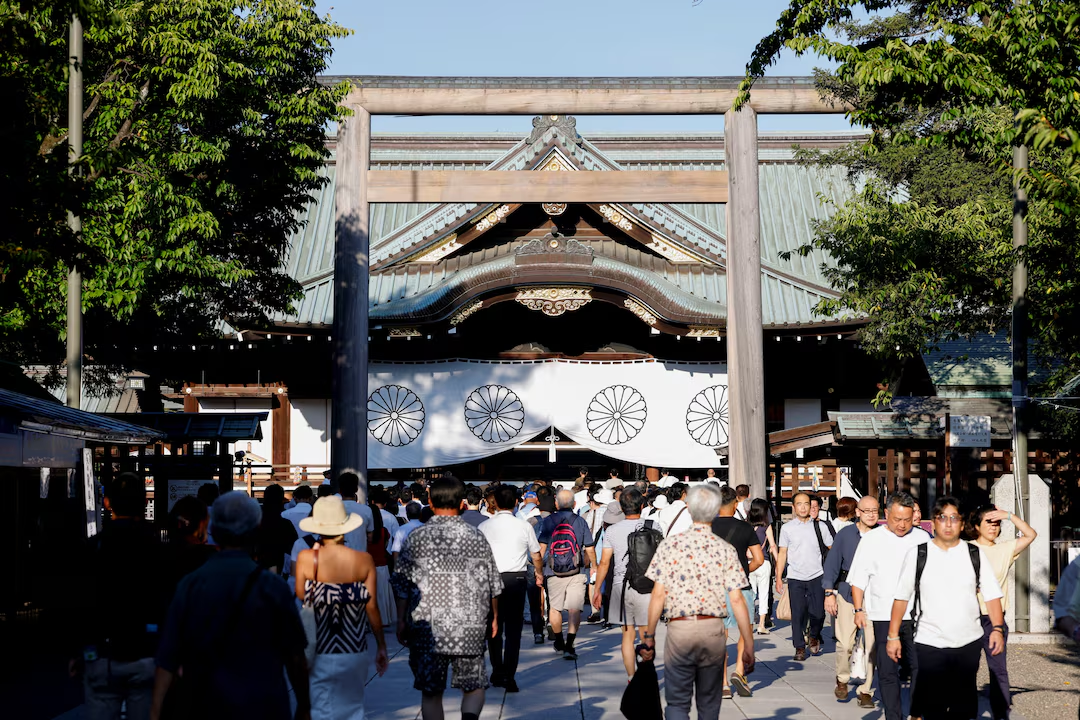
Tensions between China and Japan have once again escalated after strong reactions from Beijing over recent visits and offerings made by Japanese leaders at the controversial Yasukuni Shrine. The issue, deeply rooted in historical grievances, continues to strain diplomatic relations between the two major Asian powers.
Why the Yasukuni Shrine Is So Controversial
The Yasukuni Shrine, located in Tokyo, honors Japan’s war dead, including several convicted Class-A war criminals from World War II. For China and other neighboring countries that suffered under Japanese occupation, the shrine symbolizes Japan’s militaristic past and lack of full accountability.
Whenever Japanese political figures visit or send ritual offerings to the shrine, it often sparks outrage in Beijing. Chinese officials argue that such actions glorify a painful history and undermine efforts toward reconciliation in the region.
China’s Strong Response
The Chinese government has issued a sharp condemnation of the recent shrine-related activities. Officials from Ministry of Foreign Affairs of China stated that Japan must “face and reflect on its history honestly” and warned that such actions damage mutual trust.
Chinese media outlets and social platforms have also amplified public anger, with many users criticizing Japan for what they perceive as repeated insensitivity toward historical issues. The reaction highlights how deeply emotional and politically significant this matter remains in China.
Japan’s Position
On the other hand, leaders in Japan maintain that visits to the Yasukuni Shrine are a domestic matter tied to honoring those who sacrificed their lives for the country. Some Japanese officials argue that the actions are not intended to provoke neighboring countries but rather to preserve national tradition.
However, critics within Japan and abroad say that such visits complicate diplomatic relations and hinder regional cooperation, especially at a time when geopolitical stability is crucial.
Impact on China-Japan Relations
Relations between China and Japan have long been shaped by a mix of economic cooperation and political tension. While both countries are major trading partners, historical disputes—such as those linked to World War II—continue to resurface.
Recent developments suggest that ties may become more strained if symbolic actions like shrine visits continue. Diplomatic dialogues could face setbacks, and public sentiment in both countries may grow increasingly negative.
Broader Regional Implications
The controversy comes at a time when East Asia is already facing heightened geopolitical challenges. Issues such as territorial disputes, military activities, and alliances involving global powers add layers of complexity to regional stability.
Analysts warn that symbolic disputes, though not directly linked to military conflict, can escalate tensions and influence broader strategic decisions. In such an environment, even cultural or historical gestures carry significant political weight.
Calls for Dialogue and Stability
International observers and political analysts emphasize the need for constructive dialogue between China and Japan. Addressing historical grievances through open communication and mutual respect is seen as essential for long-term peace and cooperation in the region.
Efforts to improve bilateral relations may require both sides to adopt more sensitive approaches to historical issues while focusing on shared economic and security interests.
Conclusion
The latest dispute over the Yasukuni Shrine highlights how history continues to shape modern geopolitics in East Asia. As China condemns Japan’s actions, the incident serves as a reminder that unresolved historical tensions can quickly resurface and impact present-day relations.
For the region to move forward, both nations must find a balance between honoring their past and building a stable future. Without careful diplomacy, such controversies risk deepening divides and affecting not only bilateral ties but also the broader stability of East Asia.
Leave a Reply