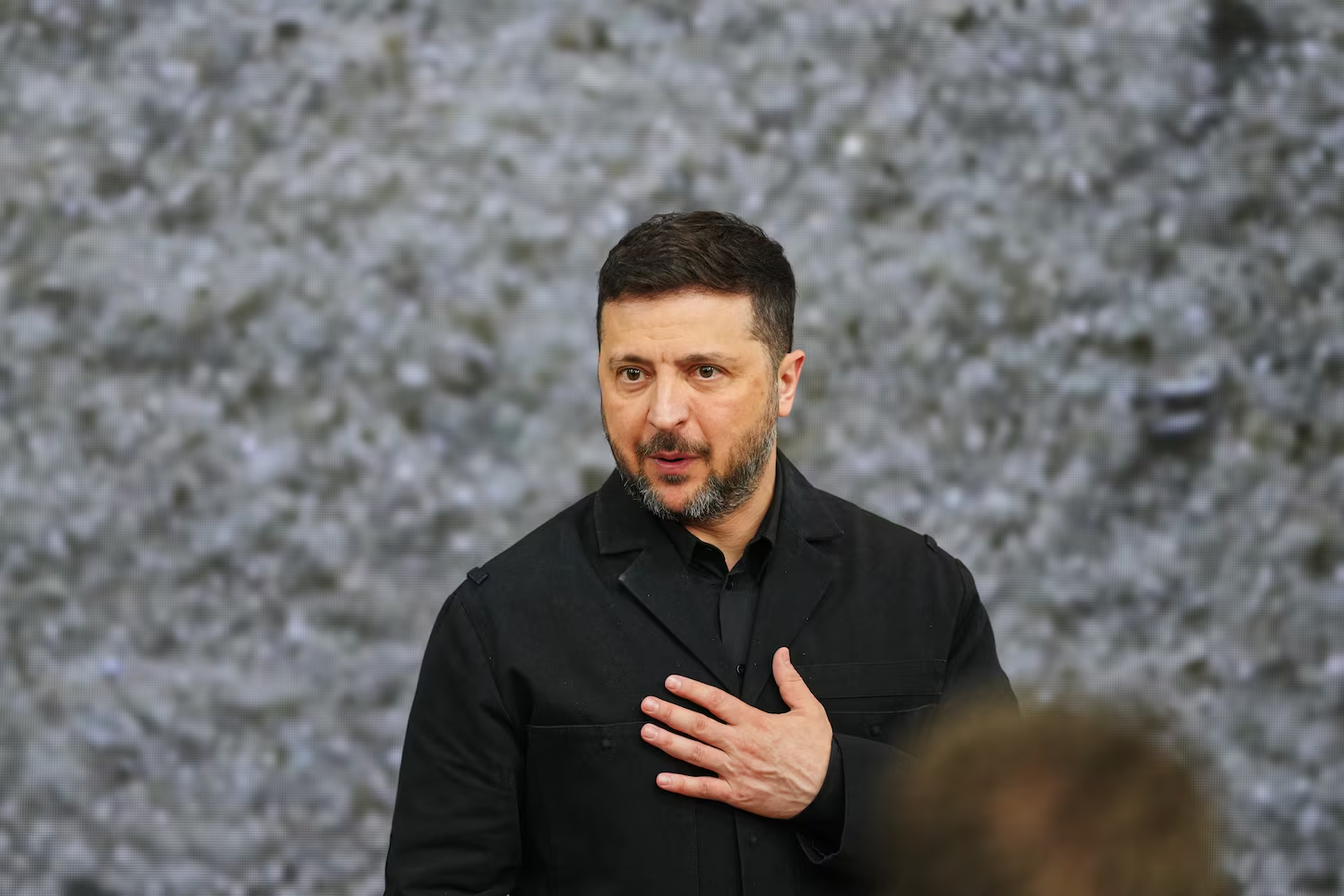
The European Union has taken a major step in its ongoing support for Ukraine by approving a massive €90 billion financial package, alongside introducing a new round of sanctions against Russia. This significant development marks a turning point in the geopolitical landscape, reinforcing Europe’s commitment to Ukraine while increasing pressure on Moscow amid the continuing conflict.
A Landmark Financial Package
The €90 billion loan approved by the European Union represents one of the largest financial aid packages in the bloc’s history. The funding is designed to stabilize Ukraine’s economy, support reconstruction efforts, and ensure the functioning of essential government services during a time of war.
Ukraine has faced severe economic challenges since the conflict escalated, including infrastructure destruction, disrupted trade, and declining revenues. This financial assistance aims to prevent economic collapse and provide the Ukrainian government with the resources needed to maintain stability.
European leaders emphasized that the package is not just about financial aid but also about long-term resilience. The funds are expected to be distributed over a period of time, ensuring sustained support rather than a one-time injection.
Strengthening Support for Ukraine
The EU’s decision sends a strong political message of solidarity with Ukraine. By committing such a substantial amount, European nations are signaling that they are prepared to stand by Ukraine for the long haul.
This move also reflects growing concerns within Europe about regional security. A stable Ukraine is seen as essential for maintaining balance and preventing further escalation of conflict in Eastern Europe.
In addition to financial aid, EU countries continue to provide humanitarian assistance, military support, and diplomatic backing. The combined efforts aim to strengthen Ukraine’s position both on the battlefield and in international negotiations.
New Sanctions on Russia
Alongside the financial package, the European Union has introduced a fresh round of sanctions targeting Russia. These measures are part of a broader strategy to weaken Russia’s economic and military capabilities.
The new sanctions reportedly focus on key sectors such as energy, banking, and defense. Restrictions on exports, financial transactions, and access to international markets are intended to increase pressure on the Russian government.
European officials argue that sanctions are a necessary tool to hold Russia accountable and to discourage further aggression. However, they also acknowledge that sanctions can have indirect effects on global markets, including energy prices and supply chains.
Impact on Global Economy
The EU’s latest actions are expected to have far-reaching economic consequences. Increased sanctions on Russia could lead to further disruptions in global energy supplies, particularly in Europe, which has historically relied on Russian oil and gas.
At the same time, the €90 billion loan to Ukraine may help stabilize one part of the global economy, reducing the risk of broader financial instability. However, the combined effect of sanctions and ongoing conflict is likely to keep markets volatile.
Investors and policymakers around the world are closely monitoring the situation, as any escalation could have ripple effects across industries, from energy to agriculture.
Rising Geopolitical Tensions
The announcement has intensified geopolitical tensions between the European Union and Russia. Moscow has repeatedly criticized Western support for Ukraine, viewing it as direct interference in the conflict.
In response to previous sanctions, Russia has taken countermeasures, including restricting exports and strengthening ties with non-Western allies. The latest EU decision could prompt further retaliation, increasing the risk of prolonged confrontation.
This growing divide highlights the broader shift in global alliances, with countries aligning themselves based on strategic interests and security concerns.
Reactions from World Leaders
International reactions to the EU’s decision have been mixed. Western allies, including the United States, have largely welcomed the move, viewing it as a necessary step to support Ukraine and uphold international law.
On the other hand, some countries have expressed चिंता over the potential economic fallout, particularly in terms of rising energy costs and inflation. Developing nations, in particular, may feel the impact of higher commodity prices.
Ukraine’s leadership has welcomed the package, describing it as a crucial lifeline for the country’s survival and recovery.
What Lies Ahead
As the conflict continues, the EU’s role is likely to remain central. The success of the financial package will depend on effective implementation and coordination among member states.
Meanwhile, the impact of new sanctions will take time to fully materialize. Analysts suggest that while sanctions can weaken Russia economically, they are unlikely to produce immediate political change.
Conclusion
The European Union’s approval of a €90 billion loan for Ukraine, combined with fresh sanctions on Russia, underscores the high stakes of the ongoing conflict. This dual approach—supporting Ukraine while pressuring Russia—reflects a broader strategy aimed at shaping the outcome of the crisis.
As tensions continue to rise, the world will be watching closely to see how these measures influence the trajectory of the conflict and the future of global stability.
Leave a Reply