Author: admin

  • Learning for Nature – Building Eco-Friendly Minds

    Learning for Nature – Building Eco-Friendly Minds

    The world around us. It’s beautiful, complex, and fragile. Forests, rivers, mountains, oceans—they all work together to support life. But human activity is putting pressure on nature. Pollution, deforestation, climate change… the list goes on. If we want a future where humans and nature coexist, we need something more than rules and regulations. We need minds that care, understand, and act for the environment. And that starts with learning.

    Why Learning Matters for Nature

    Knowledge is powerful. But not just any knowledge. Learning for nature means understanding ecosystems, the impact of human actions, and sustainable practices. Without learning, people may care, but they won’t know how to help. For example, someone might want to save water but not understand how irrigation or daily habits affect local water systems. Learning bridges that gap.

    Education shapes habits, values, and perspectives. It builds eco-friendly minds—people who think before they act, choose sustainability, and respect natural systems.

    Core Principles of Eco-Friendly Learning

    1. Environmental Awareness
    Students need to see and understand the connections between humans and nature. Lessons about climate change, wildlife, forests, and oceans teach not just facts, but consequences. Awareness creates empathy, and empathy drives action.

    2. Hands-On Engagement
    Learning shouldn’t stay in classrooms. Planting trees, cleaning rivers, building community gardens—these activities make lessons real. When students touch soil, observe insects, or monitor local water quality, they internalize lessons in ways books can’t teach.

    3. Critical Thinking
    Eco-friendly minds ask questions: Why is this river polluted? How does deforestation affect local communities? What alternatives exist to harmful practices? Encouraging curiosity and problem-solving ensures that learners don’t just follow instructions—they innovate solutions.

    4. Sustainable Practices
    From recycling and composting to energy conservation and reducing single-use plastics, learning for nature focuses on practical habits. Students learn how daily choices impact the environment and why small actions matter.

    5. Global and Local Perspective
    Eco-friendly minds understand that environmental issues are both local and global. Pollution in one city can affect the world. Climate change affects communities worldwide. Lessons connect students to local realities and global consequences, building responsible citizens.

    How Learning Shapes Behavior

    Education influences choices. A student who understands the impact of plastic pollution is more likely to choose reusable bags, avoid single-use plastics, or advocate for bans. A community aware of water scarcity may adopt rainwater harvesting or plant drought-resistant gardens. Knowledge turns awareness into action.

    Learning also fosters collaboration. Environmental challenges are complex and require teamwork. Eco-friendly minds learn to work with others, share ideas, and create collective solutions.

    Challenges in Building Eco-Friendly Minds

    It’s not easy. Some schools lack resources, trained teachers, or access to natural spaces. Students may feel powerless against large-scale problems like climate change or deforestation. Sometimes lessons stay theoretical, and habits fail to take root.

    But challenges can be overcome. Creative projects, community involvement, and using local examples make lessons practical and relatable. Small steps, repeated consistently, can build lifelong eco-friendly habits.

    Practical Steps to Foster Eco-Friendly Learning

    • Start Early: Environmental education should begin in primary school. Young children can develop curiosity and empathy for nature early on.
    • Engage in Projects: Clean-ups, tree planting, and school gardens make learning hands-on.
    • Incorporate Technology: Data collection, apps, and virtual simulations can enhance understanding of ecosystems, weather patterns, and climate change.
    • Promote Critical Thinking: Encourage students to question, analyze, and find solutions to environmental problems.
    • Connect Communities: Learning extends beyond school—families, local groups, and communities can participate in sustainable projects.

    Conclusion

    Learning for nature is more than memorizing facts. It’s about developing values, habits, and solutions. It’s about nurturing minds that respect life, understand systems, and act responsibly. Every tree planted, every river cleaned, every choice to reduce waste begins with an eco-friendly mind.

    The future of our planet depends on the people who live in it. By building eco-friendly minds today, we prepare a generation capable of protecting, preserving, and coexisting with nature tomorrow. Education is not just a tool—it’s a seed. And when nurtured, it grows into a forest of change.

  • How to Stay Motivated When Goals Feel Impossible

    How to Stay Motivated When Goals Feel Impossible

    You know that feeling when you’ve been pushing toward a goal for weeks, months, maybe even years — and suddenly it just feels… pointless? Like no matter how hard you try, you’re still stuck at the same spot. You start asking yourself if it’s even worth it anymore.

    Yeah. That’s the point where motivation begins to fade — when everything feels impossible.

    But here’s the truth: that moment isn’t the end. It’s actually the middle — the messy, uncomfortable, painfully human middle — of every real success story.

    So let’s talk about what to actually do when motivation runs out and your goals feel too big to reach.

    1. Accept That Motivation Isn’t Constant

    There’s this weird myth floating around that successful people are motivated all the time. Nope. Not even close.

    Even top athletes, entrepreneurs, and artists have days where they want to quit. The difference is, they understand that motivation comes and goes — and they don’t rely on it to keep moving.

    Instead of waiting for motivation, build systems. Small daily habits. A routine that works even when you don’t “feel like it.”

    You can’t always control how you feel — but you can control what you do next.

    2. Break Your Goals Into Ridiculously Small Steps

    Big goals are intimidating because they feel like mountains. And when you stare at the whole mountain, your brain whispers, “there’s no way.”

    So stop looking at the top. Just focus on the next rock, the next step.

    If your goal is to write a book, your only focus today might be writing one paragraph. If you’re training for a marathon, maybe it’s just putting on your shoes and walking a mile.

    Progress is progress — no matter how small. Those tiny wins rebuild confidence faster than you think.

    3. Remember Why You Started (But Update Your “Why” Too)

    Sometimes the reason you started chasing a goal changes. And that’s okay.

    Maybe you wanted to lose weight to “look better” at first, but now you’re doing it to feel stronger and have more energy for your kids. Maybe your dream business was about money, but now it’s about freedom.

    Your “why” has to evolve with you — or else your motivation fades because your purpose doesn’t fit who you are anymore.

    So ask yourself: Is my reason still true? If not, rewrite it. Motivation thrives on meaning.

    4. Focus on Identity, Not Outcome

    Here’s something most people miss: motivation is stronger when it’s tied to who you believe you are, not just what you want to get.

    For example — don’t just say, “I want to run a marathon.” Say, “I’m becoming the kind of person who doesn’t give up when things get hard.”

    That small shift changes everything. You’re not chasing a finish line — you’re building a version of yourself. And every small action becomes proof of who you’re becoming.

    5. Use “Micro-Wins” to Rebuild Momentum

    When goals feel impossible, you need proof that you can still do something right. That’s where micro-wins come in.

    Clean your workspace. Send that one email you’ve been avoiding. Go for a short walk. Drink a full glass of water first thing in the morning.

    It sounds silly, but these tiny actions trigger dopamine — the brain chemical that fuels motivation. Once you get a small win, you crave the next one. It’s like lighting a match in a dark room.

    6. Talk to Yourself Like You Would to a Friend

    We are brutal to ourselves when we fail. You’d never talk to your best friend the way you talk to yourself after a bad day.

    When your goals feel out of reach, try switching the internal dialogue:

    Instead of “I’m such a failure,” try “Okay, today wasn’t great — but I’ve gotten through worse.”

    Instead of “This is impossible,” try “This is hard, but hard doesn’t mean impossible.”

    It’s not toxic positivity. It’s self-compassion. It’s giving yourself space to try again.

    7. Rest — But Don’t Quit

    Sometimes you’re not unmotivated. You’re just burned out.

    There’s a difference between being lazy and being exhausted. One needs a push. The other needs rest.

    Take a day. Or a weekend. Do something that fills your soul instead of draining it — nature, music, time with someone you love. You’ll be surprised how much clarity comes after a genuine break.

    Resting is not quitting. It’s refueling.

    8. Remind Yourself That Every Big Goal Feels Impossible at First

    Every single person you look up to — every author, athlete, scientist, or artist — started with that same “this might not work” feeling.

    But they moved anyway. And eventually, the impossible started to bend.

    Your job isn’t to be perfect. Your job is to keep going long enough for progress to show up.

    And that’s what motivation really is — not a spark, not a rush, but the quiet decision to keep showing up.

    Final Thoughts

    Motivation isn’t magic. It’s maintenance. It’s choosing to keep taking steps — messy, small, imperfect steps — toward something that still matters to you, even when it feels impossible.

    You don’t have to climb the whole mountain today. Just keep moving your feet. The view from halfway up will remind you why you started.

  • The Role of Education in Climate Awareness

    The Role of Education in Climate Awareness

    The climate crisis. It’s real. You can see it in wildfires, floods, hurricanes, heatwaves… the list goes on. And while scientists warn us about its dangers, solving it isn’t just about science—it’s about people. Changing how people think, behave, and make decisions is key. That’s where education comes in. Education shapes minds, habits, and choices. It can make the difference between a world that adapts and survives, and one that struggles to cope.

    Why Education Matters for Climate Awareness

    Without understanding, action is hard. People need to know the causes and effects of climate change before they can act. For example, if someone doesn’t know how burning fossil fuels contributes to global warming, they might not see the value in reducing energy use or switching to clean alternatives.

    Education doesn’t just provide facts. It encourages critical thinking, problem-solving, and awareness of consequences. It helps people see how small actions—like saving water, reducing waste, or planting trees—add up to real change.

    Key Areas Where Education Impacts Climate Awareness

    1. Environmental Science
    Teaching students about ecosystems, the greenhouse effect, and biodiversity loss builds understanding. When people see the connections between human activities and environmental changes, they can make informed decisions.

    2. Sustainable Practices
    Schools and universities can teach practical skills: energy efficiency, recycling, composting, sustainable farming. These are skills students can use at home, in their communities, and later in workplaces.

    3. Civic Engagement
    Education can show people that their voices matter. Climate change is not just an individual problem—it’s political, social, and global. Learning how to advocate, vote responsibly, and participate in environmental initiatives empowers citizens to influence larger change.

    4. Technology and Innovation
    Students can learn to use technology for climate solutions—solar panels, renewable energy projects, data collection for environmental research. Understanding tech allows learners to innovate responsibly.

    5. Behavioral Change
    Education shapes habits. People who understand the impact of their actions are more likely to adopt eco-friendly lifestyles—less plastic, more public transport, energy conservation.

    Challenges in Using Education for Climate Awareness

    Of course, it’s not simple. Some challenges include:

    • Lack of Resources: Not all schools have the tools or trained teachers to teach climate science effectively.
    • Misinformation: Climate myths and denial make teaching facts harder.
    • Engagement: Students may feel overwhelmed or powerless—“What can I do?” is a common thought.
    • Cultural Barriers: Communities may prioritize other issues, making environmental education less relevant in some contexts.

    But these challenges are not impossible. Creative teaching, hands-on projects, and connecting lessons to local realities can make a big difference.

    How to Improve Climate Education

    1. Start Early: Introduce environmental topics in primary school to build habits from a young age.
    2. Make it Practical: Field trips, tree planting, school gardens, energy audits—action reinforces learning.
    3. Use Technology: Apps, simulations, and data collection make lessons engaging and meaningful.
    4. Encourage Critical Thinking: Ask students to analyze problems, propose solutions, and debate policies.
    5. Connect Globally: Help students see that climate issues are worldwide, fostering empathy and collaboration.

    The Bigger Picture

    Education alone won’t stop climate change. Policies, industries, and governments play huge roles. But without climate-aware citizens, even the best policies may fail. Education creates a culture of responsibility. It turns knowledge into action. It helps communities adapt, innovate, and protect the planet for future generations.

    Conclusion

    The role of education in climate awareness is enormous. It informs, inspires, and empowers. It teaches people to understand the causes of climate change, to recognize the consequences, and to take meaningful action. Every student, teacher, and learner can play a part.

    In the end, education is more than knowledge—it’s a tool for change. A climate-aware society is not built in a day. But step by step, lesson by lesson, we can raise a generation ready to tackle one of the greatest challenges humanity has ever faced.

  • EcoSmart Learning for Tomorrow’s World Leaders

    EcoSmart Learning for Tomorrow’s World Leaders

    The world is changing. Fast. Cities are growing, resources are shrinking, and the environment is under pressure like never before. Climate change, pollution, and biodiversity loss are not just headlines—they are realities shaping our future. In this situation, we need leaders who can think, act, and innovate for a sustainable world. And it all starts with education. Not just any education—EcoSmart Learning.

    What is EcoSmart Learning?

    EcoSmart Learning is a way of learning that blends environmental awareness, practical skills, and innovative thinking. It’s not just about reading textbooks or memorizing facts. It’s about understanding the planet, seeing the impact of human actions, and learning how to solve real-world problems.

    It encourages curiosity, creativity, and responsibility. Students don’t just learn that deforestation is bad—they explore why it happens, measure its impact, and develop ways to prevent it. EcoSmart Learning is learning with purpose. Learning for the future.

    Why Tomorrow’s Leaders Need EcoSmart Skills

    The leaders of tomorrow won’t just manage companies or governments—they will manage resources, communities, and the planet. Here’s why EcoSmart Learning is crucial:

    1. Critical Thinking and Problem-Solving
      EcoSmart education teaches students to analyze challenges like water scarcity, air pollution, and energy shortages. Leaders trained in these skills can find solutions, not just follow instructions.
    2. Innovation for Sustainability
      From renewable energy to zero-waste technologies, tomorrow’s leaders must innovate responsibly. EcoSmart Learning encourages hands-on projects, experiments, and real-world problem solving.
    3. Global Awareness
      Environmental issues are global. Pollution in one country affects the whole planet. EcoSmart education builds awareness, empathy, and collaboration across borders.
    4. Decision-Making with Impact
      Every choice a leader makes has consequences. Learning about environmental science, sustainable economics, and social responsibility equips future leaders to make smarter decisions that benefit both people and the planet.

    Core Components of EcoSmart Learning

    1. Environmental Education
    Understanding ecosystems, climate change, and biodiversity is fundamental. Students learn the science behind the environment, so they can make informed choices.

    2. Hands-On Learning
    Projects like recycling drives, community gardens, or energy audits help students apply knowledge. Action-based learning reinforces lessons and builds practical skills.

    3. Technology Integration
    Smart technology and digital tools can track energy use, measure pollution, or simulate climate models. EcoSmart learners use tech wisely to solve environmental problems.

    4. Leadership and Ethics
    EcoSmart education also teaches responsibility, teamwork, and ethical thinking. Leaders of tomorrow need values as much as knowledge.

    5. Global Perspective
    Learning doesn’t happen in isolation. Sharing ideas, understanding global challenges, and working with diverse communities are essential parts of EcoSmart Learning.

    Challenges in Implementing EcoSmart Learning

    Of course, challenges exist. Not all schools have access to resources or trained teachers. Some communities may not prioritize environmental education. Technology can be expensive, and sometimes lessons stay theoretical rather than practical. But these challenges are not insurmountable. Creativity, local solutions, and community involvement can make EcoSmart Learning accessible to all.

    How to Foster EcoSmart Leaders

    • Start Early: Environmental education should begin in primary school. Small habits formed young last a lifetime.
    • Connect with Nature: Field trips, gardening, and observation of local ecosystems make lessons real.
    • Encourage Projects: Students should actively participate in solving problems—cleanups, renewable energy experiments, water conservation programs.
    • Teach Collaboration: Environmental challenges require teamwork. Learning to work together is key.
    • Promote Awareness: Discussions about global issues, climate justice, and sustainability prepare students to think beyond their own communities.

    Conclusion

    EcoSmart Learning is more than a trend. It’s a necessity. The world needs leaders who understand the environment, think critically, innovate sustainably, and act responsibly. By teaching students to connect knowledge with action, we prepare them to lead the planet toward a healthier, greener, and more just future.

    The leaders of tomorrow are learning today. Every lesson, every project, every action counts. EcoSmart Learning ensures that when tomorrow comes, those leaders will not just manage the world—they will protect it.

  • Learn the Science of Protecting Our Planet

    Learn the Science of Protecting Our Planet

    Our planet. It’s the only home we have. But let’s be honest—it’s under pressure. Climate change, pollution, deforestation, loss of biodiversity… the list goes on. It can feel overwhelming sometimes. But the good news? We can do something. And the first step is understanding the science behind protecting the Earth. Learning the science isn’t just for scientists. It’s for all of us—students, workers, parents, even kids. Knowledge gives power, and power can create change.

    Why Understanding the Science Matters

    You might ask, “Why do I need to know the science?” Well… without knowing how things work, we can’t fix them properly. For example, if you don’t understand how greenhouse gases trap heat in the atmosphere, it’s hard to make sense of global warming. If we don’t know how soil erosion happens, planting trees or farming might not work as intended. Science is like the instruction manual for the planet. It tells us what is happening, why, and what might happen if we don’t act.

    The Core Areas of Earth Science

    To protect our planet, there are a few key areas of science we need to understand:

    1. Climate Science
    This is about understanding the weather patterns, the atmosphere, and how humans affect the climate. Greenhouse gases like carbon dioxide and methane trap heat, causing the planet to warm. That leads to melting glaciers, rising sea levels, and extreme weather. Learning the science helps us know what actions reduce harm, like using renewable energy or planting trees.

    2. Ecology and Biodiversity
    Everything on Earth is connected. Plants, animals, microorganisms—they all play a role in the ecosystem. When one species disappears, it can ripple across the system. Studying ecology teaches us how to maintain balance and protect endangered species. Small acts like preserving habitats or reducing pollution make a big difference.

    3. Environmental Chemistry
    This might sound complicated, but it’s basically about understanding what chemicals are in our environment and how they affect life. From pesticides in soil to plastic in oceans, science helps us figure out what is safe and what is harmful. It also guides policies, like banning certain chemicals or promoting cleaner alternatives.

    4. Earth Systems and Geology
    Rivers, mountains, oceans, volcanoes—they shape the planet. Learning how these systems work helps us prevent disasters or use resources responsibly. For instance, studying water cycles can improve water conservation, and understanding soil layers helps in sustainable farming.

    5. Renewable Energy and Sustainable Technology
    Science isn’t only about studying problems—it’s about solving them. Learning how solar panels, wind turbines, and hydroelectric systems work helps us reduce dependence on fossil fuels. Technology and science together can provide cleaner energy and reduce pollution.

    How Learning Science Helps Us Protect the Planet

    When we learn the science, our actions become smarter. We start making choices based on facts, not myths or guesses. Here’s how it helps:

    • Better decision-making – understanding energy use, waste management, or transportation impact.
    • Creating solutions – developing new technologies or methods to reduce pollution and protect ecosystems.
    • Educating others – sharing knowledge with your community, friends, or family spreads awareness.
    • Policy and advocacy – informed citizens can push governments and companies toward sustainable practices.

    Even small changes matter. Turning off unused lights, reducing plastic, supporting sustainable products—these are all actions rooted in understanding cause and effect.

    Learning Doesn’t Stop in Class

    Science isn’t just in textbooks. It’s outside too. Observe nature. Test things. Ask questions. Plant a garden, track rainfall, study local wildlife. Participate in citizen science projects. Even simple experiments, like measuring how fast compost decomposes, teach important lessons about ecosystems and cycles.

    The more we engage, the more we understand, the better we can protect our planet. Knowledge builds habits. Habits build change. Change protects life.

    Challenges We Face

    It’s not easy. The problems are big and global. Climate change won’t be solved by one person. But, if millions understand the science and act, small changes become a wave. We face misinformation too. Some people spread myths about climate or pollution. Learning science gives us tools to identify false information and make decisions based on evidence.

    The Role of Everyone

    Protecting the Earth is not just scientists’ work. Everyone plays a part. Kids can learn and act. Students can start projects in schools. Adults can advocate for greener policies and sustainable practices. Communities can work together to clean rivers, plant trees, and reduce waste. It all begins with understanding. Science gives us that understanding.

    Conclusion

    Learning the science of protecting our planet is more than memorizing facts. It’s about seeing the connections between humans and nature, understanding how our actions impact the Earth, and using knowledge to make better choices. Every small action counts. Every informed decision matters.

    The planet’s future depends on what we do today. And it all begins with learning. When we understand the science, we don’t just survive—we thrive. We protect the forests, the oceans, the air, and the life that depends on them. Science gives us the roadmap. We just have to follow it—and start acting.

  • Smart Education for a Sustainable World Ahead

    Smart Education for a Sustainable World Ahead

    We live in a world that’s changing fast. Technology is everywhere. Climate change is real. Societies are facing new challenges every day. In this situation, education cannot stay the same. Traditional classrooms, old methods, memorizing facts—they are not enough anymore. We need smart education. And no, it’s not just about computers or online classes. It’s about learning in a smarter, more connected, more meaningful way. A way that helps us build a world that lasts.

    What is Smart Education?

    Smart education is learning that uses technology, yes, but also focuses on understanding, creativity, problem-solving, and sustainability. It adapts to each learner. If someone struggles with a topic, they get help. If someone is ahead, they get challenges. It’s about personal growth, not just scores. It also connects learning with the real world. Students don’t just read about climate change—they measure air quality, plant trees, or find ways to reduce waste in their communities.

    Why Smart Education is Important for a Sustainable World

    1. It helps people learn to solve real problems.
      The world faces big issues: pollution, water shortages, poverty. Smart education teaches students to think critically and find solutions, not just memorize theories.
    2. It makes learning accessible.
      With smart tools, learning can reach people anywhere—even remote areas. Everyone deserves a chance to learn, grow, and contribute to a sustainable future.
    3. It builds the skills of the future.
      Students learn creativity, collaboration, digital literacy, and systems thinking. These are the skills needed to tackle complex challenges and work together to build sustainable societies.
    4. It encourages responsible behavior.
      When students see the impact of their choices—like wasting energy, throwing trash, or polluting water—they understand sustainability is about action. Smart education makes learning connected to life.

    Challenges of Smart Education

    Smart education sounds perfect, but it has challenges. Not everyone has access to technology. Teachers need training to use new tools effectively. Schools must balance technology with good teaching methods. And sometimes, gadgets are there but real learning doesn’t happen. Smart education works only if we plan carefully and focus on both learning and sustainability.

    How We Can Make It Work

    • Include sustainability in lessons. Teach students about the environment, society, and economy together.
    • Use technology wisely. Smart tools should help learning, not replace teachers.
    • Train teachers and support students. Everyone needs skills and confidence to use new methods.
    • Encourage hands-on projects. Let students take action in their communities: plant gardens, clean rivers, or track energy use.
    • Focus on equality. Make sure every learner, no matter where they live, can benefit.

    Conclusion

    The world is changing fast. If education doesn’t change, we’ll be unprepared. Smart education can help us create a world that is sustainable, fair, and strong. It teaches not just facts, but skills, awareness, and responsibility.

    Every learner, teacher, and school can play a part. Small actions—like saving energy, planting trees, or using technology for learning—can add up. Smart education for a sustainable world ahead starts with each of us. Change begins in classrooms, homes, and communities. And from there, it spreads to the world.

  • Environmental Learning – Change Starts with You

    Environmental Learning – Change Starts with You

    Introduction

    We hear a lot these days about climate change, about plastic in the oceans, about species disappearing. Big stuff. But sometimes the focus becomes so large, it sweeps over us — and we ask: what can I do? What difference does one person make? That’s where environmental learning comes in. When we learn — deeply — about our environment, about how we interact with it, how we impact it, how systems work, then change doesn’t feel like it’s “out there”, distant. It feels personal. It feels real. Change starts with you.

    What is Environmental Learning?

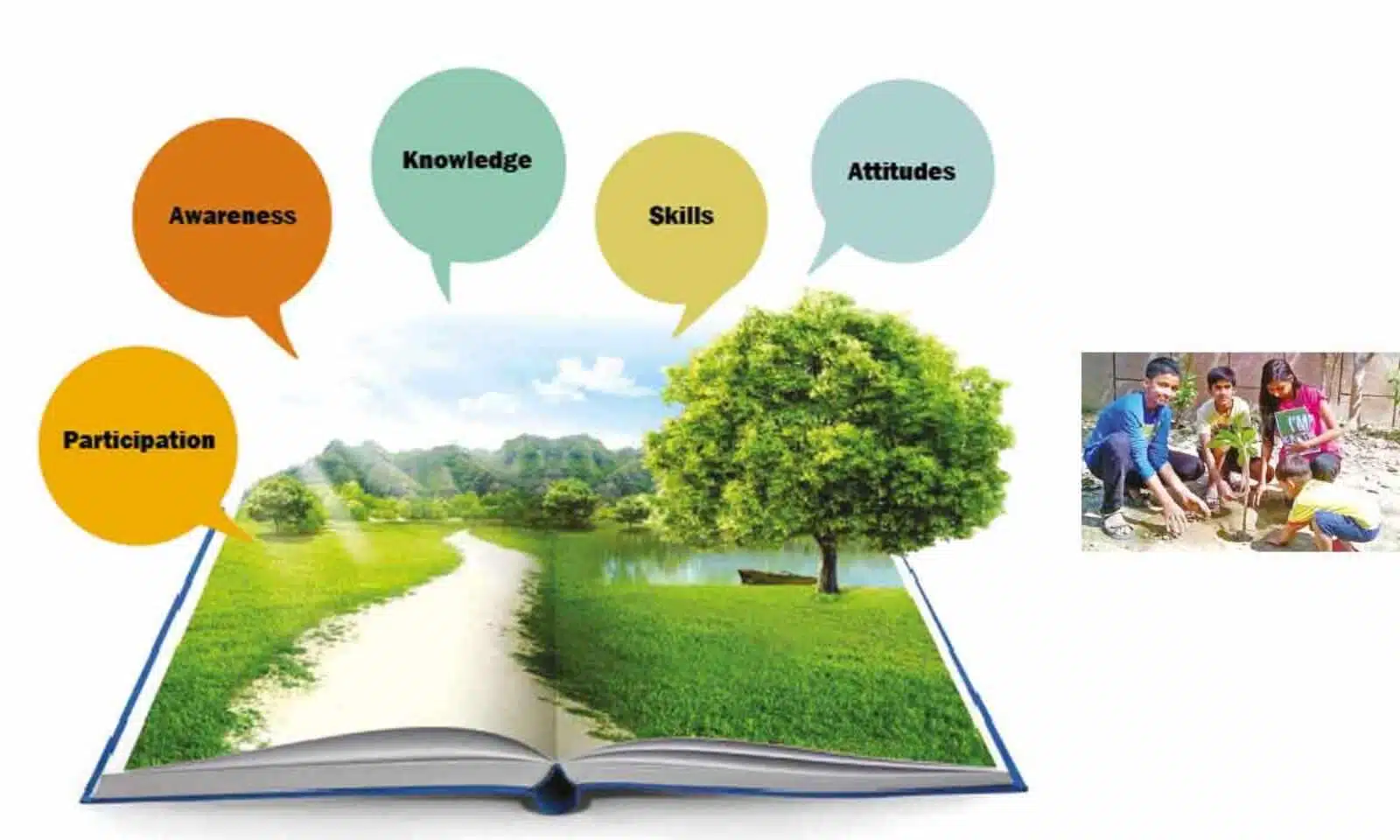
    Environmental learning is more than memorising species names or recycling rules. It’s about building understanding: how ecosystems function, how human actions affect them, how our lives are intertwined with nature. It also means developing skills and attitudes: critical thinking, willingness to act, to change habits, to speak up.

    Research supports this: for example, the study in Environmental Education found that higher levels of environmental literacy + awareness of ecological footprint were significantly linked with more positive pro‑environmental behaviours in adults. BioMed Central
    Another study showed that field‑based, outdoor “earth education” (hands‑on, real world) improved not just knowledge, but attitudes and self‑reported behaviours among students. PMC
    And still another found that integrating environmental education into K‑12 curricula supports not just environmental awareness but broader skills like creativity, collaboration, future readiness. neefusa.org+1
    So: environmental learning is both understanding + doing + becoming.

    Why It Matters – Because You & Me & the Earth Are Connected

    We often think “environmental issues” are far away: melting ice caps, rainforest deforestation, polar bears. They are far, but they’re also here. When you waste water, when you drive instead of walk, when you buy single‑use plastic because it’s easier, that ripple goes somewhere. Learning about the environment makes those ripples visible. It makes the connection visible: our choices → local ecosystems → global outcomes.

    For instance: in one study, improved “green space” access for kids improved their cognitive and behavioural development. That implies that healthy environments aren’t only about trees and wildlife — they are about us, our brains, our communities. The Guardian
    When you realize that, then change doesn’t seem optional. It becomes sensible.

    How Environmental Learning Happens – At Personal Level

    It starts with you. But also, with your context: your home, your school, your community. Here are some practical ways environmental learning can be fostered by individual action, and how you might engage with it:

    • Observation & Curiosity – Look around: what kinds of plants and animals live near you? What happens when it rains? What waste goes out of your home? What energy you use? Asking questions builds curiosity, and curiosity is the seed of learning.
    • Hands‑on Activities – Learning by doing: this could be gardening, composting, beach or park clean‑ups, tracking your household waste, analysing your consumption. Studies show outdoor and direct activities boost awareness and behaviour change more than purely theoretical lessons. MDPI+1
    • Reflecting & Connecting – After doing, reflect: how did that make me feel? What did I learn? What surprised me? How does this connect to a bigger picture (ecosystem, climate, economy)? That sets knowledge into context.
    • Changing Habits – Small things matter: maybe you choose to walk / bike when you can, reduce single‑use items, conserve water, eat a little less meat. These may seem small but when many individuals commit, it adds up. And learning helps you recognise where change is highest‑impact.
    • Sharing & Teaching – You don’t have to be a teacher. But when you talk about what you’ve noticed, invite others, organise a small group or join a local action, you amplify your learning and encourage others.
    • Advocacy & Community Action – When you’re comfortable with your own learning, you might step into broader roles: engaging local policy, pushing for green spaces, asking for sustainable practices at work or in your community. Because learning empowers voice.

    How Environmental Learning Happens – At Institutional / Societal Level

    Yes, you matter. But you also live in a system. Schools, workplaces, communities, governments matter too. The research shows that institutions that integrate environmental education get stronger outcomes. For example:

    • A study found that “why forest is important” activities improved environmental literacy and ethics among secondary school students. so06.tci-thaijo.org
    • Others note that when learning environments (schools, educational programs) are designed to co‑create sustainable development learning with values, local leadership, empowerment built in — they’re more successful. arXiv
    • Schools and curricula that tie environmental education to real‑world issues, cross‑disciplinary learning, and encourage student participation, create stronger behavioural change. neefusa.org+1

    This means: change at scale requires structures that support the individual learner. Which in turn means the “you” in “Change starts with you” is also embedded in broader contexts.

    The Obstacles – Learning Isn’t Always Easy

    Let’s be honest: doing this well is messy. There are barriers.

    • Knowledge doesn’t automatically become action – You can know many things, but not act. Though research shows literacy and awareness boost behaviour, the leap isn’t guaranteed. BioMed Central+1
    • Habit, comfort, convenience – We live in systems built for ease: car culture, single‑use plastics, consumption. Learning clashes with those.
    • Access & equity – Some communities have less access to green spaces, less educational resources, less voice in policy. Environmental learning must be equitable.
    • Scale & complexity – Environmental issues are complex, global, interlinked. Learning them fully is hard. It’s easy to feel overwhelmed.
    • Superficial learning – If environmental education is purely theoretical, or disconnected from lived experience, the impact is limited. The studies emphasise hands‑on, context‑based learning. ejournal.seaninstitute.or.id+1

    But knowing the obstacles helps us navigate them. We don’t need perfection; learning + action, imperfectly, adds up.

    Why “Change Starts with You” is More than a Slogan

    When you internalize environmental learning, you shift from being a passive consumer of the world, to being a participant in the natural‑human system. And that shift matters for several reasons:

    • Agency – You begin to realise you can influence change. You’re not just subject to big forces; you have a part to play.
    • Ripple effects – One person’s behaviour influences others. If you reduce waste, the people around you notice; community norms start shifting.
    • Feedback loops – When you act, you see results (sometimes small, sometimes big). That reinforces learning; you refine, you grow.
    • Better decisions – Environmental learning gives you tools: to question products, to understand trade‑offs, to prioritise sustainability in your choices.
    • Cultural shift – If enough individuals engage, societal values shift. The market shifts, policy shifts, systems shift. It begins with micro‑changes, grows into macro.

    So yes, “you” matter. Your actions matter. And learning is the spark.

    A Vision for How It Might Look in Everyday Life

    Let’s imagine a typical day, but through the lens of someone practicing environmental learning.

    Morning: you wake, take a shower. You think: “Okay, water usage…” Maybe you shorten your shower by a minute. You check your phone — you read a short article about local green spaces. Your curiosity grows.

    During commute: you choose the bus or bike instead of drive. On the way you notice how the air smells, how many cars there are. You reflect: “If more chose this, traffic & emissions drop.”

    Workday / school day: you suggest a small initiative — bring a reusable mug, skip single‑use plastics, have a lunch‑and‑learn about local water cycle, invite a speaker about local ecosystem. You share what you learned: that local wetlands act as sponges for floods.

    Evening: you prepare dinner — you look at your plate: where did this food come from? Could you choose a local, seasonal vegetable? You read that food transport and storage contribute a lot of emissions. You decide to try a plant‑based meal one night a week.

    Weekend: you join a clean‑up at a park, or plant a native tree, or go on a nature walk and notice invasive species. You talk with friends: “Did you know this species is non‑native and alters the habitat?” You bring it up casually.

    Reflection: you write in a journal: “Today I learned…” you note feelings, your challenges, your successes. You commit to one change next week.

    And then: you talk about it with others. You invite a friend on the walk. You encourage your team at work to think about waste streams. You bring up the topic at a dinner conversation.

    That’s how environmental learning + personal change interweave. You become a node in the environmental learning network.

    Conclusion

    So — to circle back: environmental learning isn’t optional anymore. It’s essential. Because our planet is under pressure; our societies are interconnected; our individual decisions matter. But learning alone is not enough; it must lead to change. And that change begins with you: your curiosity, your habits, your willingness to learn, act, share.

    Yes, it’s imperfect. You’ll forget. You’ll slip up. You’ll feel small compared to the scale of the challenges. That’s okay. What matters is persistence. What matters is starting. And sustaining. Because when many people adopt this mindset, many micro‑changes add up to macro‑shifts.

    So I invite you: pick one thing you’ll learn this week about the environment. Feel it in your bones. Make one small change. Share it. And watch how your view of “you and the world” begins to shift. Because change does start with you.

  • Knowledge That Protects Our Earth and Its Peoples

    Knowledge That Protects Our Earth and Its Peoples

    Introduction

    We live on a planet that gives us everything: air, water, trees, mountains, animals, the rich processes of nature. Yet, we often behave as though the Earth — our home — is endless, invincible. It is not. The protection of our Earth, and of the people who rely on it, depends on knowledge. Not just knowledge in the narrow sense (facts, numbers) but deeper knowledge: how things connect, how systems work, what our role is. This article explores that kind of knowledge — the kind that can really protect our Earth and its people.

    Understanding the Earth as a System

    First: we must understand that the Earth is not a collection of separate parts, but a web of interconnected systems. The atmosphere, the biosphere, the geosphere, the hydrosphere – they talk to each other.

    Researchers argue that humans need “environmental insight” — the competence to see how Earth‐subsystems work together, and how we fit in. MDPI+1
    For example: removing forest cover in one region doesn’t just affect trees; it affects rainfall patterns, soil stability, river flows, wildlife migration, carbon storage. And thereby, people’s lives.

    If we ignore that web, we risk unintended consequences. One small change may ripple outward. Conversely, understanding the connections gives us power — the power to act in ways that preserve balance.

    Knowledge of Human Impact & Ecosystems

    Next: we need knowledge about what humans are doing. The good, the bad — but especially the bad, because many times the threats are subtle. Pollution, climate change, habitat destruction, invasive species.

    From environmental education research: there are at least five types of knowledge that enable us to respond properly:

    • Knowledge of physical and ecological systems. naaee.org+1
    • Knowledge of social, cultural and political systems (how human society works). naaee.org
    • Knowledge of environmental issues (what the threats are).
    • Knowledge of multiple solutions (that there are choices).
    • Knowledge of citizen participation and action strategies.

    In plain terms: it’s not enough to know “the forest is being cut”. We must also know who is cutting it, why, what we can do about it, and how communities can engage.

    Only then does knowledge become protective. Otherwise it remains a passive list of facts, which doesn’t serve the people or the planet effectively.

    Indigenous and Traditional Knowledge – A Vital Piece

    Beyond the formal scientific knowledge, traditional and indigenous knowledge offers rich protective value. The way Indigenous peoples have lived in harmony with their landscapes for generations carries lessons for us today.

    For example, the concept of “traditional ecological knowledge (TEK)” is often referenced: it is place‐based, community rooted, and oriented toward living with nature rather than dominating it. Wikipedia
    In many cases, TEK holds practical insights — local ecological patterns, seasonal cycles, species relationships — which either science is now just catching up with, or sometimes ignoring.

    When we combine formal knowledge + traditional knowledge, we’re better equipped. Because one fills the gaps of the other.

    Nature‐Based Solutions & Applying Knowledge

    With understanding and awareness in place, the next step is application. Knowledge becomes protective only when it translates into action. One promising avenue: nature‐based solutions. These are solutions that use living systems (forests, wetlands, soils) to solve human concerns like climate change, water security, disaster risk. Wikipedia

    Examples:

    • Restoring wetlands so that they absorb floodwaters (instead of building only cement walls).
    • Reforesting hillsides to reduce erosion and landslides.
    • Designing cities with green spaces that cool urban heat islands and support biodiversity.

    These actions show how knowledge of systems + urgency + creativity lead to protective measures for Earth and for people.

    Education, Awareness & Behaviour Change

    It’s all well to have scientific papers and policy frameworks — but if people don’t know, don’t feel, don’t participate — the knowledge stays inert. Research in “informal earth education” shows that when people are engaged in meaningful programs (beyond textbooks) their attitudes shift, which then helps knowledge stick. Frontiers

    In short: protectively oriented knowledge needs to be spread, internalised, turned into lived behaviour. From household recycling, to community watershed management, to public policy engagement.

    Take the scene in a small town: when residents learn “our river is fed by upstream forests, our water quality depends on that” — they may plant trees, monitor runoff, speak up for regulation. That’s knowledge protecting Earth & people.

    Why It Matters – Risks & Stakes

    Let’s lay out the stakes, because protective knowledge becomes urgent when the risks are high. Several recent studies show:

    • The planet is exceeding many of its “safe operating spaces” (climate, freshwater, nutrients, biodiversity) – meaning our systems are under serious strain. AP News
    • Large portions of global land are now beyond ecological limits – meaning the resilience is diminished. The Times of India

    What this means: if we don’t act, we’re not just losing trees or species — we’re risking human well‐being. Clean water, clean air, stable food systems, safe living environments — all depend on stable Earth systems. Knowledge allows us to see these stakes, to anticipate the risks, to build protective strategies.

    How to Cultivate Protective Knowledge (and Use It)

    Here are several practical steps toward cultivating and using protective knowledge — imperfectly, and humanly.

    1. Learn the systems – Take time to learn about how Earth works: water cycles, carbon cycles, ecosystems, soil, climate. Even if superficially.
    2. Link to human systems – Understand how our economy, politics, culture, daily lives connect to those Earth systems.
    3. Listen to local knowledge – Communities, indigenous peoples, local stakeholders often have observations and insights that enrich science.
    4. Look for solutions – Don’t stop at “there’s a problem” — ask: what can we do in our region, community, home? Solutions might be small or large.
    5. Act – Knowledge without action is like a locked door. Join community efforts, advocate policy, change personal habits.
    6. Teach and share – If you know something, share it. Education isn’t only schools — families, conversations, neighbourhoods matter.
    7. Stay curious and humble – Systems evolve, new threats emerge. Be prepared to revise your understanding. Being protective means staying vigilant.

    Challenges and Caveats

    Of course — nothing is perfect. Some challenges in turning knowledge into protection:

    • Complexity: Earth systems are complex; knowledge may be incomplete. We have to act under uncertainty.
    • Behaviour gap: Knowing doesn’t always lead to doing. Many people know climate change is real, but behaviour lags.
    • Equity & justice: Some communities bear the brunt of environmental damage without getting the protective capacity. Knowledge must be shared and accessible.
    • Scale mismatch: The problems are global; actions are often local. Bridging that gap is hard.
    • Political & economic inertia: Even when knowledge is clear, vested interests may resist change.

    But these don’t mean we give up — they mean our protective knowledge has to be smart, inclusive, persistent.

    A Vision for the Future

    Imagine a future where knowledge is not a scarce commodity but shared widely. Where children grow up understanding that the rain in their town depends on a mountain forest, and the food on their plates depends on healthy soil. Where communities practise restoration, cities plan with nature in mind, nations coordinate across borders on protecting vital Earth systems.

    In that future: Earth is healthier. People are healthier. The divide between “environment vs humans” dissolves because humans are part of the environment. The protective knowledge is embedded in culture, policy, education, economy.

    And we live with not just courage or hope — but informed action.

    Conclusion

    So – we come back to the beginning: protecting our Earth and its people. It might sound grand, distant. But it starts with knowledge. Deep, connected, human knowledge. Knowledge of systems, knowledge of impact, knowledge of solutions, knowledge shared. If we commit to that – to learn, reflect, act, teach – then our Earth stands a chance, and we do too.

    And yes — there will be mistakes, setbacks, resurgence of old habits. But because we have knowledge — protective knowledge — we can pivot, adapt, recover. That’s the power. That’s the hope.

    Thanks for reading. If you like, I can also pull in specific case‐studies from around the world where this kind of knowledge made a real difference. Do you want that?

  • Eco-Education for a Cleaner and Greener Planet

    Eco-Education for a Cleaner and Greener Planet

    In our hurry to develop, expand cities, boost economies and adopt modern comforts, we’ve often overlooked one key thing: the planet that supports us. That’s where eco-education — sometimes called environmental education or “eco-literacy” — enters. It isn’t just about planting trees (though that helps). It’s about learning, understanding, feeling and acting so that individuals and communities make better choices for our shared home.

    What is Eco-Education and Why It Matters

    At the heart, eco-education means giving people knowledge, attitudes and skills so they can act in environmentally responsible ways. A helpful definition: “environmental education … is a key element of a conscious approach to environmental protection and sustainable development.” Naturalnie w Równowadze
    It enables learners to see how the natural world functions, how human actions affect it, and how they might respond.

    Why is that important?

    • We’re facing large-scale issues: climate change, biodiversity loss, pollution, resource depletion. Without awareness, we risk accelerating damage. Naturalnie w Równowadze
    • Educational research shows that eco-education can foster positive changes: In one study with university students, more environmental education correlated with more ecologically friendly behaviour, especially when mediated by a sense of responsibility. MDPI
    • For younger learners, hands-on outdoor environmental programs improved both knowledge and attitudes. PMC

    In short: teaching about the environment empowers. It creates more than passive awareness — it builds potential for action.

    Where Eco-Education Happens: From Classroom to Community

    Eco-education isn’t confined to one type of setting. It spans formal schooling, informal community programmes, everywhere. A few frameworks to highlight:

    • The global programme Eco‑Schools helps schools integrate sustainability into their curriculum and operations. Research shows that students in Eco-Schools fairs somewhat better on environmental knowledge than those not participating — though attitudes/behaviours vary. Children & Nature Network+2ERIC+2
    • For early childhood education: programmes that teach sorting waste, plant care, understanding ecosystems in simple terms show promise in building eco-literacy from the start. jurnal.uibbc.ac.id
    • Teachers integrating environmental education into language classes (e.g., English) found that students more actively engaged when the topic connected to real-world ecological issues, not just abstract facts. MDPI

    Key takeaway: Eco-education works best when it is embedded into real life — field trips, hands-on activities, local context — not just lectures about “the planet.”

    Core Components of Effective Eco-Education

    What elements make eco-education effective? Research suggests several:

    1. Knowledge: Understanding of ecological systems, human impacts, resource cycles. Without this base the rest is shaky. PMC+1
    2. Attitudes & Values: A sense of connection, responsibility, agency. If learners see themselves as powerless, education stalls. Studies show that environmental responsibility mediates the effect of eco-education on behaviour. MDPI
    3. Skills & Behaviour: Critical thinking, decision-making, problem-solving. For example: Can a learner evaluate a product’s environmental impact, choose a better option, reduce waste? One study found these skills improved via outdoor programs. PMC
    4. Context & Experience: Local relevance, lived experiences, green elements in the learning environment. A school with green spaces, active teaching methods, environmental policy performed better in student outcomes than one without. Children & Nature Network
    5. Sustained Engagement: Short bursts help, but long-term, consistent integration is what builds habit. Many programmes fail if they are one-off.

    In short: eco-education isn’t just “teach a lesson about climate change.” It’s about building a culture of awareness and action.

    Challenges & Pitfalls

    Nothing is perfect. Eco-education faces obstacles, many of them human. Here are some:

    • Knowledge vs behaviour gap: Even when students learn facts, they don’t always change behaviour. For example, Eco-Schools increased knowledge but behaviours didn’t always follow proportionally. Children & Nature Network+1
    • Teacher preparedness: Some teachers struggle to integrate environmental topics because they lack training or see them as “extra,” rather than integrated. Dergipark
    • Curriculum overload & priorities: Schools are busy; adding eco-education without coordination can mean it gets sidelined.
    • Context-dependency: What works in one region may not in another. For instance, cultural values, resource availability, local ecology matter.
    • Short term vs long term: One project or day of activity can spark interest, but long-lasting change demands ongoing support, follow-up, and structural shifts.

    Being aware of these pitfalls helps design better programmes.

    Practical Steps: How to Foster Eco-Education (for Schools, Communities, Individuals)

    If you want to advance eco-education — maybe you’re a teacher, parent, community organiser — here are practical ideas:

    • Embed environment across subjects: Don’t treat it as an addon. For example, in maths measure rainfall, examine statistics of waste, in language classes write about local ecological issues.
    • Use hands-on, real-world activities: Gardening, waste audits, local river clean-ups, school green teams. Experience builds connection.
    • Enable student agency: Let learners make decisions, lead projects. When they own it, the motivation increases.
    • Link local context to global issues: Show how what happens locally matters for the planet, and vice versa.
    • Make green space part of everyday life: Schools with gardens, trees, outdoor learning spaces show better outcomes for eco-learning. Children & Nature Network
    • Train and support teachers: Provide resources, professional development, peer sharing. Without teacher buy-in, it falters.
    • Connect with community partners: NGOs, local government, field experts, can bring real world in.
    • Evaluate and reflect: Track not just knowledge, but attitudes and behaviour over time. Use feedback to improve.
    • Scale long-term: Move from one-off events to embedding eco-education into institutional culture.

    Why This Matters for the Planet

    Let’s pause and think: Why invest energy in eco-education? Because the stakes are high. Our planet is under pressure, and we need more than technology or policy alone. We need a citizenry that understands, cares and acts.

    • With better eco-literacy, people can make more sustainable choices: in consumption, transport, waste, energy.
    • When future generations are educated in this way, behaviours may shift from “throwaway culture” to “steady state thinking.”
    • Societies where environmental responsibility is a norm are more resilient — when facing disasters, resource shocks, climate change.
    • Finally, eco-education is part of justice: many vulnerable communities face the worst environmental impacts; education empowers them to engage.

    In fact, the literature emphasises that “only an informed society can better understand the effects of its actions on the planet and learn how to implement environmentally friendly practices.” Naturalnie w Równowadze

    A Vision: What a Greener Future Could Look Like

    Imagine: Schools where students spend time outdoors, observe insects, test water samples, talk about land-use change. Communities where neighbours collaborate on gardens, bicycles replace some car journeys, you see less single-use plastics and more shared reuse systems. Policymakers working with educators so that eco-literacy is in lifelong learning, not just primary school.

    In that future, eco-education isn’t a niche but a backbone of how societies function. People see nature not just as background but as partner, recognise impacts of their actions, feel empowered to do something.

    And yes, the planet becomes cleaner, greener — because the culture has shifted.

    Final Thoughts

    I’ll leave you with this: Eco-education is not a magic wand. It doesn’t instantly fix climate change or restore ecosystems. But it is a key piece of the puzzle. Without well-educated, motivated, responsible citizens, even the best technological fixes may fail or be unevenly applied.

    So if you’re reading this and thinking: “What can I do?” — maybe start small. Teach someone a bit about recycling, organise your school or community group around sorting waste, get a local tree-planting event going, or push for green space in your neighbourhood. Because each bit helps.

    We’re all part of the planet’s story — and eco-education can help us write a better chapter.

  • Calm Mind, Strong Learning – The Perfect Balance

    Learning is more than memorizing facts or completing assignments. It’s a process that involves the mind, emotions, and focus. And yet, many students, professionals, and lifelong learners struggle with stress, distractions, and pressure. In such chaos, learning can feel weak, ineffective, even exhausting. But there’s a secret: a calm mind strengthens learning. Finding the balance between calmness and active study can transform the way we learn—and the way we live.

    Why Calmness Matters in Learning

    A busy, anxious mind struggles to focus. Thoughts jump, attention scatters, and retention drops. But when the mind is calm:

    • Concentration improves
    • Understanding deepens
    • Creativity flourishes
    • Stress and anxiety reduce
    • Learning becomes more enjoyable

    In other words, calmness is not laziness—it’s preparation. A calm mind is like a clear lake: when the surface is still, you can see everything beneath it. Learning becomes easier, faster, and more meaningful.

    The Science Behind Calm Learning

    Research shows that stress negatively affects memory and cognitive function. When the brain is under pressure, it produces cortisol, which can block information processing. On the other hand, mindfulness, meditation, and deep focus improve brain function, attention, and memory consolidation.

    Simply put: calm minds learn better. Strong learning does not come from cramming under pressure; it comes from a combination of focus, reflection, and mental clarity.

    Principles of Calm and Strong Learning

    1. Presence
    Being fully present in the moment is key. Whether reading, listening, or problem-solving, focus entirely on the task at hand. Avoid multitasking—your brain works best when it concentrates on one thing at a time.

    2. Patience
    Learning is a process, not a race. Mistakes are part of growth. Calm learners accept errors as opportunities, not failures.

    3. Reflection
    Take time to reflect on lessons. Ask questions like: What did I understand? What can I apply in real life? Reflection connects knowledge to understanding.

    4. Mindful Awareness
    Notice your emotions while learning. Frustration? Fatigue? Excitement? Recognizing these feelings allows you to manage them instead of being controlled by them.

    5. Balance
    Balance study with rest. Brain needs downtime to process information. Overworking leads to fatigue and reduced retention.

    Practical Strategies for a Calm, Strong Mind

    1. Mindful Breathing: Start study sessions with a few deep breaths to calm your nervous system.
    2. Set Intentions: Decide what you want to learn and why—it brings focus and motivation.
    3. Break Work into Small Steps: Large tasks feel overwhelming; small steps maintain calm and steady progress.
    4. Take Mindful Breaks: Short breaks with stretching, walking, or quiet reflection refresh the mind.
    5. Active Learning: Ask questions, summarize information aloud, or teach others—it reinforces knowledge without stress.
    6. Environment Matters: Minimize distractions, tidy your space, and create a calm environment conducive to focus.

    Benefits of Calm Minded Learning

    • Improved Focus: Calm minds are more attentive.
    • Better Retention: Information stays longer when absorbed mindfully.
    • Reduced Stress: Mindfulness decreases anxiety and promotes emotional balance.
    • Enhanced Creativity: Calmness allows the mind to explore new ideas.
    • Sustainable Learning: Enjoying the process encourages lifelong learning.

    Overcoming Challenges

    Life is full of distractions. Exams, deadlines, notifications, responsibilities—they all challenge calm focus.

    Tips to overcome:

    • Start small: even 5 minutes of mindfulness can help
    • Accept imperfection: calm learning is a practice, not a perfect routine
    • Combine physical activity: walking, light exercise, or stretching improves focus
    • Avoid multitasking: focus on one subject or task at a time for better results

    Conclusion

    Calm mind, strong learning—it’s not just a slogan. It’s a strategy, a lifestyle, a path toward effective, meaningful education. Knowledge gained under pressure may fade. Knowledge gained with calm focus lasts, integrates deeply, and enhances creativity.

    When learning is balanced with peace and awareness, it becomes more than academics. It shapes the mind, nurtures emotional well-being, and builds resilience for life.

    A calm mind strengthens learning, and strong learning reinforces calm. Together, they create the perfect balance, where growth, understanding, and happiness coexist.