Category: Education & Learning

  • How to Take Smart Notes Like a Top Student

    How to Take Smart Notes Like a Top Student

    Notes. Simple word, huge impact. But let’s be honest, most students struggle with it. Some just jot down everything, hoping they’ll remember it later. Others rely on memory alone, only to panic when exams come. Taking smart notes isn’t about writing everything or copying textbooks. It’s about capturing the right information in a way that makes your brain work for you, not against you.

    Understand Before You Write

    First thing, don’t write blindly. Listen or read with the intent to understand, not just record. If you don’t get the concept, writing it down won’t help. Ask questions while you learn: Why is this important? How does it connect to other topics? When you understand, the note-taking process becomes meaningful, not mechanical.

    Top students don’t just write; they process. That’s the difference between notes that sit in a notebook gathering dust and notes that actually help you ace exams.

    Use Your Own Words

    Copying word-for-word might feel safe, but it doesn’t stick. The act of rewriting ideas in your own words forces your brain to make sense of the material. Paraphrasing helps with understanding and recall. It’s okay if your notes aren’t perfect grammar or complete sentences. Fragments, doodles, arrows—anything that helps you remember counts.

    Don’t worry about looking “academic.” The notebook is for you, not anyone else.

    Structure Matters

    Chaos in notes equals chaos in memory. Use headings, subheadings, bullet points. Highlight key terms or concepts. Indentation can show hierarchy—main ideas first, details later. Color coding is optional but helpful. Maybe blue for definitions, red for examples, green for formulas. Just don’t overdo it—too many colors can actually be distracting.

    A well-structured note page is like a mini-map. When you review, you immediately see the big picture and the details. No hunting through scribbles or random lines.

    Use Visuals

    Humans are visual creatures. Diagrams, flowcharts, timelines—they all help your brain grasp complex ideas faster than plain text. Even small sketches or arrows linking ideas can make a difference. Mind maps are especially powerful for connecting topics.

    You don’t need to be an artist. Stick figures, boxes, arrows—they work perfectly. The goal is clarity, not beauty.

    Make It Active

    Smart notes aren’t just for recording; they’re for engaging. Ask yourself questions while taking notes. Add examples or relate it to something you already know. Highlight contradictions, patterns, or connections. Active note-taking turns passive reading into learning.

    Some students write “review later” in the margins. Others summarize paragraphs in one sentence. Both methods force your brain to interact with the material instead of just transcribing.

    Review and Revise

    Notes aren’t finished the moment you write them. Top students revisit notes, preferably within 24 hours. This is where the magic happens. Revising helps transfer information from short-term to long-term memory. During review, add missing details, clarify points, or rewrite confusing parts.

    Don’t just flip pages. Test yourself with your notes. Cover sections and recall, explain concepts aloud, or turn headings into questions. This active review is what makes your notes truly smart.

    Organize Digitally or Physically

    Some swear by notebooks, others by apps. Either works as long as it’s organized. Physical notebooks are tactile and often easier for memory. Digital notes are searchable, portable, and easy to back up. Whatever you choose, consistency matters. Keep related notes together, date them, and label clearly. Messy or scattered notes defeat the purpose.

    Keep It Concise

    Notes aren’t meant to be textbooks. Avoid writing everything. Focus on concepts, keywords, formulas, examples, and connections. Long paragraphs are hard to scan and review. Short, clear points make revising faster and more effective.

    Remember: notes are your memory aid. They should save you time, not add extra work later.

    Final Thought

    Taking smart notes isn’t about fancy pens or perfect handwriting. It’s about strategy: understand before you write, structure your ideas, engage actively, use visuals, and review consistently. Smart notes save time, reduce stress, and make studying far more efficient.

    Top students don’t just take notes—they turn notes into a tool for understanding, recalling, and applying knowledge. Start practicing these strategies now, and your study sessions will become more productive, your memory sharper, and your exam prep far less stressful. In the end, notes aren’t just words on a page—they’re the foundation of real learning.
  • Top Time Management Tips for Students

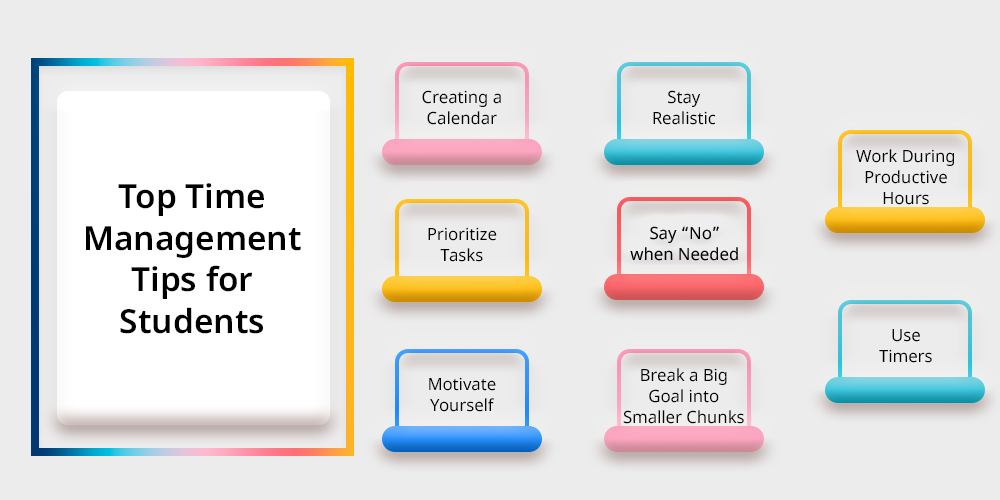
    Top Time Management Tips for Students

    Time—funny thing, isn’t it? No matter how many hours you have in a day, it never feels like enough. Assignments, lectures, group projects, part-time jobs, social life… it piles up fast. If you’ve ever felt overwhelmed, anxious, or like you’re always running behind, you’re not alone. The good news? With some smart strategies and a bit of discipline, you can take control of your time instead of letting it control you.

    1. Know Your Priorities

    First things first: know what actually matters. Not every task is equally important. Some assignments or exams weigh more, some projects have tighter deadlines. Make a list of tasks and categorize them: urgent, important, and less important.

    This simple step stops you from wasting hours on things that don’t really matter. It also gives a sense of direction—you know exactly where to focus. Trust me, trying to do everything at once just leads to stress and half-finished work.

    2. Create a Realistic Schedule

    A lot of students fail at time management because their schedules are unrealistic. Don’t block 12 hours straight thinking you’ll magically stay focused. Humans aren’t built that way.

    Break your day into smaller chunks. Study for 50–60 minutes, then take a 5–10 minute break. Longer breaks after a few cycles. Include classes, meals, exercise, and even leisure time. A schedule isn’t about being rigid; it’s about giving your day structure and predictability.

    3. Use a Planner or Digital Tools

    Whether it’s a notebook or an app, keeping track of tasks is essential. Write down deadlines, exam dates, and study sessions. Seeing everything in one place reduces the chances of forgetting something.

    Apps like calendars, reminders, and task managers are super helpful. But don’t go overboard. Pick one system and stick with it. Switching between apps or constantly checking notifications can waste more time than it saves.

    4. Break Tasks Into Smaller Steps

    Big assignments or projects can feel intimidating. And when you feel intimidated, procrastination sneaks in. The trick is to break large tasks into smaller, manageable steps.

    For example, instead of “write essay,” break it down: research topic, outline, write introduction, write body paragraphs, revise. Checking off these small steps gives a sense of progress and keeps motivation high.

    5. Avoid Multitasking

    Multitasking is a myth. Trying to study while scrolling social media or chatting with friends divides your attention and slows you down. Focus on one task at a time. Complete it, then move on.

    This may sound obvious, but it’s surprisingly hard to practice. A simple way to start is turning off notifications or putting your phone in another room during study sessions. You’ll be amazed at how much faster you can get things done.

    6. Set Clear Goals

    Time management isn’t just about making lists; it’s about having clear goals. What do you want to achieve in a study session, a week, or a month? Set SMART goals—specific, measurable, achievable, relevant, and time-bound.

    For instance, “finish 20 pages of biology notes today” is way better than “study biology.” It’s precise, achievable, and keeps you accountable.

    7. Learn to Say No

    One of the hardest lessons for students is saying no. Social invitations, extra projects, random errands—they all eat into your time. It’s okay to decline things that interfere with your priorities. Time is your most valuable resource; guard it carefully.

    Of course, balance is key. You don’t want to become a hermit, but learning to say no without guilt is a crucial skill.

    8. Review and Reflect

    At the end of each day or week, review your schedule. What went well? What didn’t? Did you procrastinate on certain tasks? Reflection helps you understand your habits, adjust your schedule, and become more efficient over time.

    It’s easy to get frustrated when things don’t go perfectly, but small improvements compound over time. Even shifting your most productive study times by an hour can make a huge difference.

    9. Take Care of Yourself

    Time management isn’t just about doing more; it’s about doing better. Sleep, nutrition, and exercise are not optional. A tired, hungry, or stressed brain works slower, forgets things easily, and struggles with focus.

    Even a short walk, stretching, or a healthy snack can boost energy and efficiency. Don’t sacrifice your well-being for productivity—good time management balances both.

    Final Thought

    Time management isn’t magic. It’s about habits, self-awareness, and intentional planning. Prioritize tasks, create a realistic schedule, focus on one thing at a time, and take care of yourself along the way.

    Remember, it’s not about filling every minute with work. It’s about using your time wisely so you can achieve your goals without burning out. Master these strategies, and suddenly those overwhelming days don’t feel so impossible. You’ll finish assignments on time, be ready for exams, and even have some space left for life outside studying.

    Time is limited, but with the right approach, you can stretch it farther than you thought possible. Start small, stay consistent, and watch how control over your time transforms your student life.

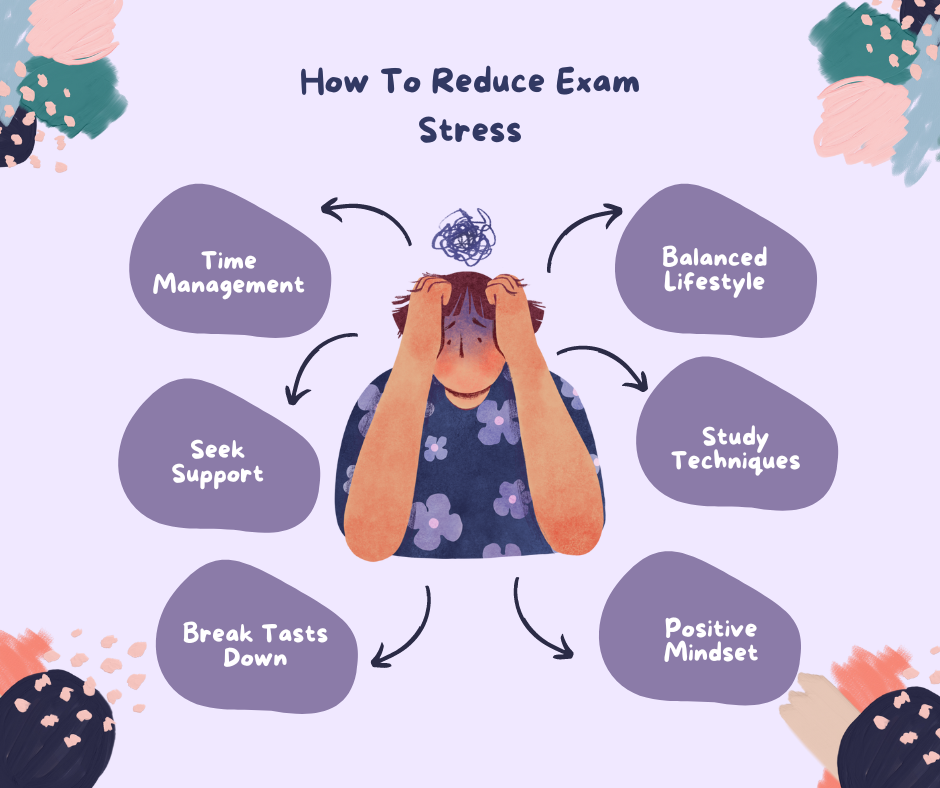
  • How to Prepare for Exams Without Stress

    How to Prepare for Exams Without Stress

    Exams. Just saying the word can make your heart race, palms sweat, and brain go blank. We all know that feeling—the panic when you realize there’s so much to cover and so little time. But here’s the thing: preparing for exams doesn’t have to feel like walking on a tightrope with no safety net. With the right strategies, you can study effectively, retain information, and actually keep your sanity.

    Understand Your Exam

    First step, always, always understand what kind of exam you’re facing. Multiple choice? Essay? Practical problem-solving? Each type needs a slightly different approach. And don’t just glance at the syllabus. Really break it down. Highlight topics that are heavily weighted. Note chapters that you’ve already struggled with. When you know exactly what you’re up against, you can make a plan that feels realistic.

    It’s easy to think “I’ll just start revising everything.” That’s a recipe for stress. Focus on what’s important, what actually counts, and give yourself a chance to tackle it properly.

    Make a Realistic Study Schedule

    One of the biggest causes of exam stress is trying to cram everything at the last minute. Instead, make a study schedule. And by schedule, I mean something that isn’t overly ambitious. Don’t block 12 hours straight and expect miracles. Break your study time into smaller, manageable chunks.

    For example, you can try the Pomodoro technique—study for 25 minutes, take a 5-minute break, repeat. After four cycles, take a longer break. This method not only keeps your brain fresh but also reduces stress because you know breaks are coming.

    Also, balance subjects. Don’t do the same tough topic for three hours straight. Mix it up with something easier, or something you actually enjoy. Your brain will thank you.

    Active Learning Over Passive Reading

    Rereading textbooks for hours is tempting, but it doesn’t really work. Active learning does. Ask yourself questions. Summarize what you’ve read in your own words. Teach it to an imaginary class or a friend. Make flashcards, mind maps, diagrams—whatever works for you.

    The more actively you engage with material, the more your brain retains. Passive reading gives a false sense of productivity. You feel like you’re working hard, but when the exam comes, nothing sticks.

    Take Care of Your Body

    It’s crazy how often people forget this. Your brain is part of your body, and if your body is stressed or exhausted, your brain can’t perform. Sleep. Seriously, sleep. Late-night cramming sessions may feel productive, but you’re just sacrificing memory and focus.

    Eat well. Avoid too much junk food or caffeine binges—they spike your energy and then crash it. Hydrate. Exercise a bit, even if it’s just a 20-minute walk. Movement clears your head and reduces tension.

    Stress-Relief Techniques

    Even with the best plan, stress can creep in. That’s normal. What matters is how you deal with it. Quick breathing exercises, meditation, or even short mindfulness practices can calm the mind. Some people find journaling or writing down their worries before studying helps—they feel less trapped by their own anxiety.

    Also, don’t isolate yourself completely. Talking with friends about study strategies, sharing tips, or just venting a bit can lighten the mental load. Just avoid comparing yourself to them—it’s easy to get discouraged that way.

    Practice Exams and Past Papers

    Nothing prepares you better than practicing under real conditions. Past papers, mock tests, sample questions—use them. They familiarize you with the format, timing, and pressure. They also highlight areas where you need more revision.

    The trick is not to obsess over mistakes. Each error is a chance to learn. Stress comes when we fixate on what we don’t know. Shift your mindset: mistakes are information, not proof of failure.

    Break Down Big Goals

    Exams can feel like one giant mountain. But if you break it down into smaller, achievable goals, it becomes less scary. Instead of “I have to learn the entire chemistry syllabus,” try “I’ll finish chapter 3 and 4 today, then do practice questions.” Checking off smaller goals gives a sense of progress and reduces overwhelm.

    Remember, it’s about consistent effort, not perfection. One productive hour is worth more than six distracted hours.

    Final Thought

    Exams are stressful, yes, but stress doesn’t have to control you. Preparation, organization, and self-care are your allies. Understand your exam, make a realistic study plan, engage actively with the material, take care of your body, and allow yourself breaks. Use past papers as a learning tool, and break big tasks into smaller, manageable steps.

    At the end of the day, success isn’t just about memorizing everything—it’s about being calm, focused, and confident in what you know. Treat your study time like a process, not a panic attack. Step by step, you’ll get there, and maybe even surprise yourself with how much you can handle without losing your cool.

  • 7 Ways to Improve Focus and Concentration During Study

    7 Ways to Improve Focus and Concentration During Study

    Studying is hard enough without your mind wandering off every two minutes. You sit down, open your textbook, and suddenly you’re checking your phone, staring at the ceiling, or thinking about what’s for lunch. Sound familiar? Focus and concentration aren’t just about willpower—they’re skills you can train. Here’s how.

    1. Eliminate Distractions

    This seems obvious, but you’d be surprised. Phones, notifications, social media, background noise—they all chip away at focus. Try turning your phone on silent, putting it in another room, or using apps that block distracting websites. Even small changes can drastically improve concentration.

    2. Create a Dedicated Study Space

    Your brain associates places with actions. If you study on your bed, your mind thinks “relax.” Find a quiet spot, organized, and only for studying. Good lighting, a clean desk, maybe a plant—create an environment that signals, “It’s time to focus.”

    3. Use Time-Blocking Techniques

    Techniques like the Pomodoro Method work wonders. Study in short, intense bursts—say 25–50 minutes—then take a short 5–10 minute break. Your brain can only focus for so long. These small breaks actually boost productivity and prevent mental fatigue.

    4. Prioritize Tasks

    Not all study tasks are equally important. Make a list of what needs to be done and tackle high-priority tasks first. Crossing off important items gives a sense of achievement and keeps motivation high.

    5. Practice Mindfulness

    Meditation or just a few minutes of deep breathing can improve your concentration. Mindfulness trains your brain to notice distractions without acting on them. Even 5 minutes a day can make a difference in your ability to stay present while studying.

    6. Stay Physically and Mentally Healthy

    Your brain doesn’t work in isolation. Sleep, nutrition, and exercise all impact focus. Skipping meals, staying up late, or sitting for hours without moving makes concentration nearly impossible. A healthy body supports a sharp mind.

    7. Break Down Tasks

    Big, overwhelming tasks are concentration killers. Instead of thinking, “I need to study this entire chapter,” break it down: read one section, summarize key points, do practice questions. Small steps make it easier to focus, and completing each step gives mini motivational boosts.

    Final Thought

    Focus and concentration aren’t just about “trying harder.” They’re about creating the right environment, using smart techniques, and taking care of your mind and body. Start small—eliminate distractions, try time-blocking, and gradually train your brain to stay present. Over time, you’ll notice studying becomes less of a struggle and more of a productive, even enjoyable, process.

    Remember, even small improvements compound. Each day you practice focus, your brain gets better at it. Consistency beats intensity.

  • How to Create a Productive Study Schedule

    How to Create a Productive Study Schedule

    Let’s be real. Studying without a plan is like trying to drive somewhere new without a map. You might eventually get there—but it’s stressful, confusing, and way less efficient. A productive study schedule doesn’t just organize your time; it helps reduce stress, improve retention, and actually makes studying feel… doable.

    Here’s how to create one that works for you.

    Step 1: Understand Your Goals

    Before you schedule anything, figure out what you want to achieve. Are you studying for finals? Trying to improve in a particular subject? Or keeping up with regular homework? Write down your goals. Clear goals make it easier to prioritize tasks and know what deserves your focus.

    Step 2: Assess Your Time

    Look at your day and see when you’re most alert. Some people focus best in the morning, others late at night. Identify your peak productivity hours and assign your hardest tasks to those slots. Don’t forget to account for meals, classes, work, and rest. Overloading your schedule is a recipe for burnout.

    Step 3: Break Tasks Into Manageable Chunks

    Big tasks are intimidating. Instead of “study chemistry,” try “review chapter 3, summarize key points, do practice questions.” Breaking tasks down makes them actionable, gives you small wins, and reduces procrastination.

    Step 4: Prioritize Tasks

    Not all study tasks are equal. Use something like the Eisenhower Matrix:

    • Urgent & Important: Exams tomorrow, deadlines today. Do these first.
    • Important but Not Urgent: Projects due next week, long-term learning. Schedule these next.
    • Urgent but Not Important: Tasks that distract from major goals. Delegate or limit them.
    • Neither: Avoid.

    This helps you focus on what truly matters.

    Step 5: Choose Your Study Method

    Different subjects need different approaches. Reading, summarizing, flashcards, problem-solving, group study—pick methods that fit each topic. Combine techniques to avoid monotony and boost retention.

    Step 6: Use Time Blocks and Breaks

    Focus works best in short bursts. Use techniques like the Pomodoro Method: 25–50 minutes of study, then 5–10 minutes of break. After several blocks, take a longer break. Your brain consolidates info during rest, so don’t skip breaks.

    Step 7: Be Realistic

    Don’t schedule 12 hours of study straight. Life happens—classes, chores, social stuff. Build flexibility into your schedule. Missing a session isn’t failure; just adjust and keep going.

    Step 8: Track Your Progress

    Keep a log of what you complete each day. Seeing progress motivates you and highlights areas needing extra focus. Crossing off tasks feels surprisingly satisfying—and keeps you accountable.

    Step 9: Make It Visual

    A visual schedule—planner, whiteboard, or calendar app—makes your plan tangible. Color-code subjects, use stickers or highlights, whatever keeps you engaged. Seeing your plan at a glance makes it easier to follow.

    Step 10: Review and Adjust

    No schedule is perfect the first time. At the end of each week, review what worked, what didn’t, and tweak accordingly. Over time, you’ll find a rhythm that fits your energy levels, workload, and learning style.

    Bonus Tips

    • Start Small: Don’t overhaul your entire week in one night. Start with one or two study blocks.
    • Combine with Rewards: Treat yourself after completing tasks—small rewards reinforce motivation.
    • Account for Sleep: Don’t sacrifice rest. Sleep is crucial for memory and focus.
    • Stay Flexible: Life is unpredictable. A schedule is a tool, not a prison.

    Bottom Line

    A productive study schedule isn’t about perfection—it’s about structure, focus, and consistency. It turns overwhelming workloads into manageable steps, helps you use your time wisely, and reduces stress. Start by understanding your goals, block your time, prioritize tasks, and keep tweaking.

    Remember, even a “good enough” schedule beats no schedule at all. Small adjustments, consistent effort, and smart planning—these are the secrets to studying smarter, not harder.

  • The Pomodoro Technique for Students: A Complete Guide

    The Pomodoro Technique for Students: A Complete Guide

    Studying can feel… endless. Hours pass by, you glance at your notes, stare at your laptop, and somehow, nothing really gets done. We’ve all been there. But there’s a method that’s surprisingly simple—and actually works. It’s called the Pomodoro Technique, and for students, it can be a total game-changer.

    What is the Pomodoro Technique?

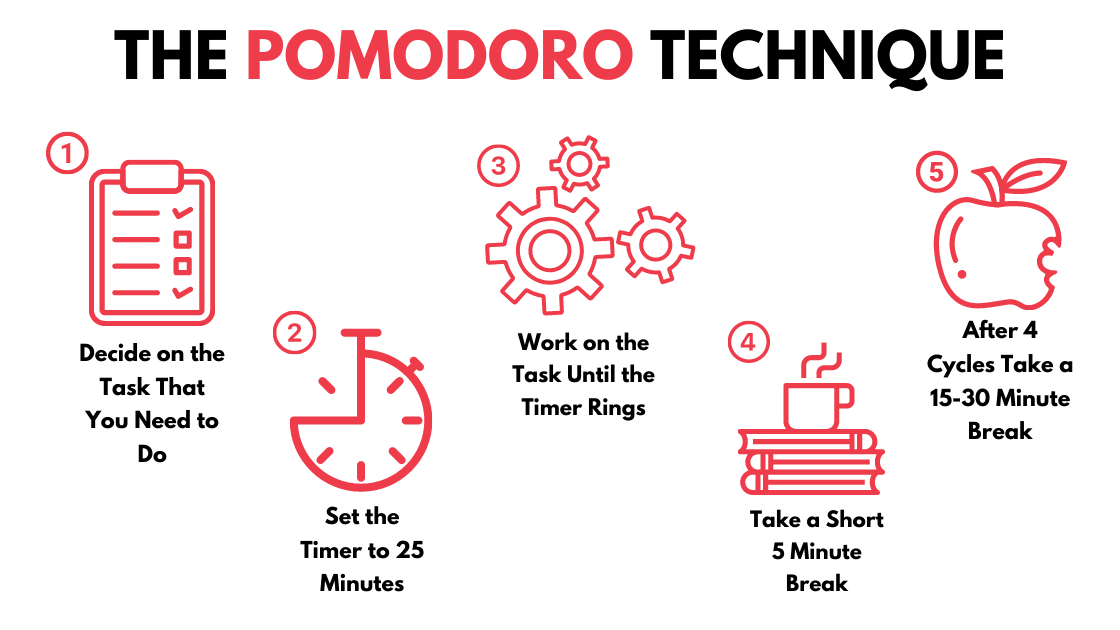
    The Pomodoro Technique is a time management method developed by Francesco Cirillo in the late 1980s. The idea is simple: break your work into short, focused intervals—usually 25 minutes—called “Pomodoros,” followed by a 5-minute break. After 4 Pomodoros, take a longer break of 15–30 minutes.

    Why 25 minutes? Well, our brains can only focus intensely for a limited time before fatigue sets in. Short bursts of concentration, followed by a break, help you stay productive without burning out.

    Why Students Should Use It

    Students juggle lectures, assignments, exams, and maybe even part-time jobs. It’s easy to get overwhelmed or procrastinate. The Pomodoro Technique helps in several ways:

    • Improves focus – 25 minutes is short enough to avoid distraction, long enough to make progress.
    • Reduces procrastination – Breaking tasks into small chunks makes starting easier.
    • Boosts motivation – Seeing Pomodoros stack up feels satisfying, like little wins.
    • Enhances memory and learning – Short, focused study sessions improve retention more than long, unfocused hours.

    How to Use the Pomodoro Technique

    1. Choose a Task – Pick what you want to focus on: reading a chapter, solving problems, writing an essay.
    2. Set a Timer for 25 Minutes – You can use a phone, an app, or a classic kitchen timer.
    3. Work Without Distractions – Focus fully on the task. Ignore notifications, messages, everything.
    4. Take a 5-Minute Break – Step away from your desk, stretch, grab water, breathe.
    5. Repeat – After 4 Pomodoros, take a longer break (15–30 minutes).

    Simple, right? But it’s the consistency that really matters.

    Tips for Making It Work

    • Customize your intervals – 25 minutes is standard, but some students find 40–50 minutes works better. Adjust to your attention span.
    • Eliminate distractions – Phone in another room, notifications off, quiet space—make it as interruption-free as possible.
    • Combine with other techniques – Use Pomodoro with active recall, flashcards, or note-taking for maximum effect.
    • Track your Pomodoros – Write down how many you complete each day. Seeing progress motivates you.
    • Use breaks wisely – Don’t scroll social media endlessly. Stretch, hydrate, or take a short walk.

    Common Mistakes to Avoid

    • Skipping breaks – Thinking “I’ll keep going” can lead to burnout. Breaks are crucial.
    • Overloading tasks – Don’t cram huge tasks into one Pomodoro. Break them down.
    • Being too rigid – Life happens. Adjust your Pomodoros when necessary. Flexibility keeps you consistent in the long run.

    Benefits Beyond Studying

    The Pomodoro Technique isn’t just for exams. It can improve productivity in daily life, work, or even hobbies. It teaches discipline, time awareness, and helps you respect your attention span. Once you master it as a student, it becomes a life skill.

    Bottom Line

    The Pomodoro Technique is more than a timer—it’s a tool for focus, motivation, and productivity. For students, it makes daunting tasks manageable, fights procrastination, and keeps your brain fresh. Start with one Pomodoro, see how it feels, and gradually build your rhythm.

    Remember, it’s not about perfection. It’s about consistency, small wins, and making steady progress. Give it a try—you might be surprised at just how much you can get done in 25 minutes.

  • Best Websites to Learn Coding for Free

    Best Websites to Learn Coding for Free

    Coding. It’s no longer just for computer scientists. From building apps to automating tasks, learning to code is becoming an essential skill in today’s world. But getting started can feel overwhelming, especially if you’re on a budget. Luckily, there are tons of websites that let you learn coding for free, without expensive courses or textbooks. The key is knowing which platforms actually provide value and structured learning. Here’s an in-depth look at some of the best websites to learn coding for free and how they can help beginners and even intermediate learners.

    1. Codecademy

    Codecademy is one of the most popular platforms for beginners. It offers interactive lessons in multiple programming languages like Python, JavaScript, HTML/CSS, SQL, and more.

    What’s great about Codecademy is its hands-on approach. Instead of just reading theory, you’re writing code directly in your browser. This practical experience is crucial because coding is learned by doing, not just watching videos.

    The free version includes basic courses that are more than enough to get started. However, if you want projects, quizzes, or certificates, there’s a paid “Pro” plan. But even the free content can help you build a solid foundation.

    2. freeCodeCamp

    freeCodeCamp is a treasure for self-learners. It’s completely free, offers structured curricula, and has a huge community. You can learn web development, data structures, algorithms, JavaScript, React, Python, and more.

    The platform emphasizes hands-on projects. After completing lessons, you work on coding projects that simulate real-world scenarios. These projects are perfect for your portfolio—something employers or colleges often look for.

    Another big advantage is the active community forum. If you get stuck, other learners or mentors are ready to help. This sense of community can keep motivation high, especially when learning alone at home.

    3. W3Schools

    If you want a simple and beginner-friendly resource, W3Schools is hard to beat. It’s especially good for web development, covering HTML, CSS, JavaScript, PHP, SQL, and more.

    What makes W3Schools different is its simplicity. Each topic is broken into small, digestible sections, with examples that you can edit and test immediately. The “Try It Yourself” feature lets you experiment with code directly on the website, reinforcing learning.

    While it’s not a complete coding bootcamp, it’s great for reference and quick practice. Many coders use it as a companion resource alongside other platforms.

    4. The Odin Project

    The Odin Project is perfect for those serious about becoming web developers. It’s a free, open-source curriculum that teaches full-stack web development.

    What sets it apart is its project-based approach. You learn HTML, CSS, JavaScript, Git, Node.js, and databases by building real projects like personal websites, to-do apps, and full-stack applications. It also emphasizes soft skills like problem-solving, collaboration, and project management—skills employers love.

    The Odin Project also encourages self-directed learning. While that might feel challenging at first, it builds independence and prepares you for the real-world coding environment.

    5. Khan Academy

    Most people know Khan Academy for math or science, but it also has excellent coding tutorials. You can learn JavaScript, HTML/CSS, and even animation basics.

    Khan Academy’s approach is very beginner-friendly. Lessons are interactive, and there are step-by-step exercises with instant feedback. It’s particularly good for younger learners or absolute beginners who want to start with simple, visual coding exercises.

    Plus, it’s completely free, with no hidden fees. The platform also encourages creativity, allowing you to create animations, games, and interactive stories using your coding skills.

    6. Coursera (Free Courses)

    Coursera is famous for its university-backed courses. While many are paid, there are free options available. Universities like Stanford, University of London, and University of Michigan offer coding courses you can audit for free.

    Topics include Python programming, web development, data science, and algorithms. Courses often come with video lectures, quizzes, and hands-on projects. Auditing a course allows you to access all the learning material without paying, though certificates require payment.

    The academic approach of Coursera is helpful if you prefer structured lessons and assignments like a real college course. It’s a bit more formal compared to platforms like freeCodeCamp, but it’s a great option for deep learning.

    7. edX (Free Courses)

    edX is another platform offering university-level courses, many of which are free to audit. You can learn Python, Java, C++, SQL, and more.

    Like Coursera, edX courses include video lectures, readings, exercises, and sometimes community discussions. They’re perfect for learners who want a structured and credible curriculum. You can always upgrade to a verified certificate later, but the free content alone is excellent for skill-building.

    8. SoloLearn

    SoloLearn is designed for beginners who want bite-sized lessons and learning on the go. It’s available on both web and mobile, making it perfect for learning during commutes or short breaks.

    It offers courses in Python, JavaScript, Java, C++, HTML, CSS, and SQL. Each lesson is interactive and followed by quizzes. SoloLearn also has a community where you can ask questions, share code, and participate in challenges.

    Its gamified approach—earning points, badges, and competing with others—keeps motivation high. For beginners, SoloLearn is a fun, engaging way to build foundational coding skills.

    9. GitHub and Open-Source Projects

    While not a traditional learning platform, GitHub is an invaluable resource for coders. You can explore open-source projects, read other people’s code, and contribute to projects.

    Working on real projects helps you understand coding practices, collaboration, and version control. Even if you’re new, small contributions like fixing bugs or improving documentation give practical experience. Plus, showcasing contributions on your resume or portfolio impresses potential employers.

    10. YouTube Tutorials

    YouTube is often underestimated as a learning resource. Many experienced developers share free coding tutorials, step-by-step projects, and crash courses. Channels like “Programming with Mosh,” “Traversy Media,” and “freeCodeCamp.org” offer hours of free content.

    The advantage of YouTube is visual learning. Seeing someone write code in real-time helps beginners understand the thought process and workflow. Pair YouTube tutorials with practice to reinforce skills.

    Conclusion

    Learning coding for free has never been easier. From interactive platforms like Codecademy and SoloLearn to project-based curricula like The Odin Project and community-driven resources like freeCodeCamp, there’s a wealth of opportunities for beginners. Khan Academy, W3Schools, edX, Coursera, and YouTube offer structured, beginner-friendly content that can complement your learning.

    The key is consistency and practice. Pick one or two platforms, follow a structured path, and build projects to apply what you learn. Don’t just watch tutorials—write code, experiment, make mistakes, and solve problems. That’s how real learning happens.

    Remember, coding is a skill you develop over time. Free resources give you the tools—you bring the effort and curiosity. With dedication, you can become proficient in coding without spending a single dollar. The internet is your classroom, and your journey starts today.

  • Education That Brings Clarity and Self-Awareness

    Education That Brings Clarity and Self-Awareness

    Education. We often think of it as books, exams, lectures, degrees. But education is more than facts and figures. True education helps people understand themselves and the world around them. It brings clarity, fosters reflection, and builds self-awareness. Without this, learning risks becoming mechanical—memorization without meaning.

    Self-aware learners know what they think, feel, and value. They can focus better, make better choices, and navigate life with purpose. Clarity and self-awareness aren’t taught in a single lesson—they grow through a combination of mindful study, reflection, and engagement with ideas.

    Why Clarity Matters in Education

    Clarity is about understanding, not just knowing. Many students memorize information without grasping its deeper meaning. This leads to confusion, stress, and shallow knowledge. Clear understanding allows learners to:

    • Connect concepts across subjects
    • Solve problems creatively
    • Make informed decisions
    • Reflect on their own strengths and weaknesses

    When education is clear, the mind feels lighter, more organized, and more confident. Confusion decreases, and learning becomes meaningful instead of overwhelming.

    The Role of Self-Awareness

    Self-awareness is the ability to observe your thoughts, emotions, and behaviors without judgment. In education, it helps learners:

    • Recognize personal learning styles
    • Identify areas for improvement
    • Understand emotional reactions to challenges
    • Set realistic goals and expectations
    • Build empathy for others and themselves

    Self-aware learners are not just knowledgeable—they are insightful, reflective, and adaptable.

    How Education Can Foster Clarity and Self-Awareness

    1. Encourage Reflection
    Reflection is key. After lessons, students should ask: What did I learn? How does this relate to my life? What did I struggle with? Journaling or discussion can help process experiences and solidify understanding.

    2. Promote Mindful Learning
    Mindfulness in education is paying attention to the present moment. Avoid multitasking, notice emotions while learning, and focus fully on the task at hand. This improves concentration, comprehension, and awareness.

    3. Integrate Real-Life Connections
    Linking knowledge to real-world experiences makes learning tangible and meaningful. When students see how concepts apply to their lives, clarity deepens, and self-awareness grows.

    4. Encourage Critical Thinking
    Questioning, analyzing, and evaluating information allows learners to form their own understanding rather than accepting ideas blindly. This builds intellectual independence and self-awareness.

    5. Foster Emotional Intelligence
    Education should teach more than academics. Emotional intelligence—recognizing and managing emotions—is critical. Understanding oneself emotionally contributes to both personal clarity and effective social interactions.

    Practical Steps for Learners

    • Set Learning Intentions: Know why you are studying a topic, not just what you are studying.
    • Journal Regularly: Write reflections on lessons, emotions, and personal insights.
    • Practice Mindfulness: Even a few minutes of focused breathing before study improves attention and clarity.
    • Seek Feedback: Constructive feedback from teachers or peers helps identify blind spots and encourages self-reflection.
    • Engage in Discussion: Talking about ideas with others challenges assumptions and deepens understanding.

    Benefits of Education That Brings Clarity and Self-Awareness

    • Deeper Understanding: Knowledge is not just memorized—it is comprehended.
    • Better Decision-Making: Self-aware learners make informed, thoughtful choices.
    • Improved Focus: Clarity reduces mental clutter and distraction.
    • Emotional Growth: Awareness of thoughts and emotions enhances resilience and empathy.
    • Lifelong Learning: Understanding oneself encourages curiosity and continuous personal growth.

    Challenges and Solutions

    Many learners struggle with distractions, information overload, or pressure to perform. These can cloud clarity and hinder self-awareness.

    • Solution 1: Break study sessions into smaller, focused blocks.
    • Solution 2: Practice mindfulness techniques to calm the mind.
    • Solution 3: Reflect after each lesson, even for five minutes.
    • Solution 4: Accept mistakes as learning opportunities—they reveal areas for self-awareness.

    Conclusion

    Education that brings clarity and self-awareness goes beyond textbooks. It shapes minds that understand themselves, their learning, and the world. Such education prepares learners not just for exams, but for life.

    Clarity illuminates knowledge. Self-awareness guides application. Together, they make learning purposeful, thoughtful, and meaningful. Students who cultivate these qualities become not just knowledgeable, but wise, resilient, and capable of navigating life with confidence.

    True education is more than learning—it’s understanding, reflecting, and growing as a person. The mind that is clear and self-aware is a mind ready to learn, adapt, and thrive.