
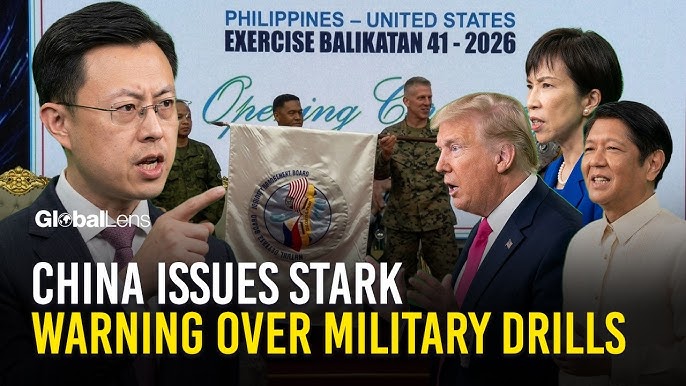
Growing military cooperation between the United States, Philippines, and Japan has sparked a sharp reaction from China, which has warned that such joint exercises risk undermining regional trust and stability. As geopolitical competition intensifies in the Asia-Pacific, these developments highlight the fragile balance of power and the increasing risk of confrontation.
China’s Strong Warning
China has openly criticized the joint military drills conducted by the United States, Japan, and the Philippines, calling them provocative and destabilizing. The Ministry of Foreign Affairs of China stated that such actions “erode mutual trust among regional countries” and could escalate tensions unnecessarily.
According to Chinese officials, the Asia-Pacific region should prioritize peace, cooperation, and economic development rather than military alliances and power displays. Beijing views these joint drills as part of a broader strategy to contain China’s rise and limit its influence in the region.
What Are These Joint Military Drills?
The joint exercises involve coordinated operations between the armed forces of the three countries. These drills typically include naval maneuvers, air defense training, amphibious landings, and strategic coordination exercises.
For the United States and its allies, these drills are intended to improve interoperability, strengthen defense capabilities, and ensure preparedness in the face of potential security threats. The Philippines, in particular, has increased its military cooperation with the United States amid ongoing territorial disputes in the South China Sea.
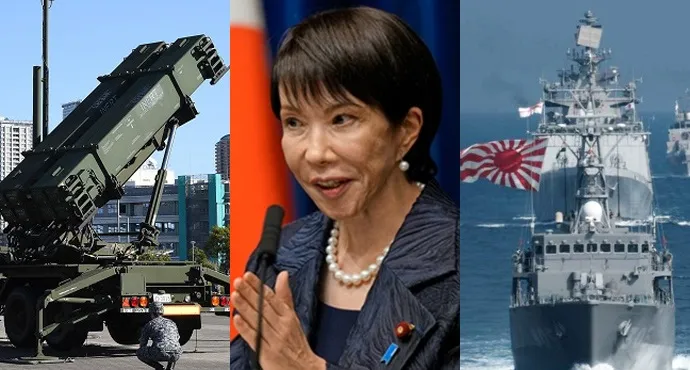
Japan, meanwhile, has been expanding its defense role in recent years, moving away from its traditionally pacifist stance. Its participation in such drills reflects a broader shift in its security policy.
The South China Sea Factor
A key source of tension behind these developments is the South China Sea, a strategically vital waterway rich in natural resources and critical for global trade.
China claims a significant portion of the South China Sea, a position contested by several countries, including the Philippines. The United States has repeatedly conducted “freedom of navigation” operations in the region, challenging China’s territorial claims.
Joint military exercises involving the United States, Japan, and the Philippines are often seen as a response to China’s growing presence and assertiveness in these disputed waters.
The Philippines’ Strategic Shift
The Philippines has taken a more assertive stance in recent years, strengthening its alliance with the United States. Joint drills have become more frequent and more extensive, signaling a shift in Manila’s defense strategy.
For the Philippines, these exercises are not just symbolic—they are a practical necessity. Facing increasing pressure in disputed waters, the country views its partnership with the United States and Japan as essential for safeguarding its sovereignty.
However, this shift has also placed the Philippines at the center of regional tensions, as China views such alliances with suspicion.
Japan’s Expanding Military Role
Japan’s involvement in these drills marks a significant evolution in its defense posture. Historically constrained by a pacifist constitution, Japan has gradually expanded its military capabilities and international engagement.
Participation in joint exercises with the United States and the Philippines reflects Tokyo’s growing concern about regional security and its willingness to play a more active role.
China, however, remains wary of Japan’s military normalization, given the historical context of World War II. This adds another layer of complexity to an already tense situation.
US Strategy in the Indo-Pacific
For the United States, these joint drills are part of a broader Indo-Pacific strategy aimed at maintaining regional stability and countering potential threats. Strengthening alliances with countries like Japan and the Philippines is seen as crucial for ensuring a balance of power.
The United States has emphasized that its actions are defensive in nature and intended to uphold international law. However, China perceives these moves as efforts to encircle and contain it.
This difference in perception is a major driver of ongoing tensions.
Impact on Regional Trust and Stability
China’s warning about “eroding regional trust” reflects deeper concerns about the long-term implications of increased military activity. As countries in the region align themselves with different powers, the risk of division and conflict grows.
Frequent military drills can create a cycle of action and reaction, where one country’s defensive measures are seen as aggressive by another. This dynamic can escalate tensions even in the absence of direct conflict.
Smaller countries in the region may also feel pressured to choose sides, further complicating the geopolitical landscape.
The Role of Diplomacy
Despite rising tensions, experts stress the importance of diplomacy in managing disputes. Dialogue, confidence-building measures, and multilateral cooperation are essential for preventing escalation.
Regional organizations and forums can play a role in facilitating communication and reducing misunderstandings. However, achieving meaningful progress requires trust—and that is precisely what China claims is being undermined.
A Region at a Crossroads
The Asia-Pacific region is at a critical juncture. Economic interdependence remains strong, but political and military tensions are increasing. The challenge for regional leaders is to find a balance between security concerns and the need for cooperation.
China’s warning serves as a reminder that actions taken in the name of security can have unintended consequences. Without careful management, the current trajectory could lead to greater instability.
Conclusion
The joint military drills involving the United States, Japan, and the Philippines have become a focal point of rising tensions in East Asia. China’s strong response underscores the deep divisions and competing interests shaping the region.
As geopolitical competition intensifies, the need for dialogue and mutual understanding becomes more urgent. Whether regional powers can navigate these challenges without escalating conflict will be a defining question for the future of the Asia-Pacific.












Leave a Reply