
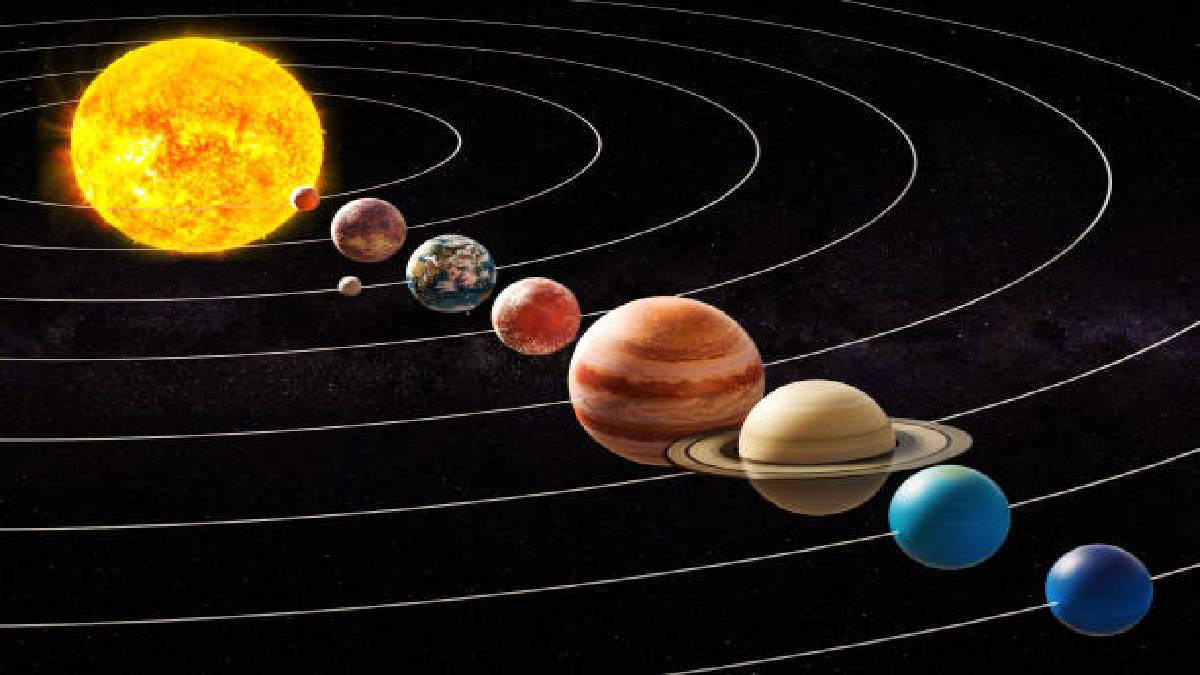
One of the most exciting science trends in April 2026 is the rare planetary alignment, a celestial event that has captured global attention. Skywatchers, astronomers, and space enthusiasts are closely following this phenomenon, where multiple planets appear aligned in the sky. This rare event offers a unique opportunity to witness the beauty and complexity of our solar system.
What is a Planetary Alignment?
A planetary alignment occurs when several planets in our solar system appear to line up in the sky from Earth’s perspective. While the planets are not actually in a perfect straight line in space, they appear aligned due to their positions in orbit.
In April 2026, planets like Mercury, Mars, Saturn, and Neptune are part of this visible alignment. This makes it a special event for both amateur and professional observers.
Why is This Event Rare?
Planetary alignments are not extremely rare, but having multiple visible planets align at the same time in a clear and observable way is uncommon. Each planet orbits the Sun at a different speed and distance, so such alignments only happen occasionally.
The 2026 alignment is particularly interesting because it includes both inner and outer planets, creating a visually impressive formation in the early morning sky.
When and How to See It
The best time to observe this alignment is during the pre-dawn hours, just before sunrise. During this time, the sky is dark enough to see planets clearly, yet bright enough to identify their positions.
Tips for viewing:
- Find a location with minimal light pollution
- Look toward the eastern horizon
- Use binoculars or a telescope for better visibility
- Check weather conditions for a clear sky
Some planets like Mars may be visible to the naked eye, while others like Neptune require optical equipment.
Scientific Importance
Planetary alignments are not just visually stunning—they also hold scientific value. Astronomers use these events to study planetary motion, gravitational interactions, and orbital mechanics.
This phenomenon is closely related to the principles of Astronomy, helping scientists better understand how planets move and interact within the solar system.
Public Interest and Global Attention
Events like this often go viral on social media, attracting millions of viewers and sparking curiosity about space science. Educational institutions and space organizations use such moments to promote awareness about astronomy.
Many people take photos, share observations, and engage in discussions, making it both a scientific and cultural event.
Future Planetary Events
While the 2026 alignment is special, similar events will occur in the future. However, each alignment is unique in terms of the planets involved, visibility, and timing.
Space enthusiasts are encouraged to follow astronomical calendars to stay updated on upcoming celestial events.
Conclusion
The rare planetary alignment of April 2026 is a remarkable reminder of the beauty and precision of our universe. With planets like Mercury, Mars, Saturn, and Neptune appearing aligned in the sky, this event offers a perfect opportunity to connect with space science.
Whether you are an astronomy enthusiast or a casual observer, this alignment is worth watching. It not only provides a stunning visual experience but also deepens our understanding of the solar system and the vast universe beyond.














Leave a Reply